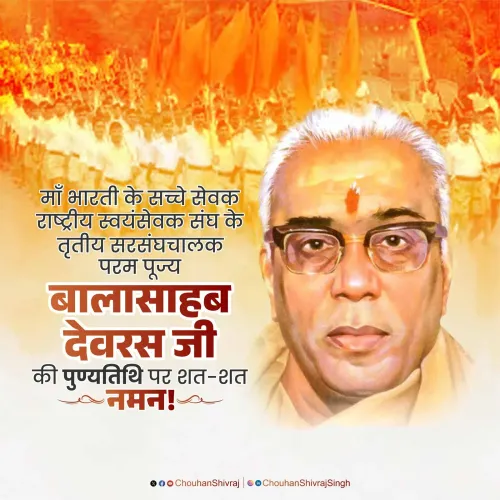
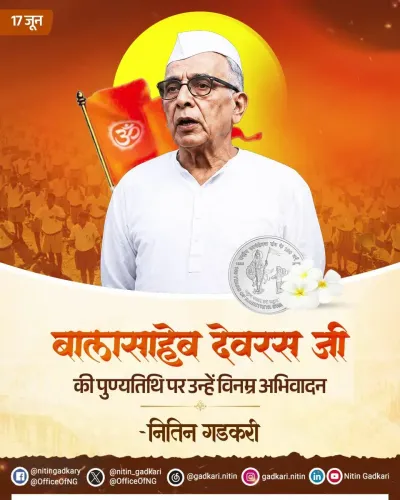
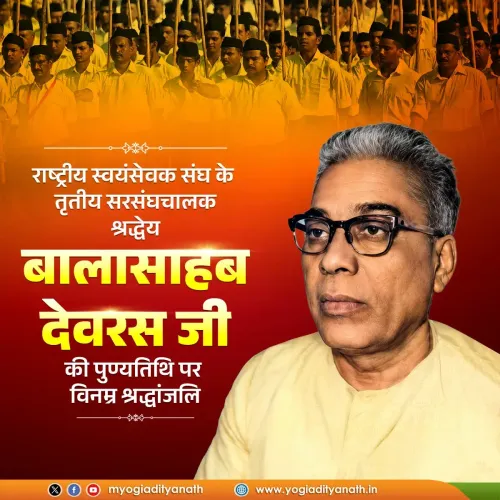
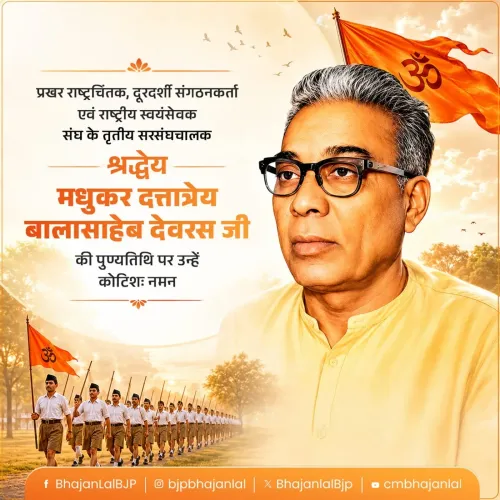
CM Vishnu Deo Sai pays tribute to RSS chief Balasaheb Deoras
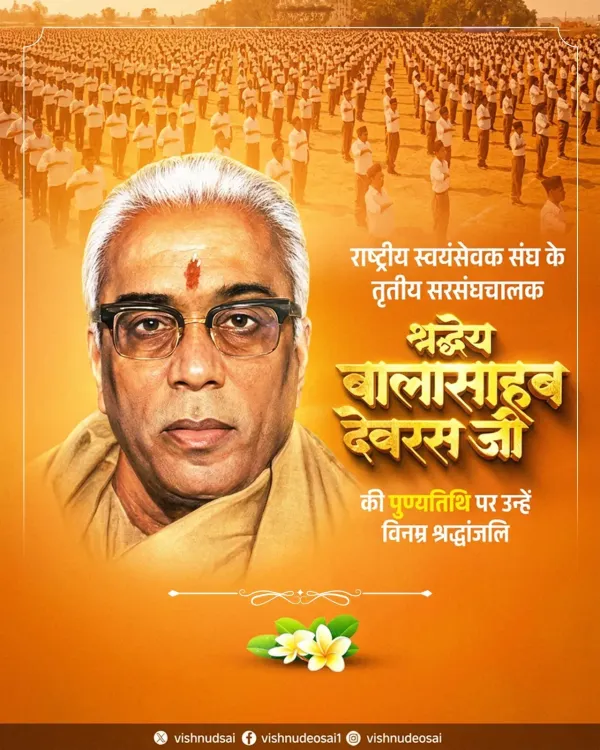
Synopsis
Chhattisgarh Chief Minister Vishnu Deo Sai on 17 June 2026 paid tribute to Balasaheb Deoras, the RSS's third Sarsanghchalak, on his death anniversary, honouring his role in organisational expansion, social harmony, and national service during his 1973–1994 tenure.
Key Takeaways
Chhattisgarh CM Vishnu Deo Sai paid tribute to Balasaheb Deoras on his death anniversary on 17 June 2026 .
Balasaheb Deoras was the third Sarsanghchalak of the RSS, serving from 1973 to 1994 .
Golwalkar and is credited with major organisational expansion and social outreach of the RSS.
CM Sai highlighted Deoras's contributions to social harmony , nation-building , and cultural consciousness .
BJP leaders across states routinely mark RSS Sarsanghchalak death anniversaries as part of a consistent pattern linking the party to the RSS's legacy.
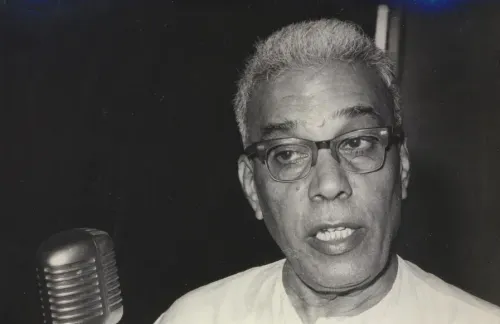
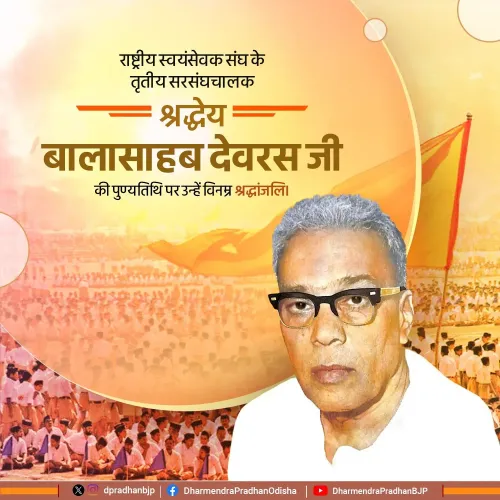
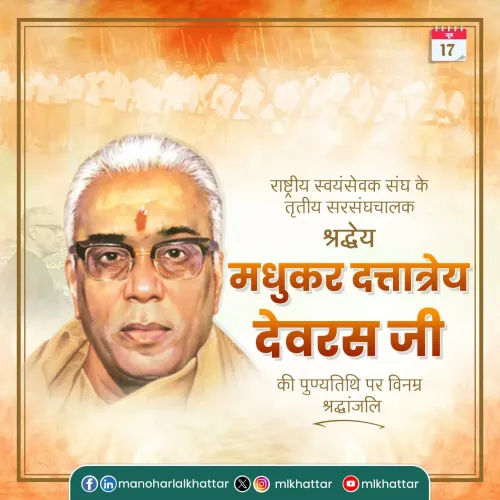
Chhattisgarh Chief Minister Vishnu Deo Sai on Wednesday, 17 June 2026 paid tribute to Balasaheb Deoras, the third Sarsanghchalak of the Rashtriya Swayamsevak Sangh, on his death anniversary, honouring his contributions to organisational expansion, social harmony, and national service.
Context
Posting on X, CM Sai offered what he called a vinarm shraddhanjali ('humble tribute') to Deoras, stating that his 'far-sighted leadership, simple personality, and life dedicated to society inspired lakhs of swayamsevaks and workers to serve the national interest.' The post was written in Hindi and reflects the Chief Minister's consistent public acknowledgement of RSS ideological figures.
Deoras, referred to in the post as shraddhey Balasaheb Deoras ji ('revered Balasaheb Deoras'), is remembered by BJP and RSS circles for giving 'a new direction to organisational expansion, social harmony, and the work of national service,' as Sai wrote.
Policy Backdrop
Madhukar Dattatraya Deoras, popularly known as Balasaheb Deoras, served as the third Sarsanghchalak of the Rashtriya Swayamsevak Sangh from 1973 to 1994, succeeding M.S. Golwalkar. He led the organisation through the Emergency period of 1975–77 and its aftermath, overseeing significant expansion of prachar work and social outreach programmes.
The RSS was founded in 1925 by K.B. Hedgewar, with Deoras being the third in its line of chiefs after Hedgewar and Golwalkar. His two-decade tenure is credited within the organisation with broadening its reach across social strata and deepening its commitment to what it terms samajik samarasata ('social harmony').
Stakeholders and Impact
Tributes of this nature carry significance for the broader RSS-BJP ecosystem. BJP state and national leaders routinely mark the death anniversaries of past Sarsanghchalaks, using such occasions to reinforce the ideological and organisational links between the party's current leadership and the RSS's training legacy.
For Chhattisgarh's large network of RSS swayamsevaks and BJP workers, a public tribute from the Chief Minister on such an anniversary serves as a reaffirmation of the shared organisational culture. CM Sai, himself a BJP leader with strong RSS roots, has consistently highlighted such figures in his public communications.
What's Next
Annual commemorations around 17 June are typically observed by BJP and RSS units across states, including Chhattisgarh, through shakha-level programmes and public events referencing Deoras's tenure and legacy. CM Sai's public post is likely to be followed by similar tributes from party and organisational units at the district and block level across the state.
Deoras's emphasis on social harmony and national unity continues to be invoked by current BJP leadership as a guiding framework, suggesting his legacy will remain a touchstone in the party's public discourse well beyond this anniversary.
Point of View
Sai reinforces the BJP's self-presentation as the political expression of the RSS's organisational and cultural project. This pattern is especially pronounced in states like Chhattisgarh, where the RSS network is both electorally significant and organisationally active. The tribute also keeps Deoras's legacy — particularly his focus on broadening the RSS's social base — visible within a contemporary political context.
NationPress
19 Sept 2026
Frequently Asked Questions
Who was Balasaheb Deoras?
Balasaheb Deoras, full name Madhukar Dattatraya Deoras, was the third Sarsanghchalak of the Rashtriya Swayamsevak Sangh, serving from 1973 to 1994. He succeeded M.S. Golwalkar and is credited with major organisational expansion and social outreach during his tenure, including through the Emergency period of 1975–77.
When is Balasaheb Deoras's death anniversary?
Balasaheb Deoras's death anniversary falls on 17 June and is observed annually by RSS and BJP units across India with tributes and commemorative programmes.
Why did CM Vishnu Deo Sai pay tribute to Balasaheb Deoras?
CM Vishnu Deo Sai paid tribute to Balasaheb Deoras on his death anniversary on 17 June 2026, honouring his contributions to RSS organisational expansion, social harmony, and national service. BJP leaders routinely mark such anniversaries as part of the party's acknowledgement of the RSS's ideological legacy.
Who are the Sarsanghchalaks of the RSS in order?
The RSS has had multiple Sarsanghchalaks since its founding in 1925 by K.B. Hedgewar. Hedgewar was the first, M.S. Golwalkar the second, and Balasaheb Deoras the third, serving from 1973 to 1994.
What is the RSS's stance on social harmony as associated with Deoras?
During Balasaheb Deoras's tenure as Sarsanghchalak, the RSS placed increased emphasis on 'samajik samarasata' or social harmony, expanding outreach across social strata. This theme continues to be cited by BJP and RSS leaders when referencing his legacy.