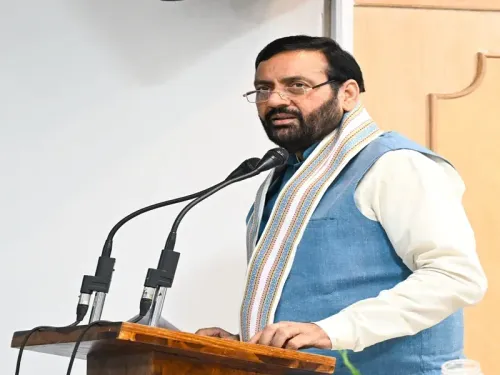
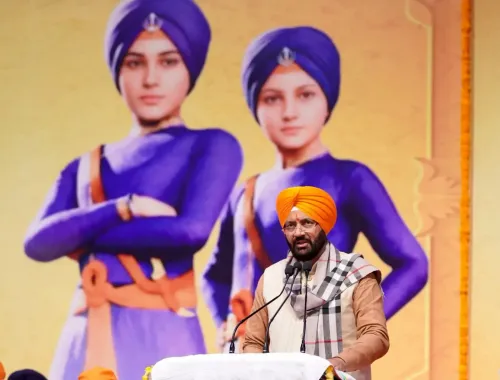
CM Saini Backs Push to Teach Sikh History to New Generations
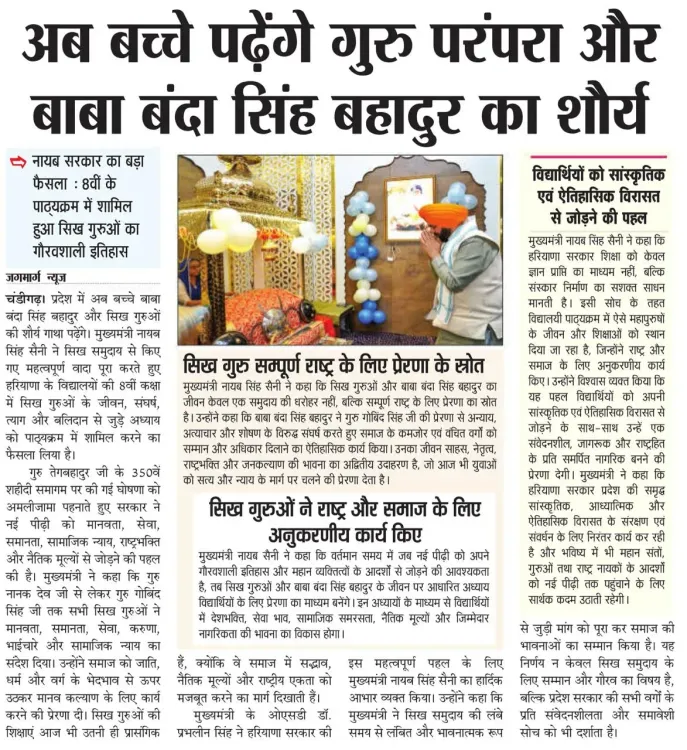
Synopsis
Haryana Chief Minister Nayab Singh Saini on June 12, 2026, endorsed an initiative to familiarise future generations with Sikh history and the ideals and sacrifices of the Gurus, signalling a push for cultural education in the state.
Key Takeaways
CM Nayab Singh Saini publicly backed an effort to teach Sikh history and Guru ideals to future generations on June 12, 2026 .
The initiative aims to acquaint youth with the great sacrifices of the Sikh Gurus alongside their philosophical and historical legacy.
Haryana shares deep historical and demographic ties with Punjab , the heartland of Sikhism, making such an effort particularly significant.
The move aligns with the National Education Policy 2020 's directive to integrate regional cultural histories into state curricula.
Key stakeholders include Haryana school students and the state's Sikh community , who stand to benefit from formal recognition of this heritage.
Rollout details — including curriculum modules, digital platforms, and budget provisions — are awaited.
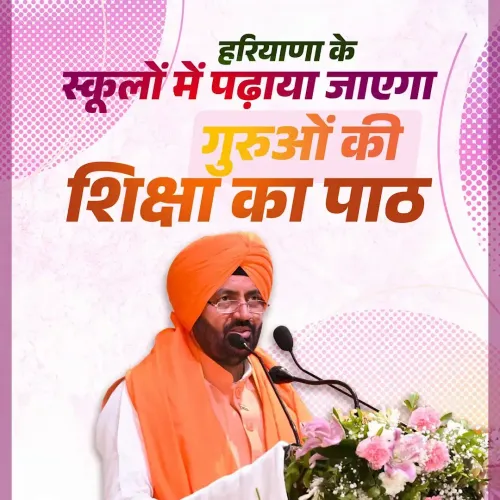
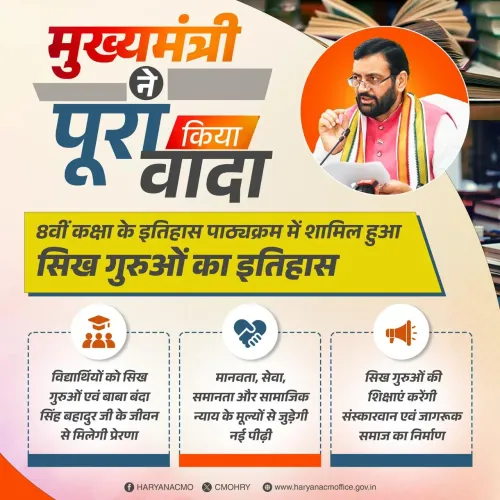
Haryana Chief Minister Nayab Singh Saini on Friday, June 12, 2026, publicly backed an initiative aimed at acquainting future generations with Sikh history, the ideals of the Gurus, and their great sacrifices. The post, shared on X, signals the Haryana government's intent to deepen cultural and historical education among the state's youth.
Context
Saini shared the post with the message: 'aane wali peedhiyon ko Sikh itihas, Guruon ke adarshon aur unke mahan balidanon se parichit karane ke liye ek prayas' — 'an effort to acquaint coming generations with Sikh history, the ideals of the Gurus, and their great sacrifices.' The statement frames the initiative as a forward-looking cultural mission rather than a routine government announcement.
Haryana shares a long border with Punjab, the heartland of Sikhism, and has a significant Sikh population spread across districts such as Ambala, Kurukshetra, and Sirsa. The state is also home to several historically important Sikh sites, giving such an initiative particular resonance.
Policy Backdrop
The move aligns with the spirit of the National Education Policy 2020, which directs states to integrate local histories, Indian knowledge systems, and regional cultural contributions into school curricula. State governments across India have been encouraged to develop supplementary learning material that reflects the diversity of India's civilisational heritage.
Under BJP-led state administrations, cultural education programmes highlighting regional religious histories have become a recurring feature of governance. Haryana has periodically undertaken such efforts given its geographic and demographic proximity to the Sikh community's core geography in Punjab.
Stakeholders and Impact
The primary beneficiaries of any such initiative would be students in Haryana government schools, who stand to gain structured exposure to the lives and teachings of the Sikh Gurus, including their roles in resisting oppression and shaping India's cultural fabric. The Sikh community in Haryana is another direct stakeholder, as formal recognition of this history in educational settings carries both cultural and symbolic weight.
Broader civil society groups focused on heritage preservation and inter-community understanding could also find common ground with such an effort, potentially widening its social impact beyond the classroom.
What's Next
Observers will watch for the rollout of specific curriculum modules, digital platforms, or publications on Sikh history in Haryana government schools. Any dedicated budgetary provision in the next state budget would be a concrete indicator of the initiative's scale and longevity.
If the programme is institutionalised within the school curriculum, it could serve as a model for other states with significant Sikh populations or historical Sikh sites, reinforcing the National Education Policy 2020's broader mandate on cultural integration in education.
Point of View
A move with clear cultural and political resonance in a state that borders Punjab and carries memories of the Partition. The framing — 'an effort for coming generations' — deliberately elevates the initiative beyond routine government communication, casting it as a civilisational responsibility. This fits a broader pattern under BJP-led state governments of weaving regional religious histories into the public education narrative, partly as a response to the NEP 2020 mandate and partly as a signal to community constituencies. The real test will be whether the initiative translates into funded, curriculum-level implementation or remains at the level of symbolic outreach.
NationPress
26 Oct 2026
Frequently Asked Questions
What is CM Nayab Singh Saini's Sikh history initiative about?
CM Saini backed an effort to acquaint future generations in Haryana with Sikh history, the ideals of the Gurus, and their great sacrifices, as announced on June 12, 2026.
Why is Haryana involved in promoting Sikh history?
Haryana shares a long border with Punjab, the heartland of Sikhism, and has a significant Sikh population as well as several historically important Sikh sites within the state.
How does this relate to the National Education Policy 2020?
The National Education Policy 2020 directs states to integrate local histories and regional cultural contributions into curricula, providing a policy framework for such initiatives.
Who will benefit from this Sikh history initiative in Haryana?
Students in Haryana government schools and the state's Sikh community are the primary stakeholders, gaining structured exposure to Sikh heritage and formal recognition of that history.
What should we watch for next regarding this initiative?
Key developments to watch include the rollout of curriculum modules or digital platforms on Sikh history in Haryana schools and any dedicated budgetary allocation in the next state budget.