CM Saini hails ‘Amit Atal’ IFFI tribute to Vajpayee
Synopsis
Haryana Chief Minister Nayab Singh Saini hailed a special Goa IFFI screening of Panchjanya’s film Amit Atal, calling it a chance to remember Atal Bihari Vajpayee’s oratory, democratic values and nation-building vision.
Key Takeaways
On 27 November 2026 , Haryana Chief Minister Nayab Singh Saini hailed a special Goa screening of the film Amit Atal on former PM Atal Bihari Vajpayee.
He said Vajpayee gave Indian politics a distinctive identity through far-sightedness, powerful oratory and a simple personality.
He said Vajpayee’s commitment to democratic values and nation-building vision would continue to guide the country.
Saini credited Panchjanya as the producer of the film and linked the tribute to IFFI .
Vajpayee served three terms as prime minister, was a founding BJP leader, and died in 2018 .
IFFI is India’s oldest and largest film festival, staged each year in Goa.
A film about a former prime minister should not, on paper, steal a festival’s spotlight. Yet that is the claim Haryana Chief Minister Nayab Singh Saini made on 27 November 2026, treating a special Goa screening of अमिट अटल (‘Amit Atal’) as a live reminder of Atal Bihari Vajpayee’s voice, ease and vocation. He framed Indian cinema’s flagship gathering as a memorial, not merely a marketplace of premieres.
In a post on X, Saini said the special screening at the Goa Film Festival — which he called Indian cinema’s prestigious platform — became an occasion to remember Vajpayee’s inspiring personality and his dedication to the nation. He wrote that Atal ji “gave Indian politics a distinctive identity” through far-sightedness, a stirring voice and an unforced manner. Commitment to democratic values and a vision of nation-building, he added, would continue to guide the country.
The film, he noted, was produced by Panchjanya and presents Vajpayee’s many-sided personality, historic contributions and important turns in public life in an impactful way. The screening, in his telling, once more underlined the relevance of those ideas. The post carried the tag linking the tribute to IFFI.
‘Amit Atal’ on the Goa festival calendar
The International Film Festival of India is the country’s oldest and largest film festival, staged each year in Goa as a meeting ground for Indian and world cinema. Sliding a biographical work on a former prime minister into that setting folds political remembrance into a cultural marquee that usually belongs to directors, stars and juries.
Saini did not dwell on runtime or cast. He dwelt on purpose: a public pause for a leader who died in 2018 and whose three terms as prime minister still sit at the centre of how the Bharatiya Janata Party tells its own story. The festival became, in this account, a classroom as much as a cinema.
The orator who recast a party’s public face
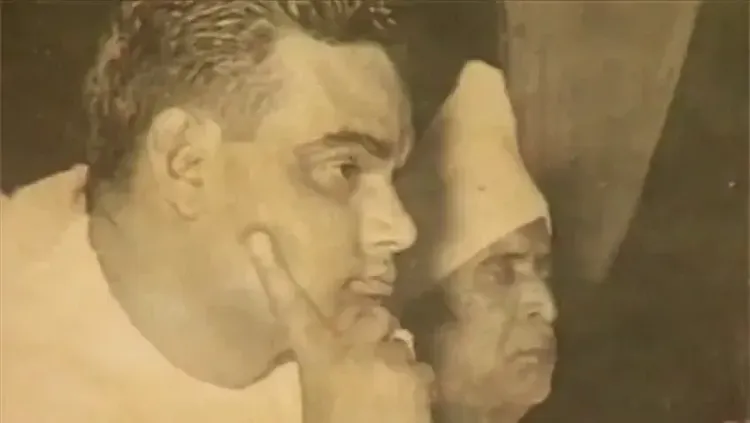
Vajpayee was a founding leader of the BJP, a parliamentarian whose speeches travelled far beyond the House, and a prime minister associated with openings in foreign policy and economic reform. Saini reached for that familiar triad — vision, voice, simplicity — rather than a policy checklist. The emphasis was moral continuity: democratic values, nation-building, a personality that still instructs.
That register has been common among BJP leaders since Vajpayee’s death. Public events, media projects and now a festival screening keep the former prime minister in circulation as both ancestor and emblem — a statesman whose appeal was never confined to one party’s benches.
Panchjanya’s film and a political afterlife
Panchjanya, the Hindi weekly associated with the Rashtriya Swayamsevak Sangh, is the producer named in Saini’s post. A magazine rooted in cultural and political commentary has stepped into cinema, and a sitting chief minister has chosen to amplify the result from the IFFI stage. The move fits a wider pattern of using cultural platforms to restage the biographies of national leaders tied to the ruling party’s memory.
Whether later editions of IFFI host more such portraits, or whether Haryana’s own cultural calendar picks up the same tribute, is the practical question the screening leaves behind. For now the message is plain. Vajpayee’s ideas, Saini insists, have not aged out of the argument.
On a festival screen in Goa, a political generation is still trying to keep that voice in the room.
Point of View
BJP leaders have repeatedly used public stages to keep his centrist, oratorical image in view — a statesman brand that still softens harder partisan edges. Parking that remembrance inside IFFI, and backing a Panchjanya production, shows how cultural festivals are being asked to do political work. Watch whether other states, including Haryana, now programme the same film as civic ritual rather than one-off festival fare.
NationPress
27 Nov 2026
Frequently Asked Questions
What is the film Amit Atal about?
Amit Atal is a film based on the life of former Prime Minister Atal Bihari Vajpayee. Haryana Chief Minister Nayab Singh Saini said it presents Vajpayee’s multi-dimensional personality, historic contributions and important phases of public life.
What did Nayab Singh Saini say about the IFFI screening?
On 27 November 2026 he said the special screening at the Goa Film Festival became an occasion to remember Vajpayee’s inspiring personality and dedication to the nation. He added that Vajpayee’s democratic values and nation-building vision would continue to guide the country.
Who produced the film Amit Atal?
According to Saini’s post, the film was produced by Panchjanya. Panchjanya is a weekly Hindi magazine associated with the Rashtriya Swayamsevak Sangh.
Who was Atal Bihari Vajpayee?
Atal Bihari Vajpayee was Prime Minister of India for three terms and a founding leader of the Bharatiya Janata Party. He was noted for his oratory, foreign-policy initiatives and economic reforms, and he died in 2018.
What is IFFI and where is it held?
The International Film Festival of India is the country’s oldest and largest film festival. It is staged each year in Goa to promote Indian and international cinema.