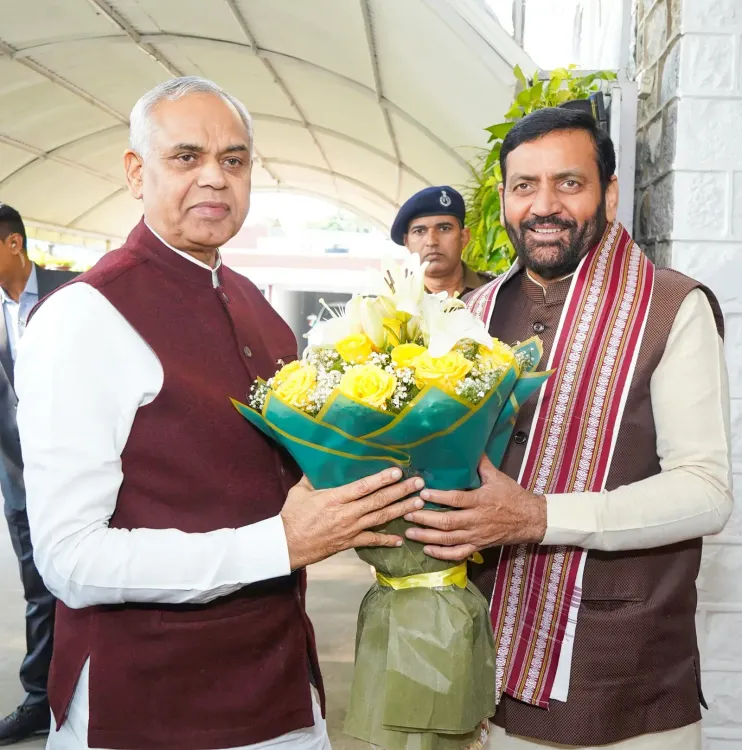
CM Saini welcomes Gujarat Governor Devvrat in Chandigarh
Synopsis
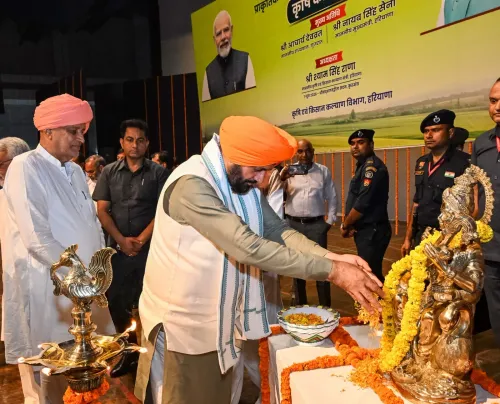
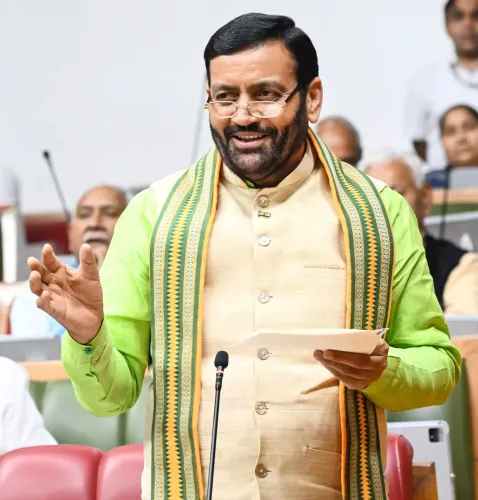
Haryana Chief Minister Nayab Singh Saini welcomed Gujarat Governor Acharya Devvrat at Sant Kabir Kutir in Chandigarh, commending efforts to turn natural farming into a people's movement and linking that work to farmers' future and environmental protection.
Key Takeaways
Haryana Chief Minister Nayab Singh Saini welcomed Gujarat Governor Acharya Devvrat at Sant Kabir Kutir in Chandigarh.
Saini praised the Governor's continuous effort to make natural farming a people's movement.
He said the Governor's guidance and dedication inspire a brighter future for farmers and environmental conservation.
Acharya Devvrat has been associated with natural-farming advocacy as Gujarat Governor.
Several Indian states have pursued natural or zero-budget farming to cut chemical inputs and support farm livelihoods.
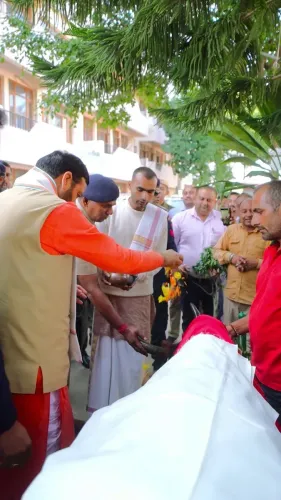
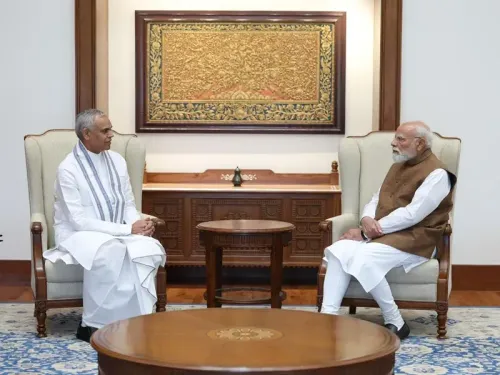
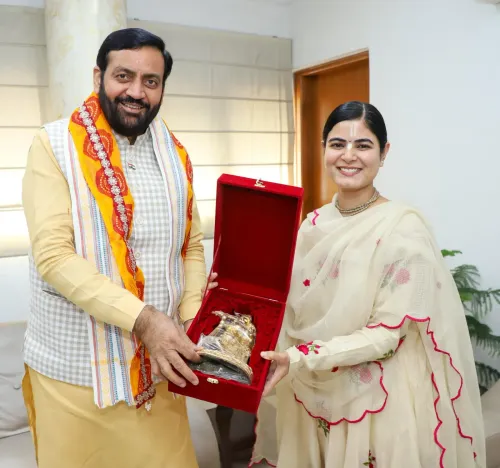
Haryana Chief Minister Nayab Singh Saini on Friday welcomed Gujarat Governor Acharya Devvrat at Sant Kabir Kutir in Chandigarh, putting natural farming — not mere protocol — at the centre of the visit. He hailed the Governor's drive to turn chemical-free cultivation into a people's movement. Two BJP-led state leaderships were thus on the same farm question: how to cut chemical inputs without leaving farmers behind.
In his post, Saini said he had offered a respectful welcome and felicitation — saadar swagat evam abhinandan — at the Chandigarh ashram. He called Acharya Devvrat's continuous effort to make natural farming a jan-andolan (people's movement) commendable, and said the Governor's guidance and dedication were giving new inspiration for a brighter future for farmers and for environmental conservation.
Welcome at Sant Kabir Kutir
The venue is an ashram, not a secretariat. That setting matched the spiritual-agrarian language around natural farming that Acharya Devvrat has long used in public life. Saini framed the visit as both courtesy and endorsement.
No new scheme, budget, or training calendar appeared in the post. The message was clear and limited: praise the method, praise the messenger, and tie both to farmers and the environment.
Natural farming as a mass campaign
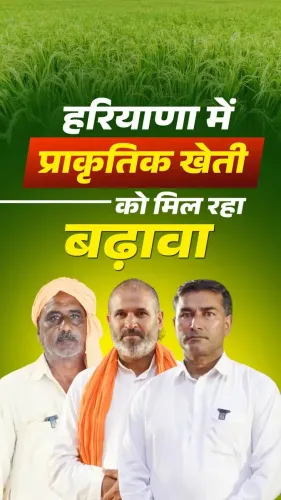
Acharya Devvrat has been associated with natural-farming advocacy during his tenure as Gujarat Governor. Across India, several states have tried natural or zero-budget models to reduce chemical fertilisers and pesticides and to protect soil, water, and farm incomes. Those experiments sit at a hard junction — cheaper inputs on one side, yield risk and labour on the other.
Haryana's countryside is a high-stakes canvas for that idea. Decades of intensive cereal farming built the state's grain surplus and also piled pressure on groundwater and soil. A jan-andolan pitch only works if it survives that arithmetic.
What Haryana's fields will test
Cross-state exchanges on agriculture are routine between aligned administrations. This one is notable because it names natural farming as a mass movement, not a boutique plot. The next chapter, if there is one, will not be written in Chandigarh. It will be written in Haryana's villages — in whether farmers get tools, training, and market cover, not just tributes.
Point of View
Pilots, or a calendar. That gap matters: Haryana farmers live on yield and procurement, not ashram rhetoric. The policy arc to watch is whether the praise becomes extension and market cover — or stays a ceremonial exchange between two aligned administrations.
NationPress
27 Nov 2026
Frequently Asked Questions
Who is Acharya Devvrat?
Acharya Devvrat is the Governor of Gujarat and a known advocate of natural farming. Haryana Chief Minister Nayab Singh Saini welcomed him at Sant Kabir Kutir in Chandigarh.
What did Nayab Singh Saini say about the Gujarat Governor?
He said Acharya Devvrat's continuous efforts to make natural farming a people's movement are commendable. He added that the Governor's guidance and dedication are inspiring a brighter future for farmers and environmental conservation.
Where is Sant Kabir Kutir?
Sant Kabir Kutir is in Chandigarh. It was the venue where the Haryana Chief Minister received and felicitated the Gujarat Governor.
What is natural farming?
Natural farming is an approach that seeks to grow crops with little or no chemical fertilisers and pesticides, often using local biological inputs. Several Indian states have promoted such models to lower input costs and protect soil and water.
Why did the Haryana CM meet the Gujarat Governor?
Saini said he welcomed and felicitated Acharya Devvrat at Sant Kabir Kutir and highlighted the Governor's work on natural farming. The interaction fits a wider pattern of states exchanging ideas on chemical-free agriculture.