CM Saini addresses natural farming workshop in Kurukshetra
Synopsis
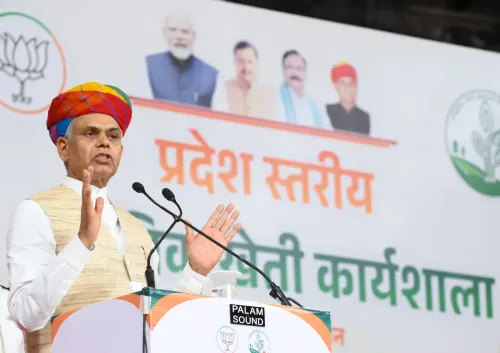
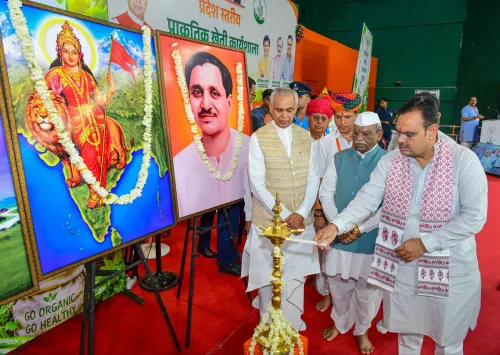
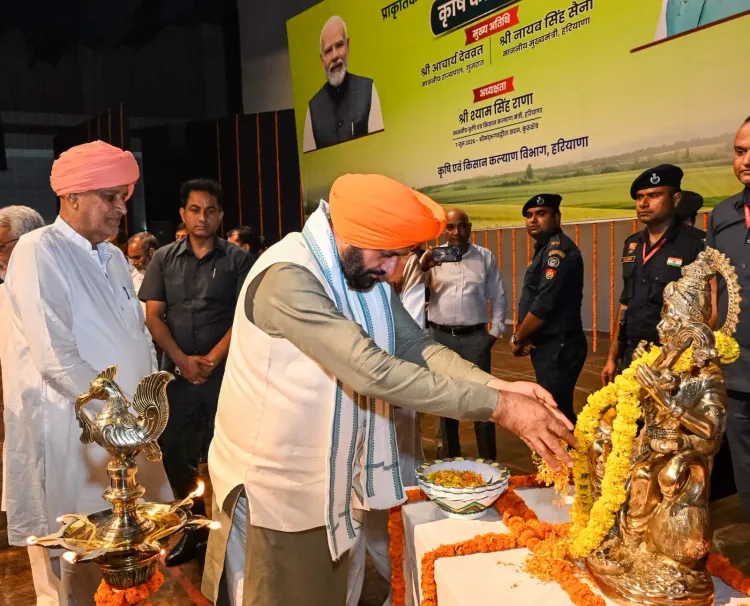
Haryana Chief Minister Nayab Singh Saini addressed the Krishi Karyashala natural and organic farming workshop in Kurukshetra on June 7, 2026, welcoming Gujarat Governor Acharya Devvrat and reinforcing the state's push toward chemical-free agriculture as a people's movement.
Key Takeaways
CM Nayab Singh Saini addressed the Krishi Karyashala natural and organic farming workshop at Kurukshetra on June 7, 2026 .
Gujarat Governor Acharya Devvrat , a national advocate for zero-budget natural farming, was present and was welcomed by the Chief Minister.
The event aligns with the central government's Paramparagat Krishi Vikas Yojana , launched in 2015 to promote organic farming clusters.
Haryana is part of a growing inter-state effort, alongside Gujarat and Andhra Pradesh , to scale natural farming models and reduce chemical input dependency.
The workshop targets improved soil health, lower input costs for farmers, and climate-resilient agriculture across the state.
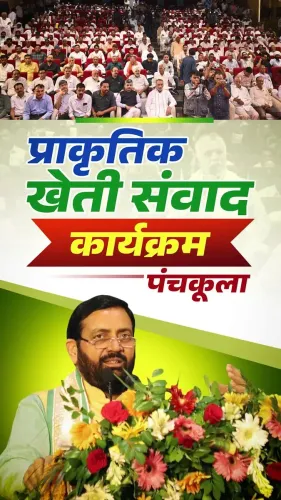
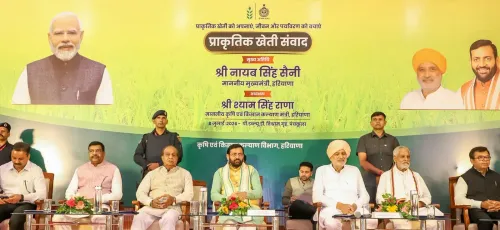
Haryana Chief Minister Nayab Singh Saini addressed a gathering at the 'Krishi Karyashala' (Agriculture Workshop) on natural and organic farming, held on the sacred grounds of Kurukshetra on Sunday, June 7, 2026. The event brought together farmers, agricultural practitioners, and policymakers to advance the cause of chemical-free cultivation across the state.
Context
Posting on X, CM Saini wrote: 'Kurukshetra ki pavan dhara par aayojit 'Krishi Karyashala' prakritik aur jaivik kheti samaroh mein sammilit hokar upasthit janasamuh ko sambodhit kiya' — 'Participated in the 'Agriculture Workshop' on natural and organic farming organised on the sacred land of Kurukshetra and addressed the assembled gathering.' He also welcomed Gujarat Governor Acharya Devvrat, noting his 'exemplary role in making natural farming a people's movement.'
Acharya Devvrat, Governor of Gujarat and a prominent national voice for zero-budget natural farming, has appeared at multiple cross-state events championing chemical-free agriculture. His presence at a Haryana government event signals an intentional effort to build inter-state momentum around sustainable farming practices.
Policy Backdrop
The workshop fits within a broader national policy push that dates to the 2015 launch of the Paramparagat Krishi Vikas Yojana (PKVY), a central scheme designed to promote organic farming through cluster-based adoption and certification support. The scheme has since been adopted across multiple states as a framework for reducing chemical input dependency.
States including Andhra Pradesh and Gujarat have scaled zero-budget natural farming models — largely drawing on methods developed by agronomist Subhash Palekar — since 2015. Haryana has increasingly aligned its agricultural outreach events with this national direction, hosting workshops that connect local farmers to proven low-input cultivation techniques.
Stakeholders and Impact
The primary beneficiaries of natural farming initiatives are Haryana's farming communities, who face persistent pressures from rising input costs and soil degradation linked to decades of chemical-intensive cultivation. Agricultural extension agencies play a key role in translating workshop learnings into on-ground adoption at the village level.
Events of this kind also serve a wider climate-resilience agenda: natural farming methods are associated with improved soil health, reduced water consumption, and lower greenhouse gas emissions from agriculture — outcomes that align with India's international climate commitments. The participation of a sitting governor lends institutional weight to what organisers have framed as a mass movement.
What's Next
The focus now shifts to whether Haryana will translate workshop momentum into concrete policy steps — such as integrating natural farming targets into existing state agricultural schemes or announcing dedicated budgetary support. Observers will also watch for any references to such state-level activities in the next Union agriculture budget or parliamentary committee deliberations on sustainable farming. CM Saini's public engagement at events featuring national advocates like Acharya Devvrat suggests the state intends to keep natural farming prominently on its policy agenda through 2026 and beyond.
Point of View
Reinforcing the framing of natural farming as both a civilisational value and a modern policy imperative. This pattern of cross-state coordination on sustainable agriculture suggests the party is building a unified narrative ahead of potential Union budget announcements on farm-input subsidies and soil health. Whether the workshop momentum translates into measurable adoption targets will be the real test of the initiative's seriousness.
NationPress
24 Oct 2026
Frequently Asked Questions
What is the Krishi Karyashala natural farming workshop in Kurukshetra?
The Krishi Karyashala is an agriculture workshop on natural and organic farming organised in Kurukshetra, Haryana, aimed at encouraging farmers to shift away from chemical-intensive cultivation toward sustainable, low-input methods.
Who is Acharya Devvrat and what is his role in natural farming?
Acharya Devvrat is the Governor of Gujarat and a prominent national advocate for zero-budget natural farming, widely credited with helping scale chemical-free agriculture across multiple Indian states.
What is Paramparagat Krishi Vikas Yojana?
Paramparagat Krishi Vikas Yojana (PKVY) is a central government scheme launched in 2015 to promote organic farming through cluster-based adoption, training, and certification support for farmers across India.
What is Nayab Singh Saini's stance on natural farming in Haryana?
Chief Minister Nayab Singh Saini has publicly supported natural and organic farming, participating in state-level workshops and welcoming national advocates to build momentum for reducing chemical input use among Haryana's farmers.
Why is Kurukshetra chosen for agricultural events in Haryana?
Kurukshetra is a historically and culturally significant district in Haryana, frequently used for large public gatherings including agricultural and policy events, lending symbolic importance to initiatives held there.