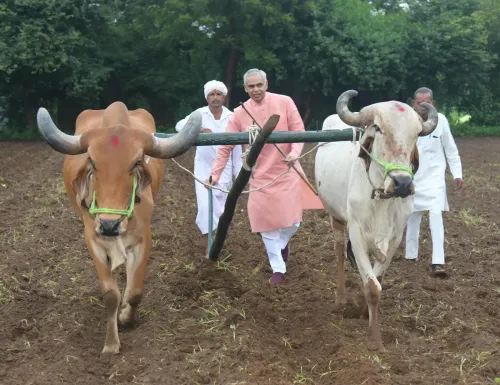
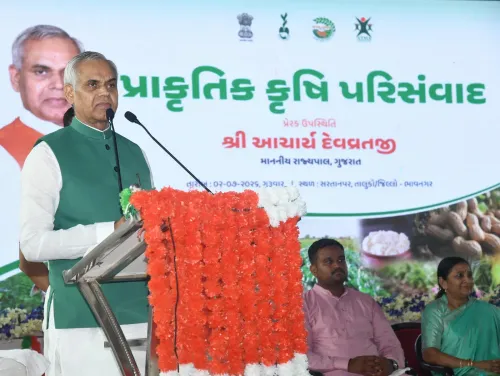
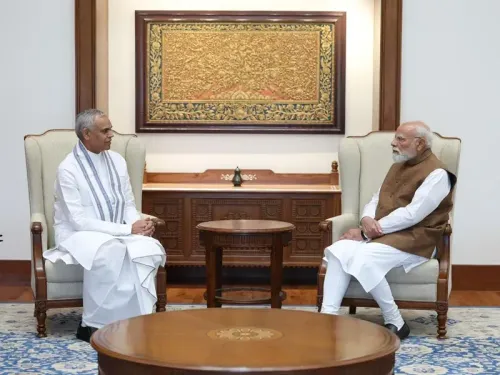
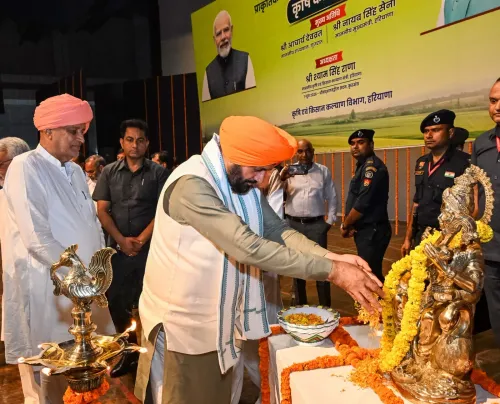
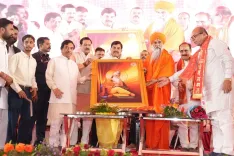
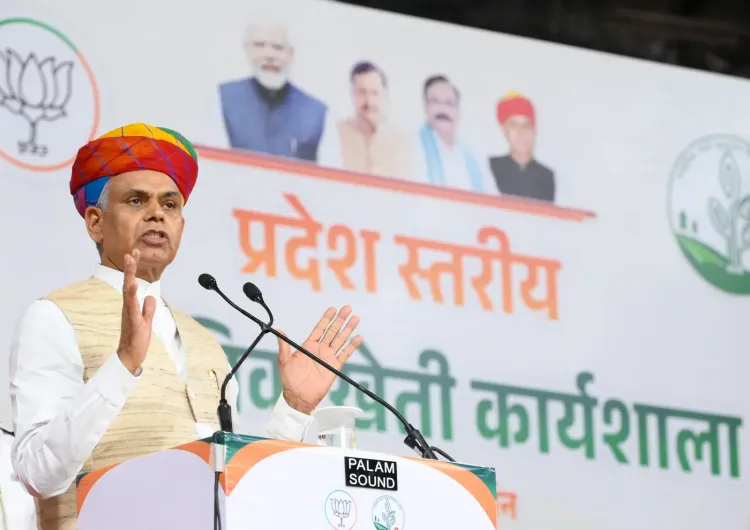
Gujarat Governor Devvrat calls chemical farming a 'sin' at Jaipur workshop
Synopsis
Gujarat Governor Acharya Devvrat did not mince words at a Jaipur farming workshop — calling chemical agriculture a 'sin' and warning that future generations will not forgive today's urea-dependent farmers. With BJP Kisan Morcha now pledging district-level campaigns across Rajasthan, the natural farming push is moving from policy rhetoric to organised political mobilisation.
Key Takeaways
Gujarat Governor Acharya Devvrat called chemical farming a 'sin' at a natural farming workshop in Jaipur on 12 June 2025 .
He cited the contrast between M.S.
Swaminathan's recommended 13 kg of nitrogen per 2.5 acres and today's use of 13 bags of urea per acre in states like Punjab and Haryana .
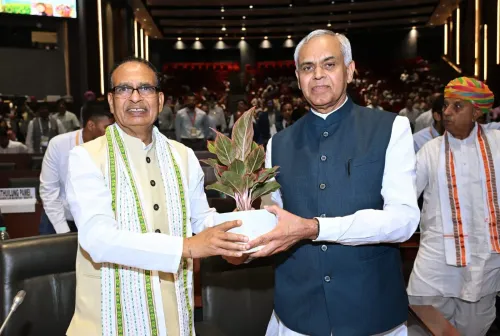
The workshop was organised by BJP Kisan Morcha and attended by Rajasthan CM Bhajanlal Sharma , Deputy CM Prem Chand Bairwa , and Rajasthan Governor Haribhau Bagde .
Kailash Choudhary announced district- and constituency-level natural farming workshops across Rajasthan , with model villages to be developed.
CM Sharma claimed Rajasthan is now selling surplus electricity to other states, citing power sector progress since taking office.
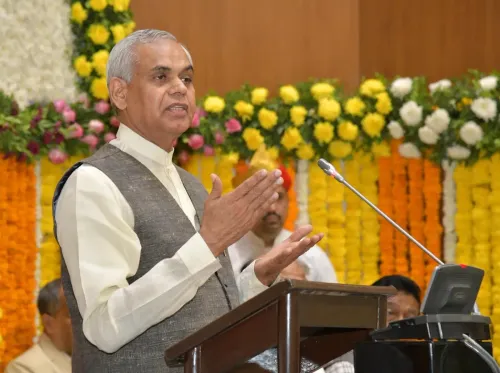
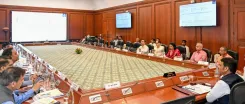
Gujarat Governor Acharya Devvrat on Thursday, 12 June issued a sharp warning against chemical-intensive agriculture at a natural farming workshop in Jaipur, declaring that unchecked use of chemical fertilisers amounts to a moral failure toward future generations. Addressing the event at Sawai Mansingh Indoor Stadium, Devvrat said the country's soil health has been gravely damaged and the consequences will be borne by those who come after us.
Key Remarks by the Governor
'If we do not wake up in time, future generations will never forgive us. Today, we are not farming but are committing a sin,' Devvrat said, drawing a direct moral equivalence between chemical farming and long-term harm to society.
Invoking the Green Revolution era, Devvrat pointed out that agricultural scientist M.S. Swaminathan had originally recommended around 13 kg of nitrogen for 2.5 acres based on the needs of that time. He contrasted that with the present reality: 'Today, farmers in states like Haryana and Punjab are applying 13 bags of urea per acre. If this is not destruction, what is?'
He further alleged that indiscriminate use of chemical fertilisers has harmed soil biodiversity and contaminated food chains. 'Millions of tonnes of urea have ruined generations. The poison entering our food ultimately affects human health and leads to serious diseases,' he said.
The Workshop and Its Organisers
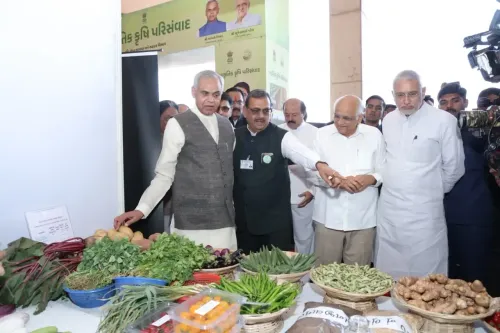
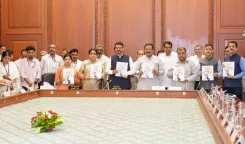
The workshop was organised by the Bharatiya Janata Party (BJP) Kisan Morcha as part of a broader campaign to promote natural farming across Rajasthan. It brought together progressive farmers, agricultural experts, and BJP workers from across the state.
The event was attended by Rajasthan Governor Haribhau Bagde, Chief Minister Bhajanlal Sharma, Deputy Chief Minister Prem Chand Bairwa, state BJP president Madan Rathore, and several senior BJP leaders.
What the Rajasthan Government Said
Chief Minister Bhajanlal Sharma used the platform to highlight his government's record in the water and power sectors. 'For four decades, Rajasthan depended on others for electricity. Today, even during peak summer demand, we are not only meeting our own requirements but are also selling power to other states,' Sharma said.
BJP Kisan Morcha's Campaign Plans
Former Union Minister and BJP Kisan Morcha state president Kailash Choudhary announced that the organisation would launch an extensive campaign to encourage natural farming in every village of Rajasthan. Workshops are planned for every district and Assembly constituency, with model villages to be developed as showcases for natural farming practices.
'The day is not far when a Collector's son will say he does not want to become a Collector but a farmer,' Choudhary said, expressing confidence in agriculture's future.
State BJP president Madan Rathore praised Choudhary's political journey, noting that previous BJP Kisan Morcha heads — including Bhagirath Choudhary and the late Sanwarlal Jat — had gone on to become Union ministers. 'Signs of future greatness are visible early,' Rathore remarked.
Why This Matters
India's dependence on chemical inputs — particularly urea — has been a subject of sustained policy debate. Soil health surveys have repeatedly flagged declining organic carbon levels in agricultural land across Punjab, Haryana, and other Green Revolution states. The Centre has been pushing natural and zero-budget farming through schemes such as the Paramparagat Krishi Vikas Yojana, but adoption remains limited. Events like this workshop signal that the BJP is now actively mobilising its farmer-facing unit behind the shift, giving the agenda both political and policy weight.
Point of View
Coming from a sitting Governor at a BJP-organised event, signals how far the party wants to push natural farming as a values-driven issue, not just an agricultural one. Yet the structural problem remains: urea is heavily subsidised by the Centre, making it artificially cheap and economically rational for farmers to over-apply. No amount of workshop rhetoric changes that incentive unless subsidy reform follows. The BJP Kisan Morcha's campaign will face its real test not in stadiums but in the subsidy ledger.
NationPress
26 Oct 2026
Frequently Asked Questions
What did Gujarat Governor Acharya Devvrat say about chemical farming?
Devvrat called chemical farming a 'sin' at a Jaipur workshop on 12 June, warning that excessive urea use has devastated soil health and that future generations will not forgive the current generation for it. He cited a sharp rise in urea application in Punjab and Haryana compared to what scientist M.S. Swaminathan had originally recommended.
Where was the natural farming workshop held and who organised it?
The workshop was held at Sawai Mansingh Indoor Stadium in Jaipur on 12 June 2025, organised by the BJP Kisan Morcha as part of its campaign to promote natural farming across Rajasthan.
Who attended the Jaipur natural farming workshop?
Senior leaders including Rajasthan Governor Haribhau Bagde, Chief Minister Bhajanlal Sharma, Deputy Chief Minister Prem Chand Bairwa, state BJP president Madan Rathore, and BJP Kisan Morcha state president Kailash Choudhary attended the event.
What campaign is BJP Kisan Morcha planning for natural farming in Rajasthan?
BJP Kisan Morcha state president Kailash Choudhary announced workshops in every district and Assembly constituency across Rajasthan, along with the development of model villages to demonstrate natural farming practices.
Why is urea overuse considered harmful to soil?
According to Governor Devvrat, decades of heavy urea application have harmed soil biodiversity, contaminated food chains, and contributed to serious human health diseases. Soil health surveys in Green Revolution states have separately flagged declining organic carbon levels as a result of chemical-intensive farming.