CM Saini Hails Haryana Farmers as India's 2nd Largest Food Grain Contributors
Synopsis
Haryana Chief Minister Nayab Singh Saini on 30 June 2026 highlighted that Haryana's farmers are the second-largest contributors to India's food grain reserves, spotlighting the state's critical role in national food security and the BJP government's farmer-first political messaging.
Key Takeaways
Haryana CM Nayab Singh Saini stated on 30 June 2026 that Haryana ranks second nationally in food grain contributions.
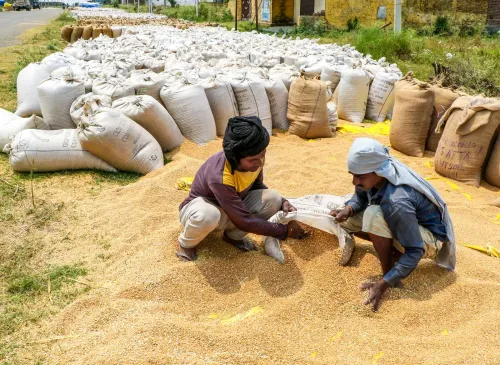
Haryana is a major producer of wheat and paddy , contributing an estimated 15–20 per cent of total national food grain procurement in recent seasons.
Punjab holds the top position in procurement; Haryana consistently ranks second, making both states the backbone of India's Public Distribution System .
Key procurement agencies in the state include HAFED and FCI , which operate across major agricultural districts such as Karnal , Ambala , Hisar , and Sirsa .
The statement coincides with the kharif sowing season 2026 , signalling active government outreach to the farming community.
CM Saini has positioned farmer welfare as a central plank of his government since taking office in October 2024 .
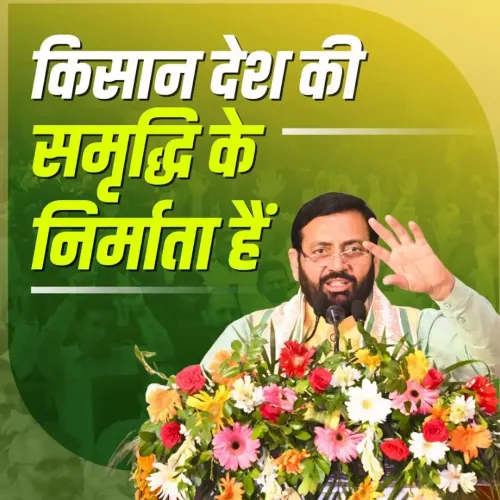
Haryana Chief Minister Nayab Singh Saini on Tuesday, 30 June 2026, paid tribute to the state's farming community, declaring that Haryana's hardworking farmers make the second-largest contribution to the country's food grain reserves — underscoring the state's outsized role in national food security.
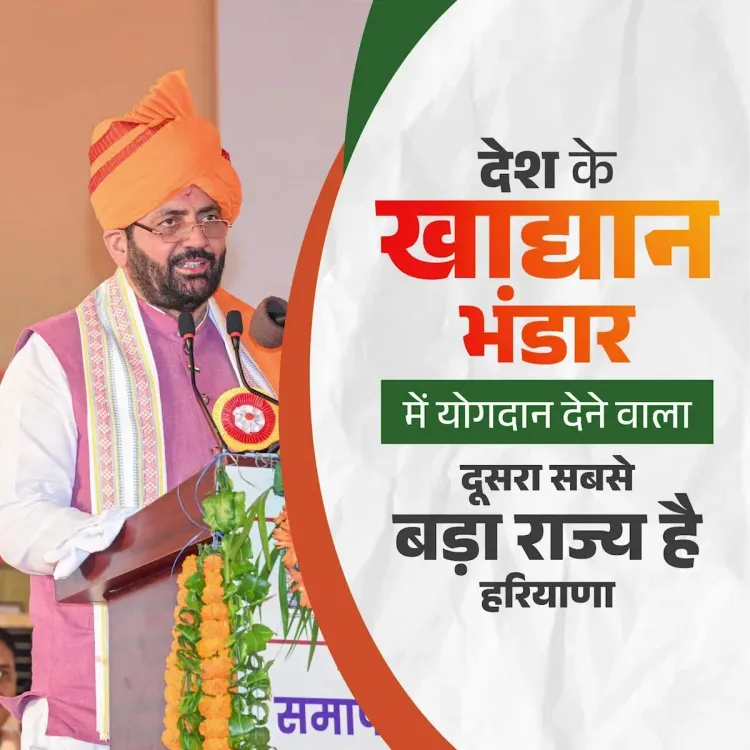
Posting on X, CM Saini wrote: 'देश के खाद्यान्न भंडार में दूसरा सबसे बड़ा योगदान हरियाणा के मेहनतकश किसानों का है' — ('The hardworking farmers of Haryana make the second-largest contribution to the country's food grain reserves.') The post was accompanied by a video, signalling a broader outreach effort directed at the state's agricultural community.
Context
Haryana, though one of India's smaller states by area, has long punched far above its weight in agricultural output. The state is a major producer of wheat and paddy (rice), the two crops that form the backbone of the central government's food grain procurement system managed through the Food Corporation of India (FCI). Punjab has historically held the top position in procurement contributions, with Haryana consistently ranking second.
The claim by CM Saini aligns with well-established procurement data: in most recent kharif and rabi seasons, Haryana has contributed between 15 to 20 per cent of total national food grain procurement — a figure that has made it indispensable to India's Public Distribution System (PDS) and strategic buffer stock management.
Policy Backdrop
The statement comes in the context of ongoing debates around Minimum Support Price (MSP) guarantees and farmer welfare in Haryana. The state government under CM Saini has repeatedly positioned itself as a champion of farmer interests since he assumed office in October 2024, following the BJP's victory in the Haryana Assembly elections. Agricultural policy — particularly assured procurement at MSP — has remained a politically sensitive issue in the state.
The central government's procurement operations through agencies like HAFED (Haryana State Cooperative Supply and Marketing Federation) and FCI are the primary channels through which Haryana's farmers sell their produce. Timely and full procurement at MSP is a core demand of farmer groups across the state's agricultural belt spanning Karnal, Ambala, Hisar, and Sirsa districts.
Stakeholders and Impact
Haryana's farming sector employs a significant portion of the state's rural population, and acknowledgement of their contribution at the highest political level carries both symbolic and electoral weight. For farmers in districts like Karnal and Kaithal — often called the 'grain bowl of Haryana' — such recognition from the Chief Minister reinforces expectations of continued government support for procurement, irrigation, and input subsidies.
The post also speaks to a broader national audience: India's food security architecture depends critically on the surplus-producing states of Punjab and Haryana, and any policy shift affecting these two states has downstream consequences for the PDS beneficiaries across the country. CM Saini's statement implicitly makes the case for sustained central government investment in Haryana's agricultural infrastructure.
What's Next
With the kharif sowing season underway as of June 2026, the timing of CM Saini's post is likely tied to ongoing procurement cycles and farmer outreach ahead of the season. State governments in agricultural heartlands typically ramp up communication with farming communities during sowing and procurement windows to build confidence in the support system. Whether this statement is followed by concrete policy announcements — such as enhanced procurement targets, bonuses over MSP, or infrastructure upgrades — will determine its practical impact beyond political signalling.
Point of View
Reinforces the BJP government's pro-farmer credentials, and implicitly pressures the centre to maintain robust procurement commitments. Coming during the kharif sowing window, the timing is unlikely to be coincidental — it reflects the standard playbook of agricultural-state politicians who must constantly demonstrate solidarity with farmers ahead of seasonal stress points. The broader arc here is Saini's effort to consolidate the rural vote bank that delivered the BJP a surprise third consecutive term in Haryana in 2024, by keeping farmer welfare at the top of the political discourse even in the absence of a specific crisis or announcement.
NationPress
29 Sept 2026
Frequently Asked Questions
Which state contributes the most to India's food grain reserves?
Punjab is the largest contributor to India's food grain reserves, followed by Haryana in second place, as highlighted by CM Nayab Singh Saini on 30 June 2026 .
What did Haryana CM Nayab Singh Saini say about farmers on 30 June 2026?
CM Nayab Singh Saini stated that Haryana's hardworking farmers make the second-largest contribution to the country's food grain reserves, posting the message on X along with a video.
What crops make Haryana a major food grain producer?
Haryana is primarily known for producing wheat and paddy (rice) , which are procured at Minimum Support Price (MSP) by agencies like HAFED and the Food Corporation of India (FCI) .
When did Nayab Singh Saini become Chief Minister of Haryana?
Nayab Singh Saini became Chief Minister of Haryana in October 2024 following the BJP's victory in the Haryana Assembly elections .
Which districts in Haryana are the main agricultural centres?
Key agricultural districts in Haryana include Karnal , Kaithal , Ambala , Hisar , and Sirsa , which together form the core of the state's grain production belt.