CM Saini Calls for Biodiversity Conservation on Int'l Day
Synopsis
Haryana Chief Minister Nayab Singh Saini marked International Day for Biological Diversity on 22 May by calling for a collective resolve to conserve biological diversity and natural resources, aligning the state with India's CBD commitments and the Kunming-Montreal Global Biodiversity Framework targets for 2030.
Key Takeaways
Haryana Chief Minister Nayab Singh Saini issued a message on 22 May for International Day for Biological Diversity , urging conservation of biodiversity and natural resources.
India ratified the Convention on Biological Diversity in 1994 and enacted the Biological Diversity Act in 2002 to meet its obligations.
The National Biodiversity Action Plan (2008) guides state-level conservation strategies, including in Haryana .
India endorsed the Kunming-Montreal Global Biodiversity Framework in 2022 , setting biodiversity protection targets through 2030 .
Haryana's agrarian economy and ecosystems — including the Aravalli hills and wetlands — make biodiversity conservation directly relevant to farmers and rural communities.
State biodiversity board activities and updates to Haryana's action plans will be key to watch ahead of future CBD meetings.
Haryana Chief Minister Nayab Singh Saini on Friday, 22 May marked International Day for Biological Diversity by calling on citizens to pledge the conservation of biological diversity and the sustainable development of natural resources, with the goal of securing a safe and balanced environment for future generations.
Context
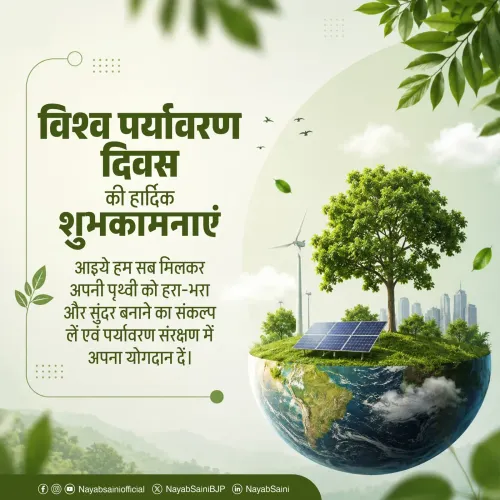
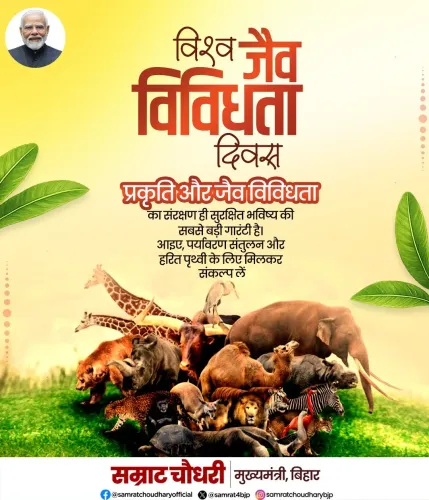
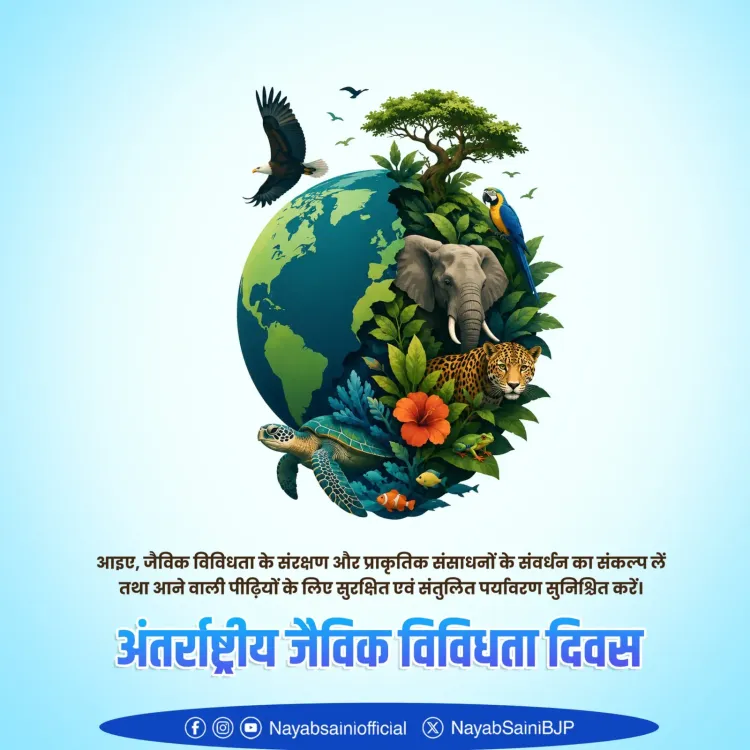
In his post on X, CM Saini wrote: 'आइए, जैविक विविधता के संरक्षण और प्राकृतिक संसाधनों के संवर्धन का संकल्प लें तथा आने वाली पीढ़ियों के लिए सुरक्षित एवं संतुलित पर्यावरण सुनिश्चित करें।' ['Let us resolve to conserve biological diversity and enhance natural resources, and ensure a safe and balanced environment for future generations.'] The message was issued on the occasion of the United Nations-observed International Day for Biological Diversity, commemorated annually on 22 May.
The day was established to raise global awareness of biodiversity loss and to reinforce commitments under the Convention on Biological Diversity (CBD), which was opened for signature at the Rio Earth Summit in 1992. India ratified the CBD in 1994.
Policy Backdrop
India enacted the Biological Diversity Act in 2002 to translate its CBD commitments into domestic law, regulating access to biological resources and ensuring equitable benefit-sharing with local communities. A National Biodiversity Action Plan followed in 2008, providing a framework for state-level conservation strategies.
Most recently, India endorsed the Kunming-Montreal Global Biodiversity Framework in 2022, which set updated and more ambitious targets for biodiversity protection through 2030. Haryana, as a predominantly agrarian state with landscapes spanning the Aravalli hills and significant wetland areas, has a direct stake in biodiversity outcomes that affect both farming communities and ecosystem services.
Stakeholders and Impact
The call to action is particularly relevant for Haryana's farming communities and rural populations, who depend on healthy ecosystems for soil fertility, water availability, and agricultural productivity. Haryana's biodiversity — from its wetlands to its semi-arid Aravalli stretches — supports livelihoods across the state.
State biodiversity boards play a central role in implementing the Biological Diversity Act at the ground level, engaging local communities in the documentation and protection of biological resources. CM Saini's statement reinforces the state's alignment with both national legislation and global conservation targets.
What's Next
Observers will watch for concrete follow-through from the Haryana government in the form of updated state biodiversity action plans or new conservation initiatives, particularly in the lead-up to future CBD Conference of the Parties meetings. Such statements from state executives typically serve as a prompt for state biodiversity boards to review and publicise ongoing conservation programmes.
As global biodiversity targets under the Kunming-Montreal Framework approach their 2030 deadline, state-level political messaging is expected to translate increasingly into measurable policy commitments on land use, wetland protection, and sustainable agriculture.
Point of View
Where soil degradation and water stress are live governance concerns, such statements carry more policy weight than ceremonial messaging alone might suggest. The post fits a broader pattern of BJP-governed states signalling ecological responsibility as India's 2030 Kunming-Montreal targets draw closer and domestic scrutiny of biodiversity outcomes intensifies. Whether the messaging translates into updated state-level action plans or new conservation investments will be the real measure of its significance.
NationPress
6 Oct 2026
Frequently Asked Questions
What is International Day for Biological Diversity?
International Day for Biological Diversity is a United Nations -observed annual event held on 22 May to raise awareness about biodiversity loss and reaffirm global commitments to conservation under the Convention on Biological Diversity .
What did Haryana CM Nayab Singh Saini say on Biodiversity Day?
CM Nayab Singh Saini called on citizens to pledge the conservation of biological diversity and the sustainable development of natural resources, with the aim of ensuring a safe and balanced environment for future generations.
What is India's law on biodiversity conservation?
India enacted the Biological Diversity Act in 2002 to implement its obligations under the Convention on Biological Diversity , regulating access to biological resources and ensuring benefit-sharing with local communities.
What is the Kunming-Montreal Global Biodiversity Framework?
The Kunming-Montreal Global Biodiversity Framework , endorsed by India in 2022 , sets updated international targets for biodiversity protection through 2030 , replacing the earlier Aichi Biodiversity Targets.
Why is biodiversity important for Haryana?
Haryana is an agrarian state whose farming communities depend on healthy ecosystems for soil fertility and water availability. The state's Aravalli hills and wetlands also support significant regional biodiversity that underpins rural livelihoods.