CM Saini Marks Valmiki Jayanti, Cites SC Quota Reform
Synopsis
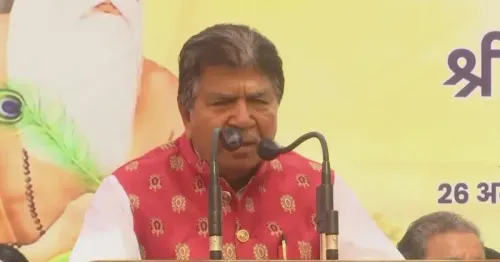
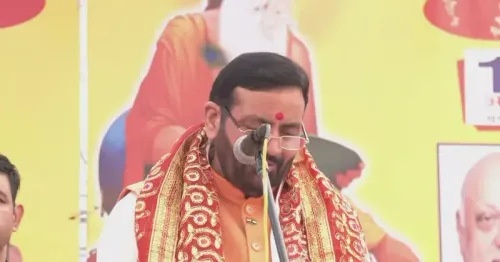
Haryana CM Nayab Singh Saini addressed a state-level Valmiki Jayanti function at Chandigarh's Sant Kabir Kutir on October 26, linking the sage's Ramayana to a 'constitution of human society' and citing SC reservation sub-categorisation and new welfare commissions as recognition of the community's contribution to nation-building.
Key Takeaways
CM Nayab Singh Saini addressed a state-level Maharshi Valmiki Jayanti function at Sant Kabir Kutir, Chandigarh on October 26, 2026 .
He described the Ramayana as 'not merely a religious text but like the constitution of human society,' emphasising its message against caste discrimination.
Saini cited sub-categorisation of Scheduled Caste reservations and formation of welfare commissions as concrete government steps honouring the Valmiki community.
The move builds on the Supreme Court's landmark 2024 ruling permitting states to sub-classify SC reservations for more targeted benefit delivery.
Exact names, scope, and timelines of the commissions mentioned by the CM have not yet been officially detailed in public notifications.
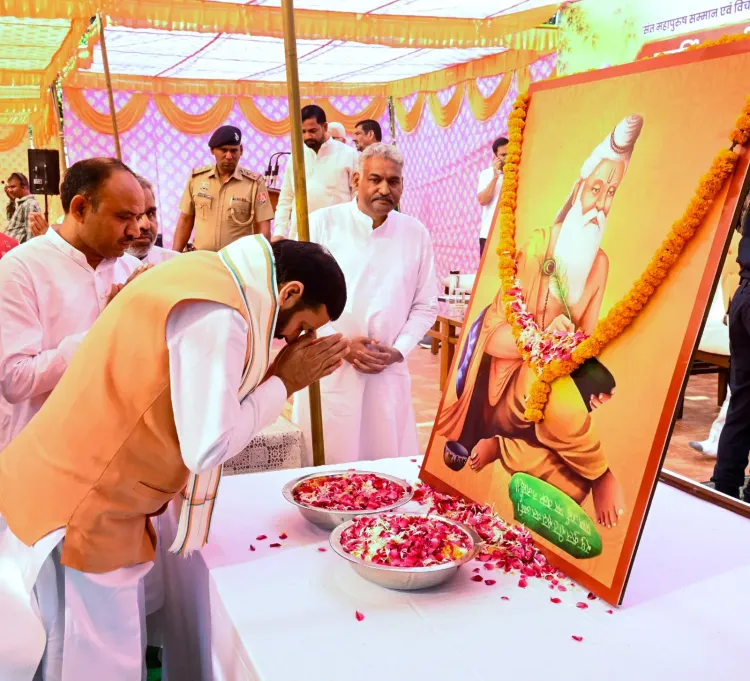
At Chandigarh's Sant Kabir Kutir on Monday, October 26, 2026, Haryana Chief Minister Nayab Singh Saini addressed a state-level function for Maharshi Valmiki Jayanti — and turned a cultural observance into a pointed statement on social justice, linking the sage's philosophy to the government's ongoing work on Scheduled Caste reservation sub-categorisation.
Saini opened with reverence: 'Bhagwan Maharshi Valmiki ji ke anuyayiyon ke charan Chandigarh sthit Sant Kabir Kutir mein pade hain, yeh param saubhagya ki baat hai' — 'It is a matter of great fortune that the followers of Lord Maharshi Valmiki have graced Sant Kabir Kutir in Chandigarh.' He thanked all attendees and described the gathering as a moment of collective honour for the Valmiki community.
Ramayana as 'constitution of human society'
The Chief Minister framed Maharshi Valmiki's legacy in terms far wider than religion. The Ramayana, he argued, gave humanity a code of dignity, compassion, and freedom from the divisions of caste, varna, and class. 'The Ramayana is not merely a religious text,' Saini said, 'but is like the constitution of human society.' It is a striking equivalence — placing an ancient epic alongside a modern founding document as a shared moral framework.
That framing matters because Valmiki Jayanti is not simply a devotional occasion. For large sections of the Scheduled Castes — particularly communities who trace their lineage and identity to the sage's tradition — it is also a moment of political visibility. Saini's appearance at the state-level programme, and his choice of language, reflected that dual register.
Sub-categorisation of SC Reservations: the policy hook
The sharpest policy signal came toward the end of his remarks. Saini stated that, in recognition of the Valmiki community's contribution to nation-building, the government has carried out sub-categorisation of reservations within Scheduled Castes and constituted commissions for the protection of their welfare and rights.
This is a direct reference to the constitutional and judicial ground that shifted after the Supreme Court's 2024 ruling, which permitted states to sub-classify Scheduled Caste reservations to direct benefits more precisely toward the most disadvantaged sub-groups within the broader SC category. Articles 15(4) and 16(4) of the Constitution have long enabled reservation, but the question of whether states could further stratify those reservations had remained contested for decades. The 2024 judgment settled it — and Haryana's government has cited the ruling as a basis for action.
The specific names, scope, and rollout timelines of the commissions Saini referenced have not been independently confirmed, and the precise contours of Haryana's sub-categorisation framework remain to be detailed in official notifications. Still, the political signal is clear: the government wants the Valmiki community to see welfare reform and reservation restructuring as a concrete outcome of its tenure.
A pattern, not a one-off
BJP-led state governments have consistently woven Valmiki Jayanti events into their political calendar — using the occasion to simultaneously honour a community's cultural identity and restate commitments on affirmative action. For Saini, who represents a party that has made Scheduled Caste outreach central to its Haryana strategy, the Sant Kabir Kutir event fits a well-established playbook: religious-cultural symbolism reinforced by a specific policy pledge.
What keeps this beyond routine ceremony is the sub-categorisation angle — a live, consequential policy question with real implications for how benefits flow inside the SC reservation umbrella. Watch for follow-up statements in the Haryana Assembly and official gazette notifications that flesh out exactly which communities gain, and by how much.
The sage composed an epic about dignity across divides. More than two millennia later, governments are still trying to translate that aspiration into policy line-items — and being judged on whether the translation holds.
Point of View
However undetailed, signals that the government intends to operationalise sub-categorisation before the next electoral cycle. Whether implementation matches the messaging will define how much political capital the BJP actually earns from this outreach.
NationPress
26 Oct 2026
Frequently Asked Questions
What is Maharshi Valmiki Jayanti and why is it significant for Scheduled Castes?
Maharshi Valmiki Jayanti is an annual observance honouring the ancient sage credited with composing the Ramayana. For large sections of the Scheduled Castes — particularly those who identify with the Valmiki tradition — it is a major cultural and community event that also carries political significance.
What is SC reservation sub-categorisation in Haryana?
SC reservation sub-categorisation refers to classifying the existing Scheduled Caste reservation quota into further tiers so that the most disadvantaged sub-groups receive more targeted benefits. The Supreme Court's 2024 judgment explicitly permitted Indian states to undertake such sub-classification under Articles 15(4) and 16(4) of the Constitution.
What did CM Nayab Singh Saini say about the Ramayana at the Valmiki Jayanti event?
CM Saini said the Ramayana is not merely a religious text but is 'like the constitution of human society,' arguing that Maharshi Valmiki used it to give humanity a message of dignity, compassion, and transcendence of caste and class divisions.
Where was the Valmiki Jayanti state function held in 2026?
The state-level Valmiki Jayanti function was held at Sant Kabir Kutir in Chandigarh on October 26, 2026, and was attended by Haryana CM Nayab Singh Saini.
What welfare commissions did CM Saini refer to for the Valmiki community?
CM Saini mentioned the formation of commissions for the protection of welfare and rights of Scheduled Castes in Haryana, though the specific names, scope, and timelines of these commissions have not yet been detailed in official public notifications.