CM Saini pays tribute to Ahilyabai Holkar on her death anniversary
Synopsis
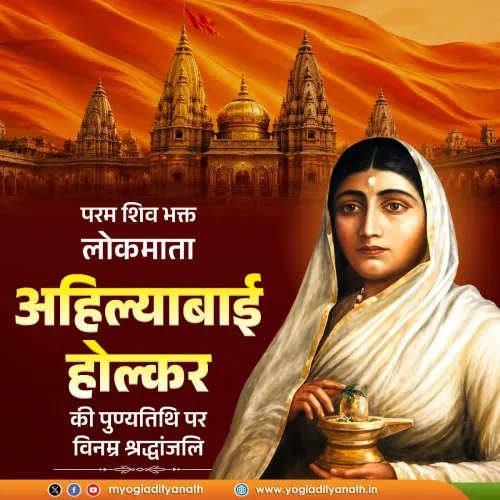
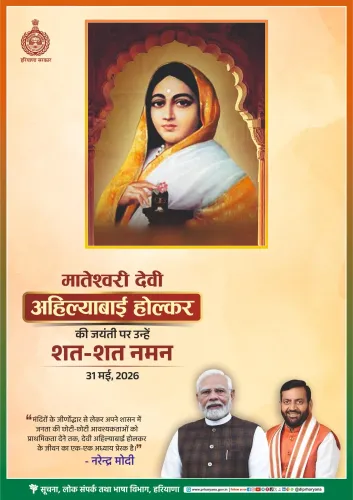
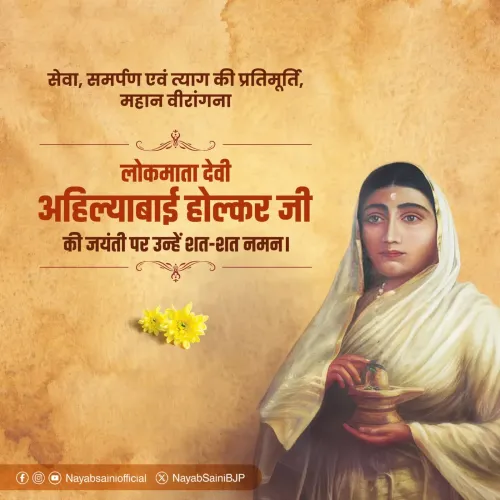
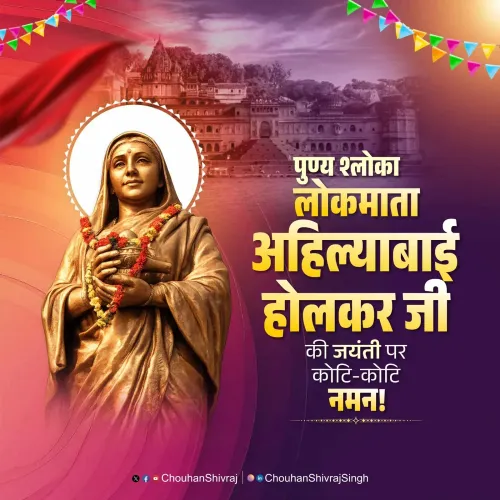
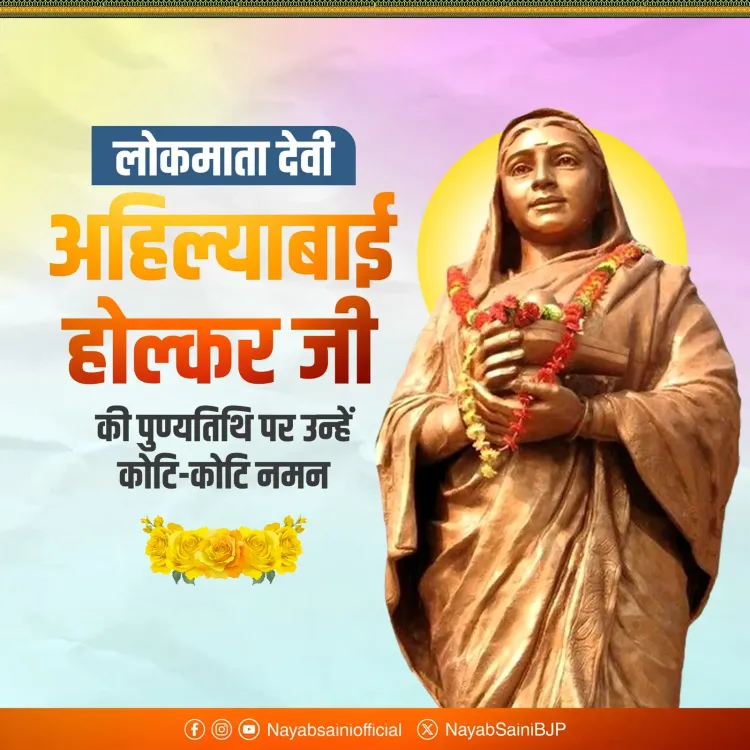
Haryana Chief Minister Nayab Singh Saini paid tribute to 18th-century Holkar ruler Devi Ahilyabai Holkar on her death anniversary, calling her a lokmata who restored temples across India and made public welfare the foundation of her reign.
Key Takeaways
Haryana CM Nayab Singh Saini paid tribute to Devi Ahilyabai Holkar on her death anniversary on 13 August 2026 .
Ahilyabai Holkar ruled Indore from 1767 to 1795 as head of the Holkar dynasty .
She is credited with restoring major temples including Kashi Vishwanath , Somnath , and shrines in Ayodhya and Dwarka .
CM Saini described her as a lokmata who made Sanatan culture's service the purpose of her life.
The tribute fits a broader BJP pattern of marking anniversaries of pre-colonial Hindu rulers associated with temple restoration and dharmic governance.
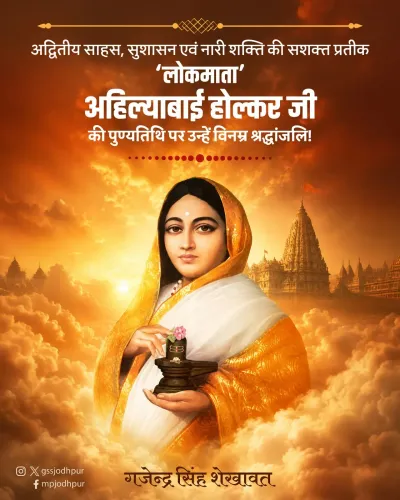
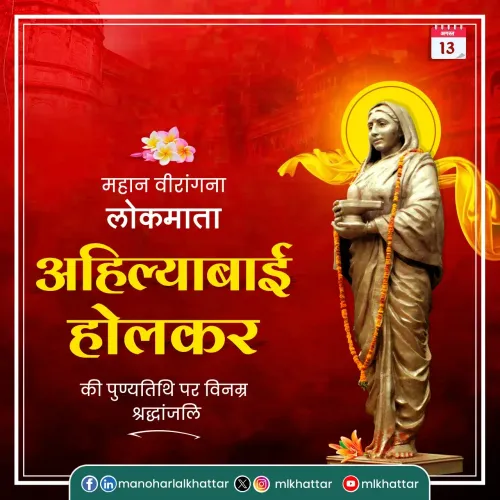
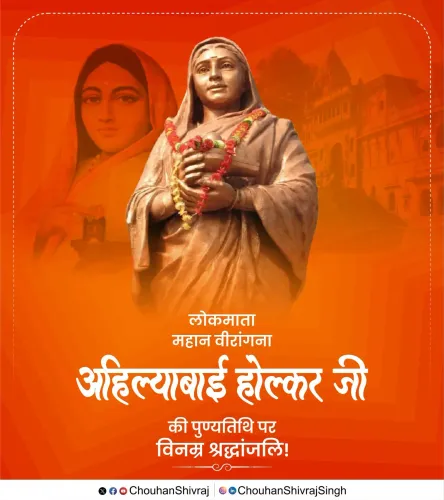
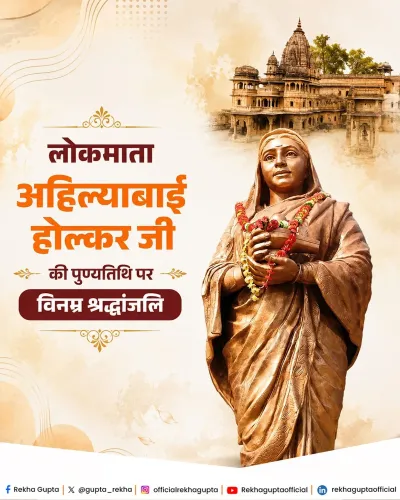
Centuries after her reign ended, Devi Ahilyabai Holkar still commands reverence that cuts across time and politics. Haryana Chief Minister Nayab Singh Saini on Thursday, 13 August 2026, marked her death anniversary with a heartfelt tribute, honouring the 18th-century Holkar queen as a lokmata — mother of the people — whose life's mission was the service of Sanatan culture.
Posting in Hindi, CM Saini wrote: 'On the death anniversary of the great warrior-queen Devi Ahilyabai Holkar — a supreme devotee of Lord Shiva who made public welfare the foundation of her governance — I bow to her with countless salutations. The lokmata who made the service of Sanatan culture the purpose of her life performed the great work of restoring temples and pilgrimage sites across the country, preserving our glorious cultural heritage. Her sacrifice, penance, and service to the nation will be remembered for ages.'
Who was Ahilyabai Holkar — and why she still matters
Devi Ahilyabai Holkar ruled the Holkar dynasty's territory of Indore from 1767 to 1795, a reign of nearly three decades that left a physical imprint on India's sacred geography. She funded and oversaw the restoration of some of Hinduism's most revered shrines — among them the Kashi Vishwanath temple in Varanasi, the Somnath temple in Gujarat, and sites in Ayodhya and Dwarka — at a time when many had fallen into disrepair or ruin.
Her legacy is not merely religious. Historians credit her with an unusually enlightened administrative record: she built roads and rest-houses, maintained law and order, and is remembered in folk memory as a ruler who governed for the people rather than over them. The title lokmata — people's mother — is the popular distillation of that memory.
BJP's recurring tribute to pre-colonial Hindu rulers
The post is part of a consistent pattern in BJP political messaging: marking the death and birth anniversaries of pre-colonial rulers associated with temple restoration, dharmic governance, and cultural continuity. For the party, figures like Ahilyabai Holkar serve as living proof of an unbroken civilisational thread — a counter-narrative to colonial-era accounts that often marginalised indigenous statecraft.
CM Saini's tribute, framed around 'sacrifice, penance, and service to the nation,' places the queen squarely within that larger cultural project. The language — yugon-yugon tak smaraneey rahegi (will be remembered for ages) — is a deliberate invocation of timelessness, not just a ceremonial gesture.
Whether Haryana marks the anniversary with state-level heritage or cultural events remains to be confirmed, but the Chief Minister's public tribute signals that Ahilyabai's memory is very much alive in the political present.
Point of View
' the party draws a direct line from 18th-century dharmic governance to its own self-image. The consistency of this pattern across BJP leaders and states suggests it is coordinated political communication, not spontaneous sentiment. For Haryana specifically, such tributes also serve a soft-power function — positioning the state government as a custodian of pan-Indian cultural heritage rather than merely a regional administration.
NationPress
13 Aug 2026
Frequently Asked Questions
Who was Devi Ahilyabai Holkar?
Devi Ahilyabai Holkar was an 18th-century ruler of the Holkar dynasty who governed Indore from 1767 to 1795 . She is celebrated for restoring major Hindu temples and pilgrimage sites across India, including Kashi Vishwanath and Somnath , and is popularly called lokmata — mother of the people.
When is Ahilyabai Holkar's death anniversary?
Ahilyabai Holkar's death anniversary, known as her punyatithi , falls in August . In 2026 , Haryana CM Nayab Singh Saini paid tribute to her on 13 August .
Which temples did Ahilyabai Holkar restore?
Ahilyabai Holkar funded the restoration of several major Hindu shrines, including the Kashi Vishwanath temple in Varanasi, the Somnath temple in Gujarat, and sacred sites in Ayodhya and Dwarka .
Why do BJP leaders pay tribute to Ahilyabai Holkar?
BJP leaders regularly mark the anniversaries of pre-colonial rulers like Ahilyabai Holkar as part of a broader cultural messaging strategy that emphasises Hindu heritage, temple restoration, and civilisational continuity — values central to the party's political identity.
What did Nayab Singh Saini say about Ahilyabai Holkar?
Haryana CM Nayab Singh Saini called Ahilyabai Holkar a supreme devotee of Lord Shiva who made public welfare the foundation of her governance and Sanatan culture's service the purpose of her life. He said her sacrifice, penance, and national service 'will be remembered for ages.'