CM Saini Pays Tribute to Shahu Maharaj on Jayanti
Synopsis
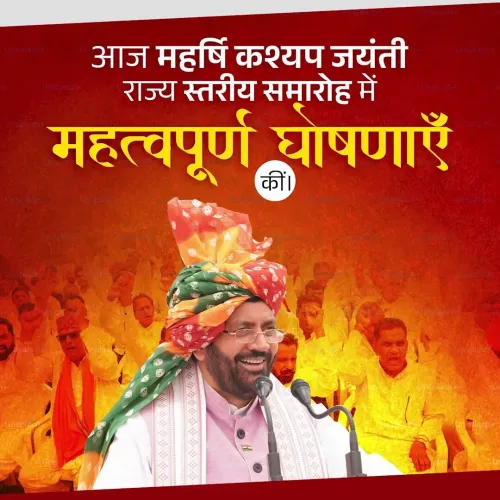
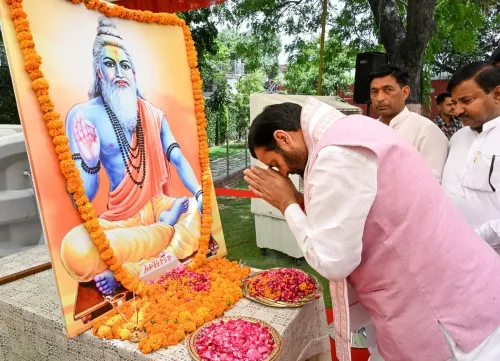
Haryana Chief Minister Nayab Singh Saini on 26 June 2026 paid tribute to Chhatrapati Shahu Ji Maharaj on his Jayanti, calling him a pioneer of social justice who made education the most powerful tool of social transformation and championed the rights of backward and marginalised communities.
Key Takeaways
Haryana Chief Minister Nayab Singh Saini posted a tribute to Chhatrapati Shahu Ji Maharaj on his birth anniversary on 26 June 2026 .
Saini described Shahu Maharaj as a 'Rajrishi' and a champion of social justice, equality, and public welfare.
Shahu Maharaj ruled Kolhapur from 1894 to 1922 and issued a landmark 50 percent reservation order for backward communities in 1902 .
His reforms are cited as a philosophical precursor to the 1950 Constitution's reservation provisions for SC and OBC groups.
The tribute reflects a broader BJP pattern of commemorating pre-independence social reformers to signal commitment to OBC and SC welfare .
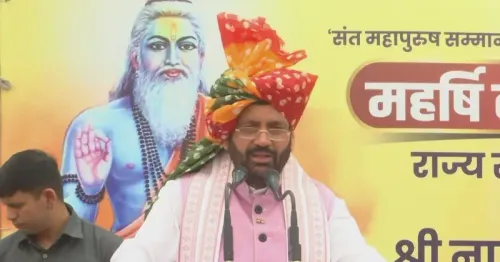
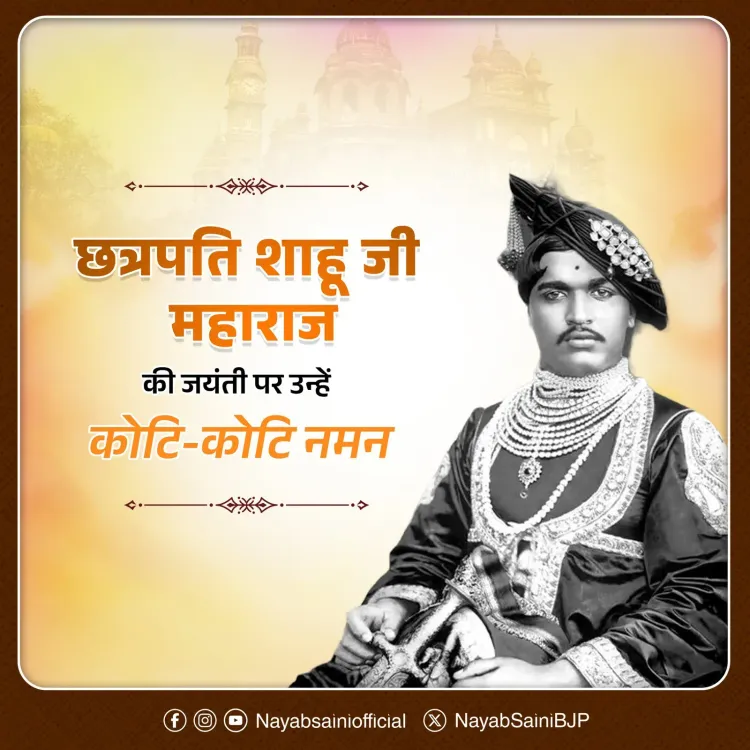
Haryana Chief Minister Nayab Singh Saini on Friday, 26 June 2026 paid tribute to Chhatrapati Shahu Ji Maharaj, the reformist Maharaja of Kolhapur, on the occasion of his birth anniversary, honouring him as a pioneer of social justice, equality, and public welfare.
Context
Saini's post, shared in Hindi on X, described Shahu Maharaj as a 'rajrishi' (royal sage) and a 'great champion of social justice, equality, and public welfare.' He wrote: 'He made education the most powerful instrument of social transformation and made a historic contribution to the protection and upliftment of the rights of the deprived, exploited, and backward classes.' The tribute coincides with the annual observance of Shahu Jayanti, marked widely by OBC and Dalit organisations across India.
Policy Backdrop
Chhatrapati Shahu Ji Maharaj ruled the princely state of Kolhapur from 1894 to 1922 and is credited with issuing one of India's earliest formal reservation orders in 1902, reserving 50 percent of posts in his administration for backward communities. He also established schools and hostels specifically for non-Brahmin and lower-caste students, removing barriers to education that had persisted for generations. His legacy is frequently cited in constitutional debates on reservation, and the 1950 Constitution's provisions for scheduled castes and backward classes draw a direct philosophical lineage from his administrative reforms.
Stakeholders and Impact
Shahu Maharaj's legacy holds particular resonance for OBC and SC communities, who regard him as a foundational figure in India's social justice movement. State-level BJP leaders, including those in Haryana, have increasingly commemorated pre-independence social reformers to signal the party's commitment to backward-class welfare and to broaden its social base. Haryana runs several active schemes for scholarships, hostels, and skill development targeted at OBC and SC students, making such tributes politically and programmatically resonant within the state.
What's Next
Observers will watch whether Haryana government follows ceremonial tributes with concrete budgetary announcements on OBC and SC education outlays in the state's coming fiscal statements. Annual observances of Shahu Jayanti are increasingly accompanied by state-level events, seminars, and scheme launches, a trend likely to continue as political parties compete for backward-class support ahead of future electoral cycles.
Point of View
The party signals ideological continuity with backward-class aspirations at a time when OBC consolidation remains a decisive electoral variable in states like Haryana. The tribute also functions as soft political messaging ahead of any future state-level events or budget cycles where OBC and SC welfare schemes will be in focus. Such commemorations rarely stand alone — they typically precede or accompany policy announcements that give the symbolism material weight.
NationPress
26 Jun 2026
Frequently Asked Questions
Who was Chhatrapati Shahu Ji Maharaj?
Chhatrapati Shahu Ji Maharaj was the Maharaja of Kolhapur from 1894 to 1922, known for issuing one of India's earliest reservation orders in 1902 and for establishing schools and hostels for lower-caste and backward-class students.
Why is Shahu Maharaj Jayanti significant?
Shahu Maharaj Jayanti marks the birth anniversary of a key figure in India's social justice movement, celebrated especially by OBC and Dalit communities who regard his 1902 reservation order as a foundational moment in the fight for equality.
What did Nayab Singh Saini say about Shahu Maharaj?
CM Saini described Shahu Maharaj as a 'Rajrishi' and said he made education the most powerful instrument of social transformation and made a historic contribution to protecting the rights of deprived, exploited, and backward classes.
What is Nayab Singh Saini's role?
Nayab Singh Saini is the Chief Minister of Haryana and a BJP leader, serving in the role since March 2024.
What was Shahu Maharaj's 1902 reservation order?
In 1902, Shahu Maharaj reserved 50 percent of posts in the Kolhapur state administration for backward communities, one of the earliest formal affirmative-action measures in Indian history, later cited in debates that shaped the 1950 Constitution's reservation provisions.