CM Saini Pays Tribute to Shaheed Udham Singh on Martyrdom Anniversary
Synopsis
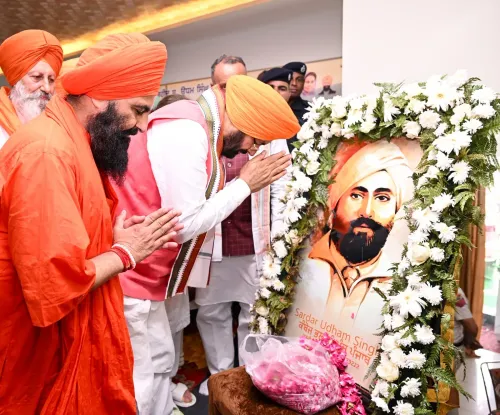
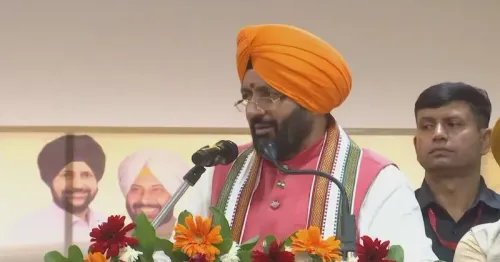
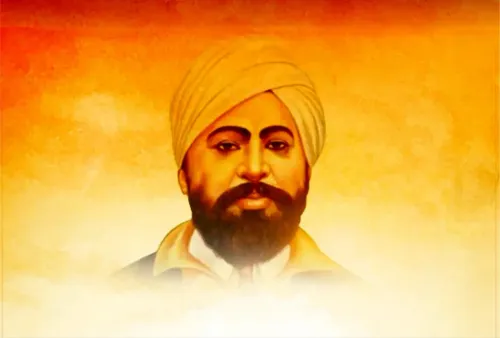
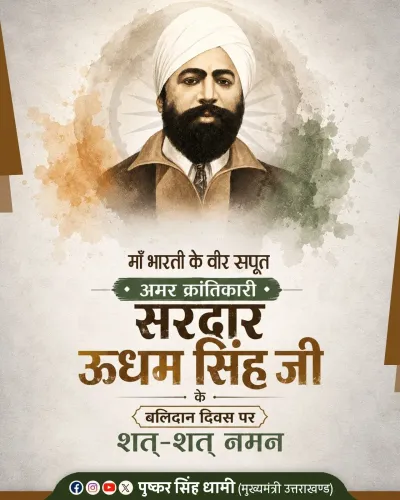
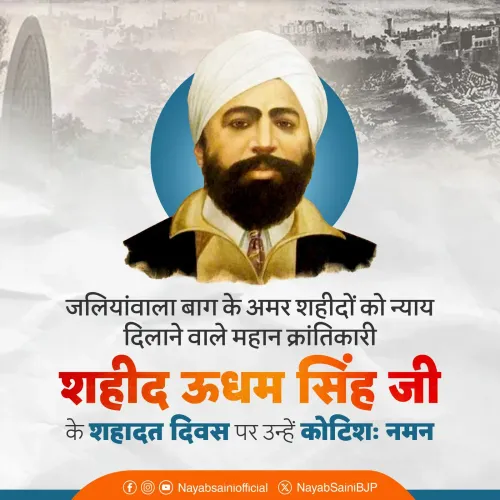
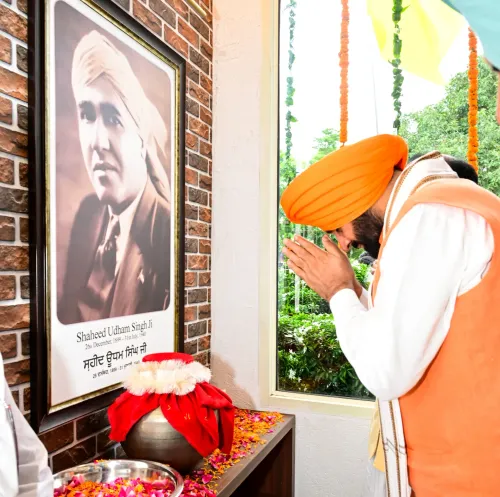
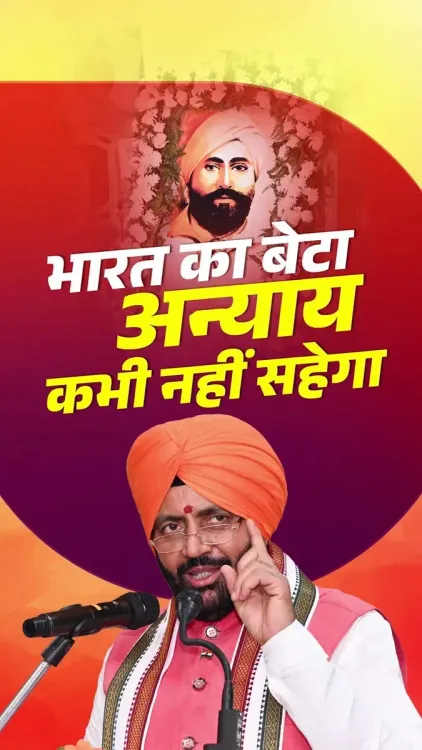
Haryana Chief Minister Nayab Singh Saini marked the martyrdom anniversary of revolutionary Shaheed Udham Singh on 31 July 2026, honouring his supreme sacrifice against colonial rule and his vow that India would never accept injustice.
Key Takeaways
Haryana CM Nayab Singh Saini posted a tribute to Shaheed Udham Singh on his martyrdom anniversary, 31 July .
Udham Singh was executed on 31 July 1940 at Pentonville Prison, London, after assassinating Michael O'Dwyer in 1940.
O'Dwyer was the former Lieutenant Governor of Punjab who sanctioned the Jallianwala Bagh massacre of 1919 , in which hundreds of unarmed civilians were killed in Amritsar .
CM Saini's tribute emphasised that Udham Singh's sacrifice carried the message that India's sons would never tolerate injustice.
BJP leaders regularly invoke revolutionary martyrs on their anniversaries as part of a consistent pattern of public political messaging on national pride.
Udham Singh's remains were repatriated to India in 1974 and cremated with state honours in his birthplace of Sunam .
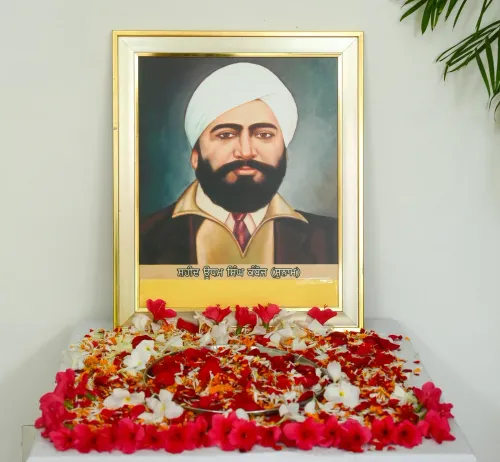
On the anniversary of his execution, Haryana Chief Minister Nayab Singh Saini remembered revolutionary martyr Shaheed Udham Singh — a man who crossed continents to settle a debt of blood and honour, and paid for it with his life. The tribute, posted on 31 July 2026, invoked Udham Singh's supreme sacrifice as a timeless declaration that India's sons would never bow to injustice.
CM Saini wrote: 'Shaheed Udham Singh ji ne desh ki raksha ke liye gulami ki zanjiron ko katne ke liye apna sarvochch balidaan diya' — 'Shaheed Udham Singh gave his supreme sacrifice to defend the nation and to break the chains of slavery, sending the message that India's son will never tolerate injustice.'
The Man Who Avenged Jallianwala Bagh
Udham Singh was a witness to one of colonial India's darkest hours: the Jallianwala Bagh massacre of 13 April 1919, when British troops under the command of General Dyer opened fire on an unarmed civilian gathering in Amritsar, killing hundreds. The wound never healed. Over two decades later, on 13 March 1940, Udham Singh walked into Caxton Hall in London and shot dead Michael O'Dwyer — the former Lieutenant Governor of Punjab who had sanctioned Dyer's action. He made no attempt to flee.
Udham Singh was tried, convicted, and hanged on 31 July 1940 at Pentonville Prison, London — the date that marks his martyrdom anniversary each year. His last words in court rang with the same defiance CM Saini echoed today: that the act was justice, not murder.
BJP's Consistent Invocation of Revolutionary Martyrs
BJP leaders and chief ministers across states have made it a consistent practice to mark the anniversaries of independence-era revolutionaries with public tributes. The messaging is deliberate — figures like Udham Singh, who chose armed resistance over petition, carry a particular resonance in the party's political vocabulary of national pride and anti-colonial resolve.
For Haryana, the connection is personal: Udham Singh was born in Sunam, Punjab (now in the state bordering Haryana), and his story is woven into the region's memory of the freedom struggle. Chief Ministers of the state have long claimed his legacy as part of the broader North Indian revolutionary tradition.
Udham Singh's remains were repatriated to India in 1974 and cremated with state honours in his birthplace — a recognition, decades delayed, of a sacrifice made far from home. His story endures not just as history, but as a recurring reference point in Indian political memory whenever themes of justice, sovereignty, and resistance are invoked. That reference point was activated again today.
Point of View
Invoking a revolutionary who chose action over petition signals ideological continuity with an assertive strand of the freedom struggle, distinct from the Gandhian mainstream. In Haryana's political landscape, where proximity to Punjab's revolutionary heritage is a cultural asset, such messaging also carries regional resonance. The consistency of this pattern across BJP-governed states suggests it is coordinated political communication as much as personal remembrance.
NationPress
15 Sept 2026
Frequently Asked Questions
Why is 31 July observed as Shaheed Udham Singh's martyrdom day?
Udham Singh was hanged on 31 July 1940 at Pentonville Prison in London after being convicted for the assassination of Michael O'Dwyer , making this date his official martyrdom anniversary.
Who was Udham Singh and what did he do?
Udham Singh was an Indian revolutionary who assassinated Michael O'Dwyer — the former Lieutenant Governor of Punjab — in London on 13 March 1940 , to avenge the Jallianwala Bagh massacre of 1919 in which British troops killed hundreds of unarmed civilians in Amritsar.
What was the Jallianwala Bagh massacre?
The Jallianwala Bagh massacre took place on 13 April 1919 in Amritsar, Punjab , when British troops under General Dyer opened fire on a peaceful civilian gathering, killing hundreds of people in one of the most infamous acts of colonial violence in Indian history.
Why did Nayab Singh Saini pay tribute to Udham Singh?
Haryana CM Nayab Singh Saini posted the tribute on 31 July 2026 to mark the martyrdom anniversary of Shaheed Udham Singh , honouring his sacrifice against colonial rule and his message that India would never accept injustice.
Where was Udham Singh from?
Udham Singh was born in Sunam , in present-day Punjab. His remains were repatriated from the United Kingdom to India in 1974 and cremated with state honours in his hometown.