CM Saini Honours Udham Singh on 87th Martyrdom Day in Sanaur
Synopsis
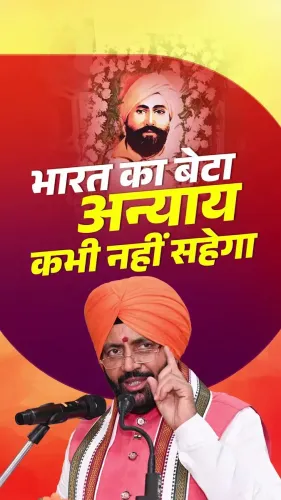
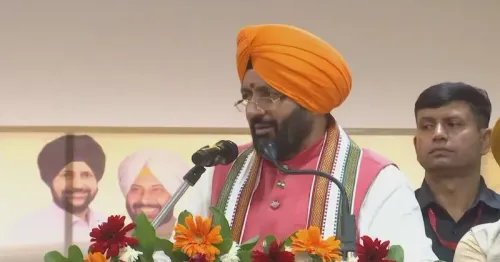
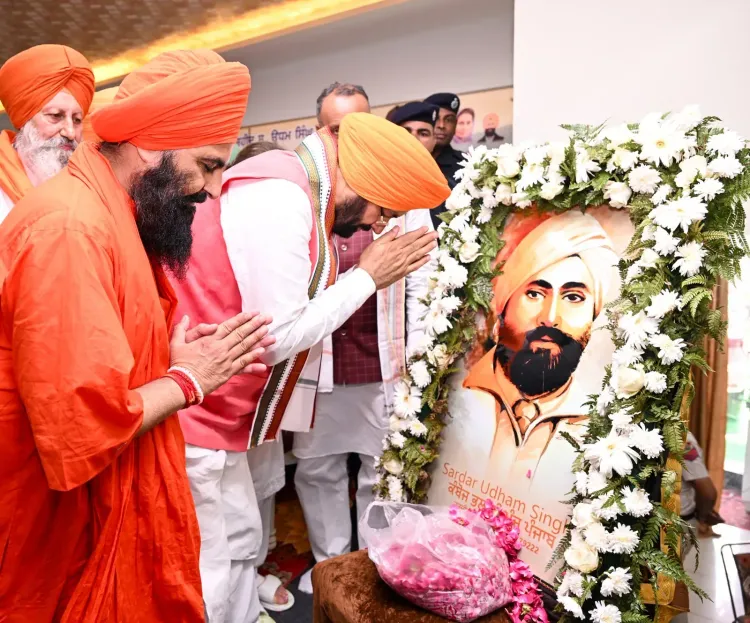
Haryana Chief Minister Nayab Singh Saini attended the 87th Shahidi Diwas of revolutionary Sardar Udham Singh at Sanaur, Punjab, on 31 July 2026, saluting his 21-year mission of justice after Jallianwala Bagh and calling on Indian youth to honour his legacy by rejecting drugs.
Key Takeaways
Haryana CM Nayab Singh Saini attended the 87th martyrdom anniversary of Sardar Udham Singh at Sanaur, Punjab on 31 July 2026 .
Udham Singh was hanged on 31 July 1940 after assassinating Michael O'Dwyer in London to avenge the 1919 Jallianwala Bagh massacre .
Saini highlighted that Udham Singh carried the grief of Jallianwala Bagh for 21 years before acting — a mark of extraordinary resolve.
Udham Singh's alias Ram Mohammad Singh Azad symbolised Hindu-Muslim-Sikh unity and was invoked by Saini as a message for modern India.
Saini extended greetings on behalf of Haryana's 2.5 crore residents and linked the martyrdom tribute to a call for youth to resist drug abuse.
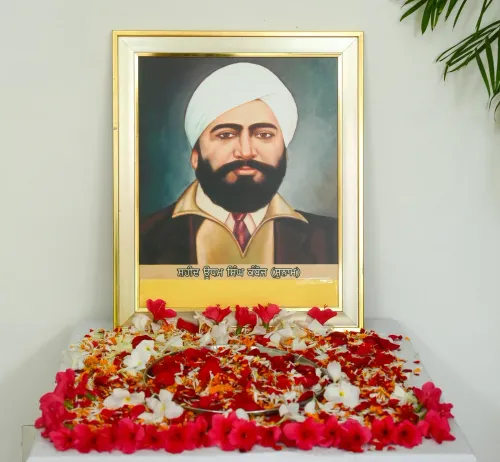
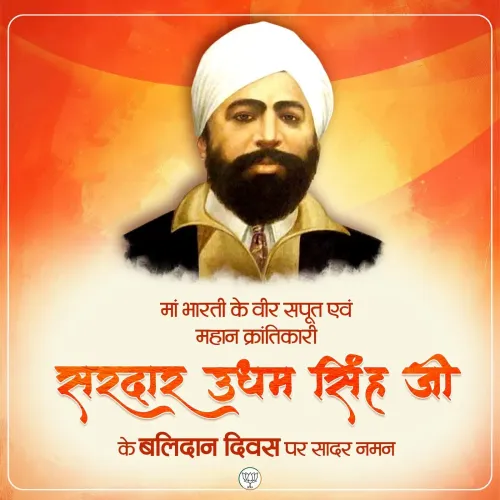
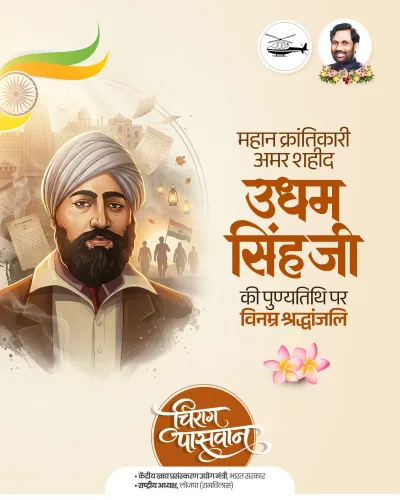
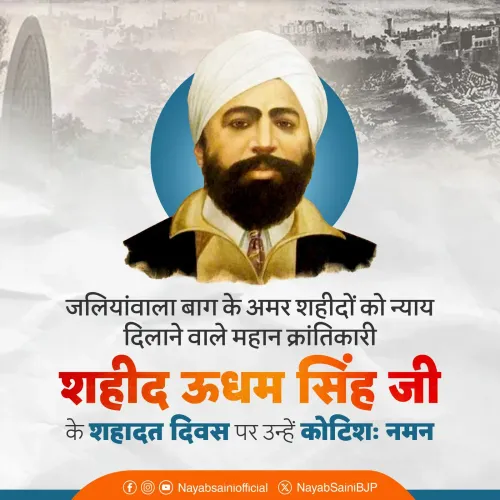
Eighty-seven years after a British hangman's noose fell on Sardar Udham Singh, a sitting Chief Minister stood on Punjab soil to make a vow — that the revolutionary's fire must outlive every generation that forgets it. Haryana Chief Minister Nayab Singh Saini attended the 87th Shahidi Diwas of Udham Singh on 31 July 2026 at Sanaur, Punjab, invoking the martyrdom not merely as history but as a living challenge to India's youth.
Twenty-one years of silence, one act that shook an empire
Saini's tribute cut straight to the psychological core of Udham Singh's legend. '21 varshon tak Jallianwala Bagh ki vedana ko apne seene mein jeevit rakha' — he carried the anguish of Jallianwala Bagh for 21 years before acting. On 13 April 1919, British troops under orders connected to Lieutenant Governor Michael O'Dwyer opened fire on an unarmed crowd in Amritsar, killing hundreds. Udham Singh tracked O'Dwyer to London and shot him dead in 1940, then walked calmly into British custody. He was hanged on 31 July 1940.
What made the act historic was not just its audacity but its symbolism. Udham Singh had adopted the alias Ram Mohammad Singh Azad — three names, three faiths, one India. Saini highlighted this directly: 'As Ram Mohammad Singh Azad, he gave the message of India's unity and soul to the entire world.'
Sanaur's sacred ground and Haryana's 2.5 crore salute
Sanaur, a town in Patiala district, Punjab, has held Udham Singh commemorations for decades, drawing participants from across the border states. Saini described Punjab as 'guruon ki pavan dharaa' — the sacred land of the Gurus — and extended a formal salute on behalf of Haryana's 2.5 crore residents. The cross-border attendance underlines how Udham Singh's memory functions as shared cultural property between the two states, carved from the same pre-Partition geography.
From 1940 to now: the anti-drug pledge
Saini's most pointed line was also his most contemporary. A true tribute to Udham Singh, he said, would come 'when India's youth refuses to bow before drugs and carries his ideals forward.' The link between freedom-struggle remembrance and the anti-narcotics drive is a recurring theme in Haryana-Punjab politics, where substance abuse in border districts has been a persistent concern for state administrations. By threading the martyr's sacrifice into a modern social message, Saini framed 31 July not as a date to mourn but as a date to mobilise.
As Saini put it: '31 July keval calendar ki ek tarikh nahin, ye Bharat ke swabhimaan ka shankhnaad hai' — July 31 is not merely a date on the calendar; it is the conch-call of India's self-respect. That conch, he made clear, is still sounding.
Point of View
Saini is doing double political work: reinforcing cultural-nationalist credentials while signalling administrative intent on a border-district crisis. The Haryana-Punjab optic also matters — cross-border solidarity on a shared hero softens the inter-state tensions that periodically flare over water and boundary disputes.
NationPress
15 Sept 2026
Frequently Asked Questions
Who was Sardar Udham Singh and why is 31 July significant?
Sardar Udham Singh was an Indian revolutionary who assassinated Michael O'Dwyer in London in 1940 to avenge the Jallianwala Bagh massacre of 1919. He was hanged on 31 July 1940, and the date is observed annually as his Shahidi Diwas (Martyrdom Day).
Why did Udham Singh use the name Ram Mohammad Singh Azad?
Udham Singh adopted the alias Ram Mohammad Singh Azad to symbolise the unity of India's three major communities — Hindus, Muslims, and Sikhs — reflecting his belief in a composite Indian identity in the fight against British rule.
Where is Sanaur and why are Udham Singh events held there?
Sanaur is a town in Patiala district, Punjab. It has hosted Udham Singh commemorations for decades, drawing participants from Punjab and neighbouring Haryana, making it a regional centre for honouring his legacy.
What was the Jallianwala Bagh massacre?
On 13 April 1919, British troops opened fire on an unarmed crowd gathered at Jallianwala Bagh in Amritsar, killing hundreds of civilians. The event became one of the defining atrocities of British colonial rule in India and directly motivated Udham Singh's act of revenge.
What did CM Nayab Singh Saini say about drugs at the Udham Singh event?
Saini said a true tribute to Udham Singh would come when India's youth refuses to bow before drugs and carries his ideals forward, linking the martyrdom commemoration to the ongoing anti-narcotics concern in Haryana and Punjab.