CM Nayab Saini Reviews Haryana Vision 2047 Farm Roadmap
Synopsis
Chief Minister Nayab Saini reviewed Haryana's Vision 2047 roadmap for agriculture, horticulture, fisheries and animal husbandry in Chandigarh on 25 May 2026, directing doorstep veterinary services within 30 minutes via helpline 1962, to be scaled to 24-hour coverage, alongside measures on natural farming, DSR, saline-land reclamation and horticulture clusters.
Key Takeaways
CM Nayab Saini chaired a Vision 2047 review meeting in Chandigarh on 25 May 2026 covering agriculture, horticulture, fisheries and animal husbandry.
Veterinary mobile vans reachable via toll-free number 1962 will provide doorstep treatment within 30 minutes , operating 6 a.m. to 10 p.m. with a phased expansion to 24 hours .
Directives were issued on waterlogging and saline-land reclamation , natural farming , crop diversification , and Direct Seeded Rice (DSR) technology.
The meeting reiterated the 'Parali-free Haryana' goal and pushed horticulture cluster development and shrimp aquaculture as diversification levers.
All measures are framed under Vision 2047 , aligned with the national Viksit Bharat@2047 development framework.
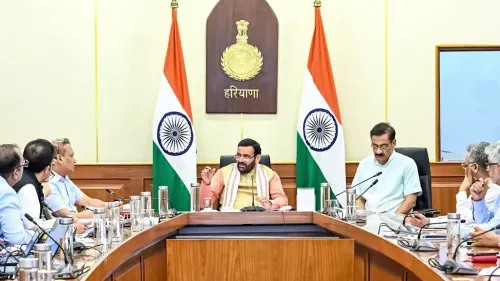
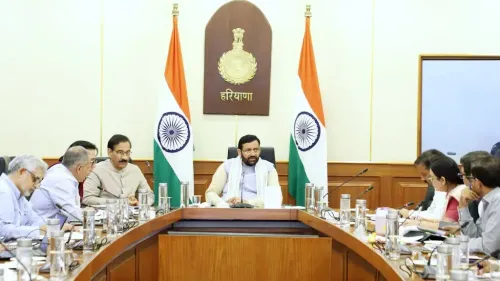
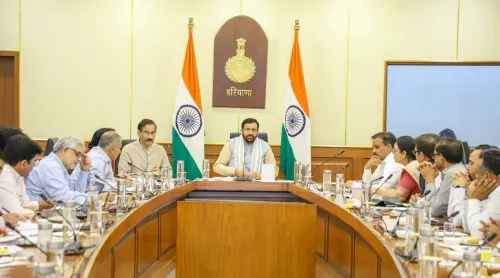
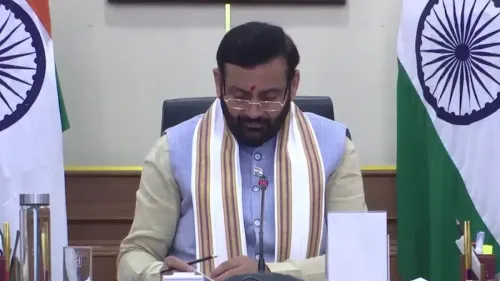
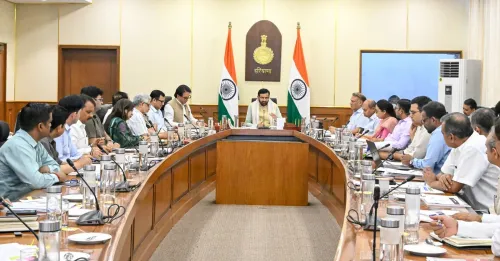
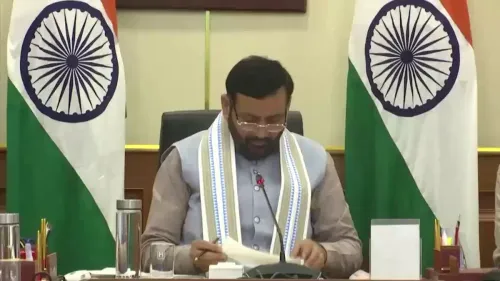
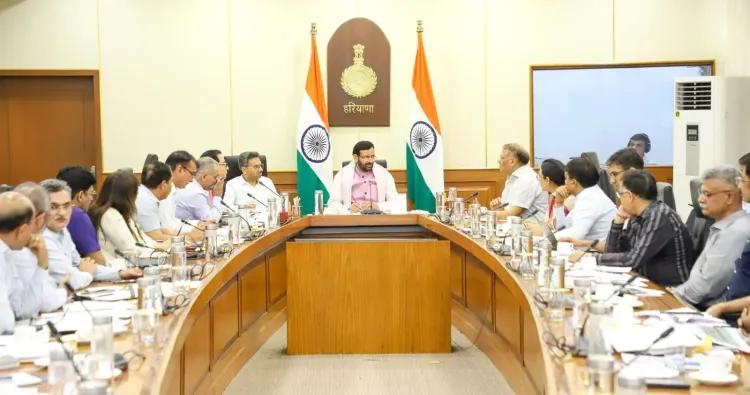
The Chief Minister's Office of Haryana announced on Monday, 25 May 2026 that Chief Minister Nayab Saini chaired a review meeting in Chandigarh to assess the 'Vision 2047' roadmap spanning the agriculture, horticulture, fisheries, and animal husbandry departments, issuing key directives aimed at raising farmer and livestock-keeper incomes and modernising rural services.
What Was Announced
The meeting's headline directive concerned veterinary outreach. CM Saini stated that veterinary mobile vans — accessible via toll-free number 1962 — will operate from 6 a.m. to 10 p.m., reaching livestock keepers at their doorstep and providing treatment within 30 minutes. The service is to be expanded in phases to a full 24-hour operation. The announcement signals a push to close the last-mile gap in animal healthcare that has historically disadvantaged small and marginal livestock holders in rural Haryana.
Context
Vision 2047 is Haryana's state-level long-term development roadmap for the farm and allied sectors, aligned with the national Viksit Bharat@2047 ('Developed India by 2047') framework. CM Nayab Saini, who assumed office in March 2024, has made agricultural modernisation and rural income growth central planks of his administration. The review meeting reflects an ongoing effort to convert broad vision documents into operational, time-bound programmes.
Policy Backdrop
Several of the directives issued at the meeting build on programmes Haryana has pursued since the late 2010s. Crop diversification and stubble management — captured in the 'Parali-free Haryana' goal reiterated at the meeting — have been state priorities since 2018–2020, driven by groundwater depletion and air-quality concerns linked to paddy-residue burning. The promotion of Direct Seeded Rice (DSR) technology continues a water-conservation push in the Indo-Gangetic plains, where flood-irrigation of paddy has accelerated aquifer decline.
Additional agenda items at the review included waterlogging and saline-land reclamation, natural farming, horticulture cluster development, and shrimp aquaculture promotion. Together these reflect a structural push to reduce the state's dependence on the wheat-paddy monoculture that has defined Haryana's farm economy for decades. Horticulture clusters and fisheries, including shrimp farming, represent diversification avenues the state has been piloting under earlier five-year plans.
Stakeholders and Impact
The directives affect three overlapping groups: crop farmers dealing with waterlogged or saline land; horticulture and fishery farmers seeking market-linked cluster support; and livestock keepers who stand to benefit most immediately from the expanded 1962 veterinary van service. For the last group, the promise of a 30-minute doorstep response window addresses a longstanding gap — animal illness in smallholder settings often results in economic loss because timely veterinary care is unavailable in remote villages. Scaling the service to 24 hours would mark a significant improvement in rural animal-health infrastructure.
What's Next
The phased rollout timeline for round-the-clock veterinary van coverage and any dedicated budget lines or cluster approvals under Vision 2047 are expected to become clearer in the next state agriculture budget or assembly session. Analysts will watch whether the review directives translate into measurable targets — such as van fleet size, coverage districts, or DSR adoption acreage — that can be tracked against the state's 2047 benchmarks. The meeting sets the political tone, but implementation specifics will determine its real-world impact for Haryana's farming and livestock communities.
Point of View
If operationalised statewide, would represent a tangible last-mile win for livestock-dependent households that rarely feature in headline agricultural policy. Haryana's simultaneous push on DSR, natural farming and saline-land reclamation reflects a state under real ecological pressure — groundwater depletion and parali pollution are not rhetorical problems but measurable crises. The challenge, as with earlier diversification drives, lies in translating review-meeting directives into funded, monitored programmes that outlast the political cycle.
NationPress
24 Sept 2026
Frequently Asked Questions
What is Haryana's Vision 2047 for agriculture?
Vision 2047 is Haryana's long-term state roadmap for agriculture, horticulture, fisheries and animal husbandry, aligned with India's national Viksit Bharat@2047 goal of making India a developed nation by 2047. It sets out targets for farmer income growth, sustainable farming practices and modernised rural services.
What is the 1962 toll-free number in Haryana?
1962 is Haryana's toll-free veterinary helpline. Livestock keepers can call it to summon a mobile veterinary van that is directed to reach their doorstep and provide treatment within 30 minutes. CM Saini announced plans to expand the service from its current 6 a.m.–10 p.m. window to 24-hour coverage.
What is DSR technology and why is Haryana promoting it?
Direct Seeded Rice (DSR) is a water-saving paddy cultivation method in which seeds are sown directly into the field rather than transplanted as seedlings from a nursery. Haryana promotes it to reduce groundwater consumption and labour costs in paddy farming, addressing the state's serious aquifer depletion problem.
What is 'Parali-free Haryana' and why does it matter?
'Parali-free Haryana' is the state's goal of eliminating paddy-stubble burning, locally called parali. Stubble fires are a major source of air pollution in northern India each winter. Haryana has pursued this through crop diversification, in-situ residue management and incentives to farmers since around 2018–2020.
What did CM Nayab Saini announce for farmers in May 2026?
On 25 May 2026 in Chandigarh, CM Nayab Saini reviewed the Vision 2047 farm roadmap and issued directives on doorstep veterinary services via helpline 1962, natural farming, DSR technology, waterlogging and saline-land reclamation, horticulture cluster development and shrimp aquaculture promotion.