CM Saini Chairs Haryana Vision-2047 Meet on Farm Modernisation
Synopsis
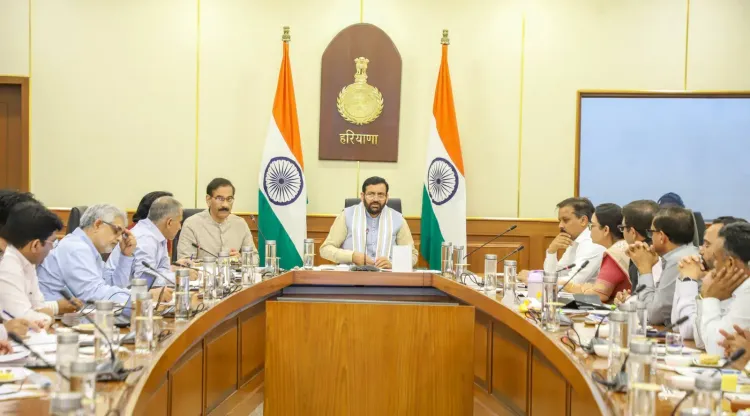
Haryana CM Nayab Singh Saini chaired a Vision-2047 action plan session in Chandigarh on 3 July 2026, deliberating on natural farming adoption, zero-budget cultivation, and modern agricultural technology to build a farmer-centric, developed Haryana over the next five years.
Key Takeaways
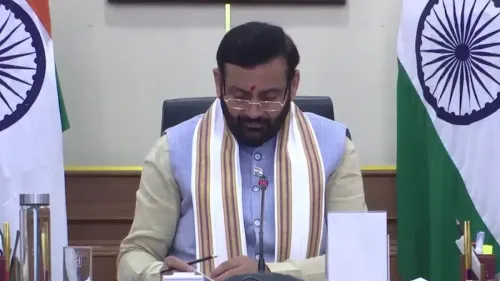
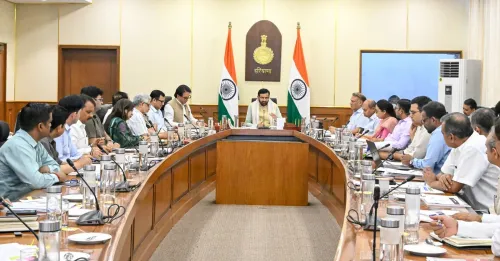
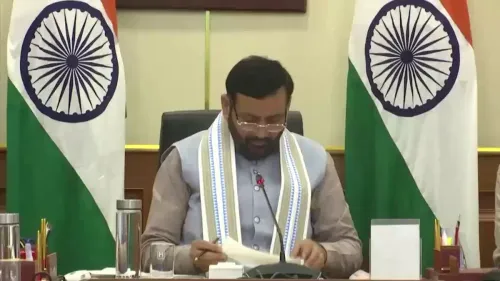
Haryana CM Nayab Singh Saini chaired a Vision-2047 brainstorming session in Chandigarh on 3 July 2026 .
The meeting covered agriculture, horticulture, fisheries, and animal husbandry departments under a unified action plan.
The government aims to motivate farmers to adopt natural farming within five years as part of the Viksit Haryana goal.
Haryana is committed to supporting farmers in zero-budget farming and modern agricultural technology at every step.
The push builds on earlier crop-diversification efforts such as the Mera Pani Meri Virasat scheme launched in 2020 .
Rollout timelines and budget allocations for the five-year plan are the next key milestones to watch.
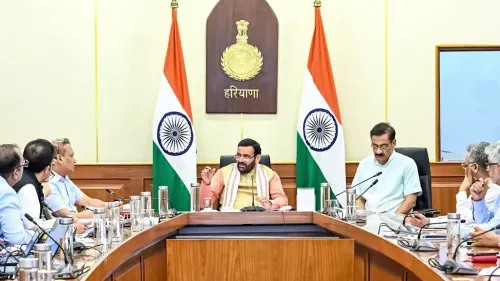
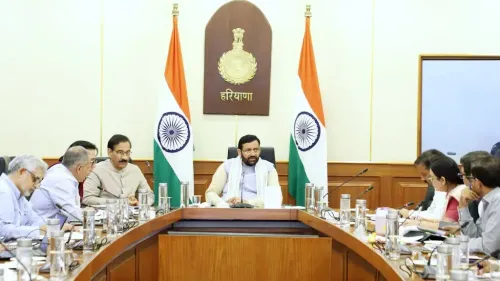
Haryana Chief Minister Nayab Singh Saini on Friday, 3 July 2026, chaired a high-level brainstorming session in Chandigarh under the Haryana Vision-2047 action plan, focusing on agriculture, horticulture, fisheries, and animal husbandry departments to chart a roadmap for a modernised, farmer-centric agrarian economy in the state.
Context
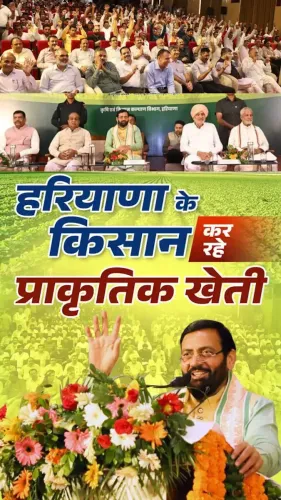
Posting on X, CM Saini said the meeting deliberated on motivating farmers to adopt natural farming over the next five years and on making the agriculture sector 'aur aadhunik evam kisaan-kendrit' (more modern and farmer-centric) to realise the vision of a 'Viksit Haryana' (Developed Haryana). He reaffirmed that the Haryana government is committed to supporting farmers at every step in the adoption of natural farming, zero-budget farming, and modern agricultural technology.
The session is part of a structured action plan under Haryana Vision-2047, the state's long-term development blueprint aligned with the national Viksit Bharat 2047 framework. Multiple Indian states have prepared such documents to synchronise sectoral targets with the central government's centenary development goals.
Policy Backdrop
Zero Budget Natural Farming (ZBNF), popularised by agronomist Subhash Palekar, is an input-cost reduction approach that eliminates the use of chemical fertilisers and pesticides, relying instead on locally available biological inputs. Several Indian states have promoted ZBNF as a means to improve soil health, reduce farmer debt, and diversify income sources.
Haryana, a core Green Revolution state, has faced persistent challenges of groundwater depletion and soil degradation from decades of intensive paddy-wheat cultivation. The state had earlier introduced the Mera Pani Meri Virasat scheme in 2020 to incentivise crop diversification and reduce dependence on water-intensive paddy farming — a policy lineage that the current push for natural farming builds upon.
The July 2026 meeting signals a concerted effort to embed these sustainability goals within a formal five-year departmental action plan, rather than treating them as standalone schemes.
Stakeholders and Impact
Haryana's farming community, which contributes significantly to the state's economy through wheat, paddy, mustard, and horticulture produce, stands as the primary stakeholder. A shift toward natural and zero-budget farming, if scaled, could reduce input costs for farmers while addressing long-standing ecological concerns around soil and water.
The departments of agriculture, horticulture, fisheries, and animal husbandry were all represented in the deliberations, suggesting a cross-sectoral approach rather than a siloed agricultural push. Integration of modern technology — from precision farming tools to digital advisory services — is also part of the envisaged modernisation drive.
What's Next
The immediate focus will be on translating the meeting's deliberations into concrete scheme notifications, budget allocations, and outreach programmes for farmers across Haryana's districts. Rollout timelines and specific financial commitments under the five-year natural farming plan are expected to be the next milestones to watch.
Broader legislative or policy notifications in the Haryana assembly could follow, particularly if the government seeks to anchor the Vision-2047 agriculture action plan in a formal statutory or budgetary framework ahead of the next state budget cycle.
Point of View
Zero-budget cultivation, and modern technology under a single Vision-2047 umbrella, the government is attempting to address both ecological sustainability and farmer welfare — two goals that have historically been in tension in Green Revolution states. The multi-department format of the meeting suggests the administration is moving beyond siloed scheme announcements toward integrated sectoral planning. Whether this translates into measurable outcomes will depend on the specificity of budget allocations and the grassroots outreach machinery the state deploys.
NationPress
2 Oct 2026
Frequently Asked Questions
What is Haryana Vision-2047?
Haryana Vision-2047 is the state government's long-term development blueprint aligned with the national Viksit Bharat 2047 framework, covering multiple sectors including agriculture, infrastructure, and social welfare to guide policy planning up to India's centenary of independence.
What is zero-budget natural farming?
Zero-budget natural farming (ZBNF) is an agricultural approach popularised by Subhash Palekar that eliminates purchased chemical inputs, relying on locally available biological materials to reduce cultivation costs and improve soil health.
What did CM Nayab Singh Saini announce on 3 July 2026?
CM Nayab Singh Saini said the Haryana government will motivate farmers to adopt natural farming over the next five years and will support them in zero-budget farming and modern agricultural technology as part of the Haryana Vision-2047 action plan.
What is Mera Pani Meri Virasat scheme in Haryana?
Mera Pani Meri Virasat is a Haryana government scheme launched in 2020 to incentivise farmers to shift away from water-intensive paddy cultivation toward alternative crops, aimed at conserving groundwater and promoting crop diversification.
Which departments were part of the Haryana Vision-2047 agriculture meeting?
The meeting held in Chandigarh on 3 July 2026 covered the departments of agriculture, horticulture, fisheries, and animal husbandry, reflecting a cross-sectoral approach to farm modernisation under the Vision-2047 action plan.