Odisha CM Office Launches ₹161 Cr Tribal Projects on Janjatiya Gaurav Divas

Synopsis
On Janjatiya Gaurav Divas 2026, Odisha's Chief Minister's Office launched ₹161 crore in tribal development projects, inaugurated 28 hostels, laid foundation stones for 35 initiatives, and reinforced the Mukhya Mantri Janjati Jibika Mission 2.0 targeting 8 lakh tribal families over five years.
Key Takeaways
₹161 crore worth of development projects launched in Odisha's tribal regions on Janjatiya Gaurav Divas, 16 November 2026 .
28 new student hostels inaugurated to expand residential access for tribal students in scheduled areas.
Foundation stones laid for 35 new projects spanning education and infrastructure in tribal belts.
Mukhya Mantri Janjati Jibika Mission 2.0 targets economic self-reliance for 8 lakh tribal families within the next five years .
Odisha has over 22 percent Scheduled Tribe population , making tribal welfare a central governance priority.
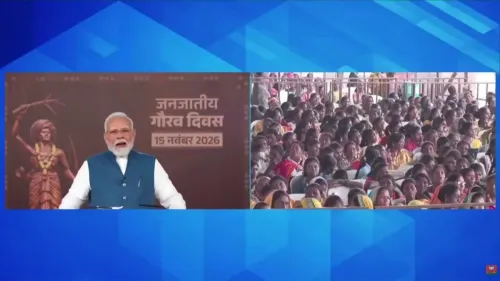
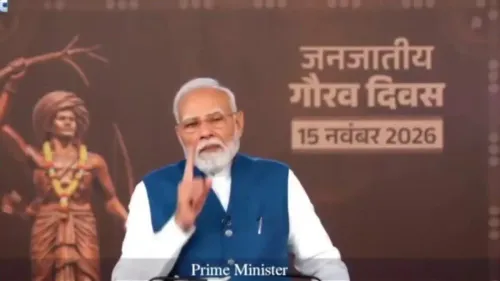
Janjatiya Gaurav Divas was instituted in 2021 to mark Birsa Munda 's birth anniversary on 15 November each year.
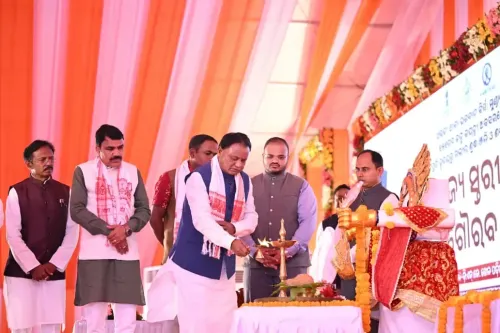
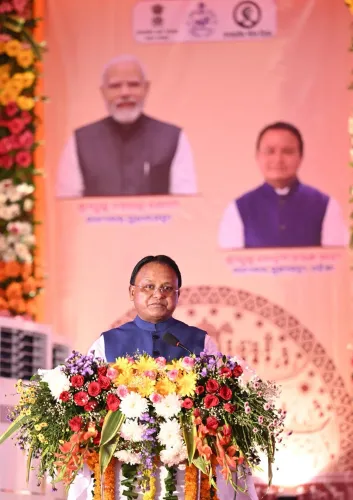
On the day India honours Birsa Munda's birth anniversary, Odisha turned the occasion into action — the Chief Minister's Office of Odisha announced on Monday, 16 November 2026 that development projects worth ₹161 crore had been launched across the state's tribal regions to mark Janjatiya Gaurav Divas, alongside the inauguration of 28 new hostels and the laying of foundation stones for 35 new initiatives.
₹161 Crore in One Day — What Was Actually Unlocked
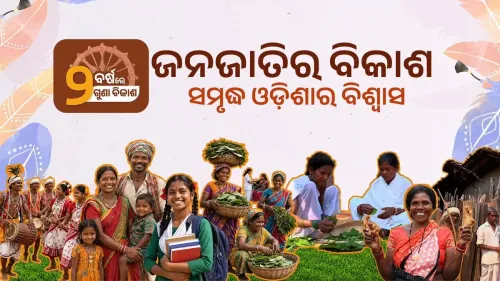
The announcements span two distinct tracks: brick-and-mortar and livelihoods. On the infrastructure side, 28 student hostels were formally inaugurated — giving tribal students across Odisha's Fifth Schedule areas residential access they previously lacked — while foundation stones for 35 projects signal a pipeline of education and infrastructure spending that will unfold over the coming years. The Odia-language post described this as giving 'new direction to education and infrastructure development' (ଶିକ୍ଷା ଓ ଭିତ୍ତିଭୂମି ବିକାଶକୁ ନୂଆ ଦିଶା) for tribal areas.
Mukhya Mantri Janjati Jibika Mission 2.0 — The Five-Year Bet on 8 Lakh Families
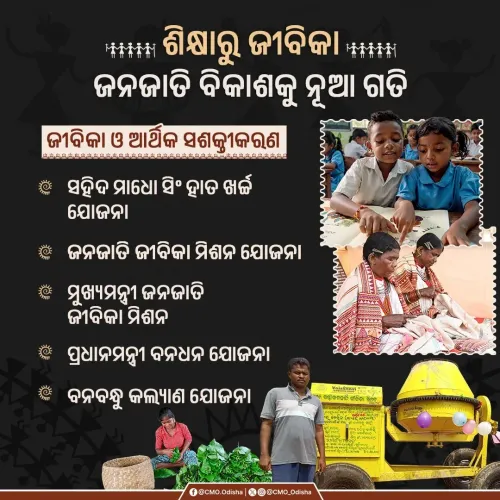
The larger strategic ambition sits with the Mukhya Mantri Janjati Jibika Mission 2.0, a livelihood scheme designed to make 8 lakh tribal families economically self-reliant within the next five years. The mission channels skill-building and income-support interventions into tribal households, reinforcing what the government calls the vision of a 'Samruddha Odisha' — a prosperous Odisha. With Odisha home to over 22 percent Scheduled Tribe population, concentrated in its interior scheduled areas, the scale of the target reflects both the ambition and the gap that still exists.
Why Janjatiya Gaurav Divas Became a Welfare Launch Pad
Janjatiya Gaurav Divas was instituted as a national observance in 2021 to mark the birth anniversary of tribal icon Birsa Munda on 15 November each year. Since then, it has evolved into a preferred occasion for states to signal their tribal welfare commitments through project launches — connecting political symbolism to measurable spending. Odisha has historically maintained a dedicated tribal sub-plan and successive governments have used national observance days to announce continuity in welfare allocation. The current announcements align with and complement central schemes such as the Vanbandhu Kalyan Yojana, which targets infrastructure and human development in tribal belts.
The real test, as always, lies ahead: whether the 28 hostels reach full utilisation, whether all 35 foundation-stone projects move from announcement to completion, and whether the livelihood mission's 8 lakh family target translates into verifiable income gains on the ground. The government has set a five-year clock. It is now ticking.
Point of View
And Odisha — where tribal votes are decisive in roughly a third of assembly constituencies — is no exception. The Mukhya Mantri Janjati Jibika Mission 2.0 repackages an existing livelihood mandate with a sharper five-year horizon and an eight-lakh-family target, signalling that the government wants a measurable accountability trail. The hostel inaugurations address a long-documented gap in tribal education retention; the real policy question is whether the construction pipeline behind the 35 foundation stones is adequately funded and monitored beyond announcement day. If the livelihood mission delivers even partial outcomes at scale, it could meaningfully shift Odisha's tribal human-development indicators — but the state's track record on project completion timelines will be the decisive variable.
NationPress
16 Nov 2026
Frequently Asked Questions
What is Janjatiya Gaurav Divas and why is it celebrated on 15 November?
Janjatiya Gaurav Divas is a national observance instituted in 2021 to mark the birth anniversary of tribal leader Birsa Munda on 15 November , honouring the contributions and heritage of tribal communities across India.
What development projects did Odisha launch on Janjatiya Gaurav Divas 2026?
The Chief Minister's Office of Odisha announced development projects worth ₹161 crore for tribal areas, including the inauguration of 28 new student hostels and foundation-stone laying for 35 new initiatives in education and infrastructure.
What is the Mukhya Mantri Janjati Jibika Mission 2.0?
Mukhya Mantri Janjati Jibika Mission 2.0 is an Odisha government livelihood scheme aimed at making 8 lakh tribal families economically self-reliant through skill-building and income support over the next five years .
How large is Odisha's tribal population?
Odisha has over 22 percent Scheduled Tribe population , concentrated in the state's interior Fifth Schedule areas, making tribal welfare one of the government's central policy priorities.
How do the 28 hostels help tribal students in Odisha?
The 28 newly inaugurated hostels provide residential accommodation in tribal areas, addressing a long-standing gap in educational access and retention for students who live far from schools in Odisha's scheduled regions.