Odisha CM Majhi Marks Birsa Munda's 151st Birth Anniversary in Malkangiri
Synopsis
On Birsa Munda's 151st birth anniversary, CM Mohan Charan Majhi attended Janjatiya Gaurav Diwas in Malkangiri, launching ₹161 crore projects, Janjati Jibika Mission 2.0 targeting 8 lakh families, 24 new Eklavya schools, and announcing ₹4,200 crore in industrial investment for the district.
Key Takeaways
₹161 crore in projects launched and foundation-laid in Malkangiri, including 28 hostels worth ₹55 crore inaugurated.
Mukhya Mantri Janjati Jibika Mission 2.0 targets ~8 lakh tribal and PVTG families across 134 blocks in 19 districts over five years.
Two industrial projects worth ₹4,200 crore announced for Malkangiri district, backed by a dedicated 'Team Malkangiri' .
Odisha now has 71 operational Eklavya Model Residential Schools — declared the highest in any Indian state — after 24 new schools became functional simultaneously.
Odisha's PMAY-Gramin housing allocation revised up from 4 lakh to 5 lakh units ; 7,667 villages in 27 districts covered under Dharti Aaba Janjatiya Gram Utkarsh Abhiyan .
Reservation of 22.5% for ST, 16.25% for SC, and 11.25% for OBC now applicable in engineering and medical higher education in Odisha.
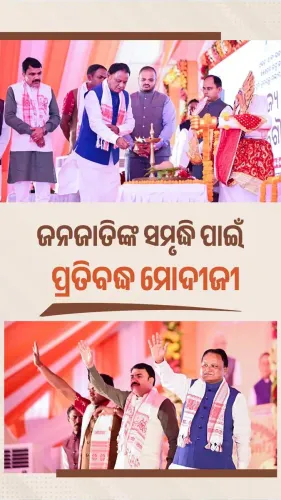
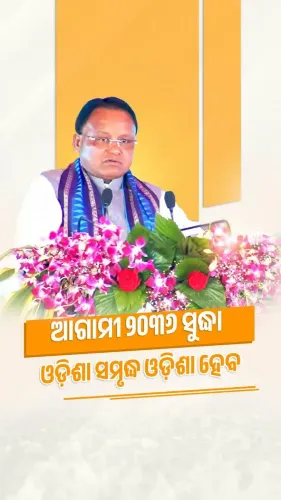
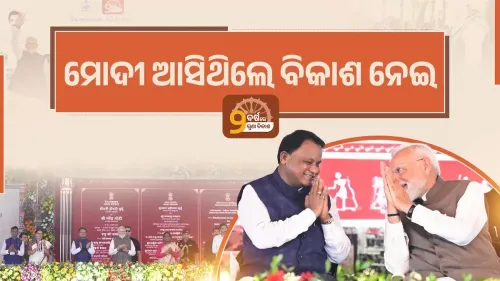
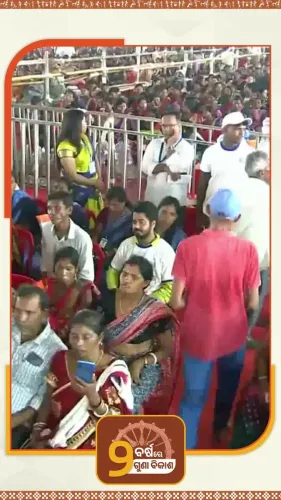
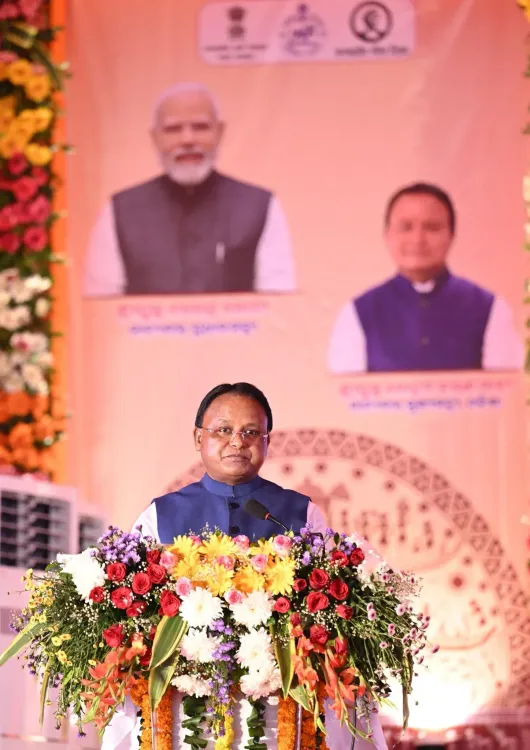
On the 151st birth anniversary of Birsa Munda, Odisha's most consequential tribal district became the stage for a sweeping statement of intent. Chief Minister Mohan Charan Majhi attended the state-level Janjatiya Gaurav Diwas (Tribal Pride Day) in Malkangiri on 15 November 2026, anchoring a series of project launches, scheme expansions, and institutional commitments aimed at the state's tribal and PVTG communities.
₹161 Crore for Malkangiri — and an Industrial Bet of ₹4,200 Crore
The day's most immediate deliverable: a package of projects worth ₹161 crore for the all-round development of Malkangiri district. That includes the inauguration of 28 hostels built at a cost of ₹55 crore, and the foundation-laying of 35 new projects worth ₹106 crore. Beyond bricks and mortar, the CM announced that two industrial projects involving a combined investment of ₹4,200 crore will be established in the district — a significant economic pivot for a region historically defined by its remoteness and security challenges. A dedicated 'Team Malkangiri' will coordinate the district's development push.
Janjati Jibika Mission 2.0 — 8 Lakh Families, 134 Blocks, Five Years
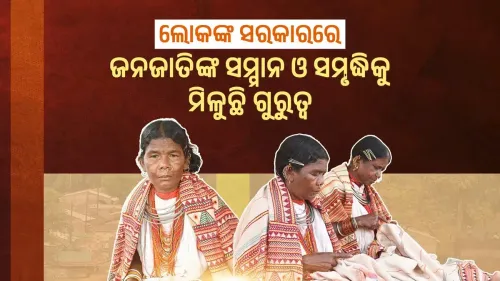
The headline policy announcement was the launch of Mukhya Mantri Janjati Jibika Mission 2.0, an upgraded livelihood scheme targeting nearly 8 lakh tribal and PVTG families across 134 blocks in 19 districts over the next five years. The Mission's predecessor focused on tribal self-employment; the 2.0 iteration broadens the economic self-reliance mandate to include Particularly Vulnerable Tribal Groups — communities that often sit below the radar of mainstream welfare delivery. The scheme represents the state government's most ambitious attempt yet to convert cultural recognition of tribal identity into measurable household income gains.
Odisha's 71 Eklavya Schools — a National First
Education was a second front. The CM confirmed that 24 new Eklavya Model Residential Schools have become operational simultaneously, taking Odisha's total to 71 — announced as the highest count of any state in India. The Eklavya programme, centrally funded and designed to bring quality residential schooling to ST-concentrated blocks, has been a vehicle for tribal educational access since its national expansion post-2014. Odisha's tally of 71 makes the state's footprint in this programme impossible to overlook.
Alongside this, the CM outlined reservation percentages now in effect for higher education in engineering and medical courses: 22.5% for ST, 16.25% for SC, and 11.25% for Other Backward Classes. Two PhD scholars and a social worker from the Didayi tribe — one of Odisha's rarest PVTG communities — were felicitated at the event, a symbolic gesture that paired institutional announcements with personal recognition.
Central Schemes, Odisha Scale
The state government also cited progress under the Dharti Aaba Janjatiya Gram Utkarsh Abhiyan, the central scheme now covering 7,667 villages across 27 Odisha districts, providing pucca housing, drinking water, roads, healthcare, and education infrastructure to tribal habitations. Under Pradhan Mantri Awas Yojana-Gramin, Odisha's housing allocation has been revised upward from 4 lakh to 5 lakh units — an addition of one lakh homes that speaks to the state's growing rural demand pipeline and its negotiating leverage with the Centre.
The day's proceedings closed on a phrase that distils the government's framing: empowerment, economic self-reliance, and holistic development of tribal society as the foundation of a samridh Odisha (prosperous Odisha) and a vikasit Bharat (developed India). That language is not incidental — it places every rupee announced in Malkangiri inside the national Viksit Bharat 2047 arc.
Malkangiri once made headlines for different reasons. Whether ₹4,200 crore in industrial investment can rewrite that story is the question the district will spend the next five years answering.
Point of View
With concrete financial announcements tethered to the symbolic weight of Birsa Munda's legacy. By stacking a livelihood mission, industrial investment, and educational milestones in a single high-visibility gathering in a PVTG-heavy border district, the Majhi government signals that tribal welfare is both a moral commitment and an electoral investment. The ₹4,200 crore industrial bet in Malkangiri is the most ambitious gamble — turning a district long associated with conflict and isolation into a site of industrial aspiration will test the government's execution capacity far more than the scheme announcements. If the Mission 2.0 and industrial pledges translate into verifiable household-level outcomes, Odisha could position itself as the national benchmark for tribal-inclusive growth ahead of the next assembly cycle.
NationPress
15 Nov 2026
Frequently Asked Questions
What is Janjatiya Gaurav Diwas and why is it celebrated on 15 November?
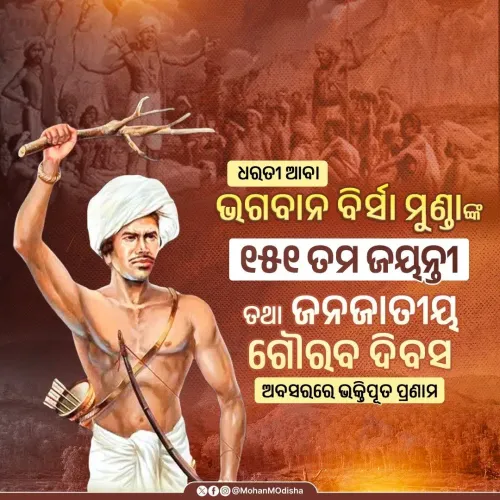
Janjatiya Gaurav Diwas is observed on 15 November to mark the birth anniversary of tribal freedom fighter Birsa Munda . The national observance was instituted in 2021 to honour the contributions and culture of India's tribal communities.
What is Mukhya Mantri Janjati Jibika Mission 2.0?
Mukhya Mantri Janjati Jibika Mission 2.0 is an Odisha state scheme announced by CM Mohan Charan Majhi to economically empower nearly 8 lakh tribal and PVTG families across 134 blocks in 19 districts over the next five years, focusing on financial self-reliance.
How many Eklavya Model Residential Schools does Odisha have?
As of the November 2026 announcement, Odisha has 71 operational Eklavya Model Residential Schools , stated to be the highest count in any Indian state, after 24 new schools became functional simultaneously.
What investment is planned for Malkangiri district?
CM Majhi announced two industrial projects with a combined investment of ₹4,200 crore in Malkangiri district, alongside ₹161 crore in immediate development projects including 28 new hostels and 35 infrastructure works.
What reservation is available for tribal students in Odisha's engineering and medical colleges?
Odisha has implemented reservations of 22.5% for Scheduled Tribes (ST) , 16.25% for Scheduled Castes (SC) , and 11.25% for Other Backward Classes in engineering and medical higher education courses.