CM Majhi Reaffirms Tribal Welfare as Odisha's Core Priority
Synopsis
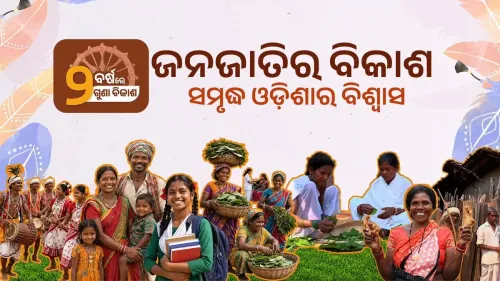
On Janjatiya Gaurav Divas, Odisha CM Mohan Charan Majhi reaffirmed his government's commitment to preserving tribal history, language, and culture while integrating tribal communities into the development mainstream under PM Modi's leadership.
Key Takeaways
CM Majhi posted his message on 15 November 2026 , Janjatiya Gaurav Divas, the national day celebrating tribal heritage.
Scheduled Tribes form over 22 percent of Odisha's population, making tribal welfare a central governance priority in the state.
Majhi pledged protection of tribal history, tradition, language, and culture alongside 'holistic development' — a twin mandate.
The post aligned with the BJP's national Antyodaya framing and cited PM Modi's visionary leadership as the driver of last-mile tribal inclusion.
The central PM JANMAN scheme (2023) targets Particularly Vulnerable Tribal Groups in Odisha with housing, health, and education access.
Concrete delivery on tribal language and cultural protection remains the harder, less measurable test for the Majhi administration.
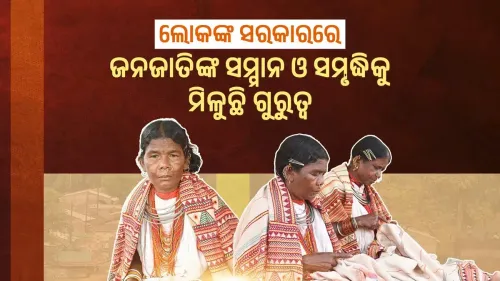
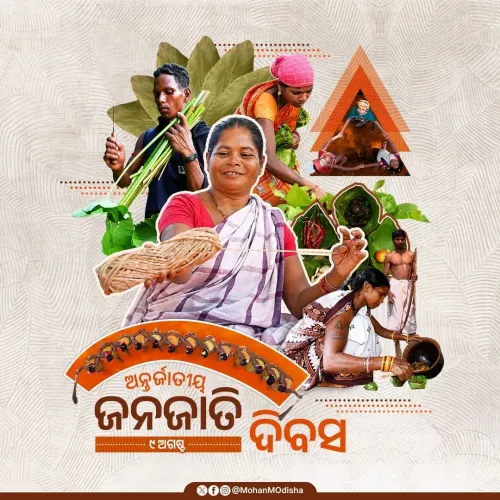
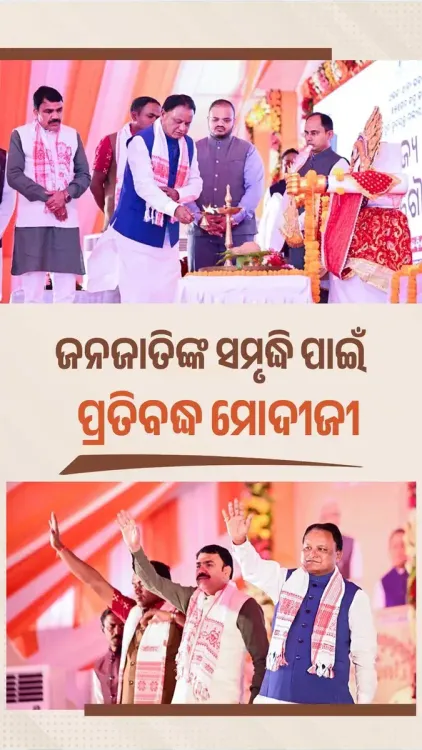
On Sunday, 15 November 2026 — Janjatiya Gaurav Divas, the national day honouring tribal pride — Odisha Chief Minister Mohan Charan Majhi posted a pointed message on X, declaring the preservation of tribal history, tradition, language, and culture, alongside the holistic development of tribal communities, the state government's foremost responsibility.
Posting in Odia, CM Majhi wrote: 'ଜନଜାତି ସମାଜର ଗୌରବମୟ ଇତିହାସ, ପରମ୍ପରା, ଭାଷା ଓ ସଂସ୍କୃତିର ସୁରକ୍ଷା ସହ ସେମାନଙ୍କ ସାମଗ୍ରିକ ବିକାଶ ଆମର ପ୍ରମୁଖ ଦାୟିତ୍ୱ' — 'Safeguarding the glorious history, traditions, language, and culture of tribal society, along with their holistic development, is our primary responsibility.' He invoked Prime Minister Narendra Modi's 'visionary leadership' as the driving force behind bringing those in the last row of society into the mainstream of development.
Odisha's Tribal Stakes: Over One-in-Five Citizens
Scheduled Tribes constitute more than 22 percent of Odisha's population — one of the highest proportions of any Indian state — spread across dozens of distinct linguistic and cultural groups, many in remote forest and highland districts. That demographic reality gives tribal welfare a weight here that it carries in few other state capitals. Any government in Bhubaneswar that fails to address tribal concerns is governing with a structural blind spot.
CM Majhi, who assumed office after BJP's 2024 Odisha assembly election victory, has consistently framed his administration's approach as a convergence of cultural respect and economic delivery — not one at the expense of the other. Sunday's message reinforced that dual mandate publicly and explicitly.
PM JANMAN and the Last-Mile Delivery Push
The post's reference to 'the last row of society' is not rhetorical accident. It echoes the Antyodaya philosophy — serving the last person — that the BJP has used to anchor its tribal outreach nationally since 2014. At the central level, the PM JANMAN scheme, launched in 2023, specifically targets Particularly Vulnerable Tribal Groups (PVTGs) with housing, healthcare, and education access — a category in which Odisha has significant numbers.
Following the 2024 election, the new state government signalled its intent to align Odisha's own tribal welfare programmes with PM JANMAN and related central initiatives. Sunday's statement, timed to Janjatiya Gaurav Divas, keeps that alignment in the public eye and signals continuity of political will from the state's highest office.
Language and Culture: The Harder Test
Development metrics — housing completions, school enrolments, health-centre reach — are trackable. The commitment to protecting tribal languages and cultural traditions is harder to measure and slower to deliver. Odisha is home to dozens of tribal languages, several with no standardised script. Whether the government translates Sunday's pledge into concrete legislative or institutional protections for those languages remains the real watch point in the months ahead.
That is the challenge every administration in Odisha eventually faces: the numbers can be built, but the culture has to be chosen. CM Majhi has now made that choice public — the state will be watching whether the follow-through matches the declaration.
Point of View
The political calculus is obvious, but so is the genuine policy complexity: aligning state schemes with PM JANMAN while also protecting dozens of endangered tribal languages requires sustained institutional will beyond annual commemorations. The dual emphasis on cultural preservation and economic mainstreaming is a deliberate rebuttal to critics who argue the two goals are in tension. Watch for legislative or budgetary moves in the upcoming Odisha assembly session that give this pledge programmatic form.
NationPress
15 Nov 2026
Frequently Asked Questions
What is Janjatiya Gaurav Divas and why is it celebrated on 15 November?
Janjatiya Gaurav Divas is observed on 15 November every year to honour the birth anniversary of tribal freedom fighter Birsa Munda and to celebrate the contributions of India's tribal communities to the nation's history and culture.
What did Odisha CM Mohan Majhi say on Janjatiya Gaurav Divas 2026?
CM Majhi declared that safeguarding the glorious history, traditions, language, and culture of tribal society, along with their holistic development, is the government's primary responsibility, crediting PM Modi's leadership for efforts to bring tribal communities into the development mainstream.
What is the PM JANMAN scheme and does it apply to Odisha?
The PM JANMAN scheme was launched by the central government in 2023 to provide housing, healthcare, and education access specifically to Particularly Vulnerable Tribal Groups (PVTGs) . Odisha has a significant PVTG population and the state government has stated its intent to align with the scheme.
What percentage of Odisha's population belongs to Scheduled Tribes?
Scheduled Tribes constitute over 22 percent of Odisha's total population, one of the highest proportions among Indian states, encompassing dozens of distinct linguistic and cultural communities.
When did Mohan Charan Majhi become Chief Minister of Odisha?
Mohan Charan Majhi became Chief Minister of Odisha in 2024 following the BJP's victory in the Odisha assembly elections, ending the long-running BJD government in the state.