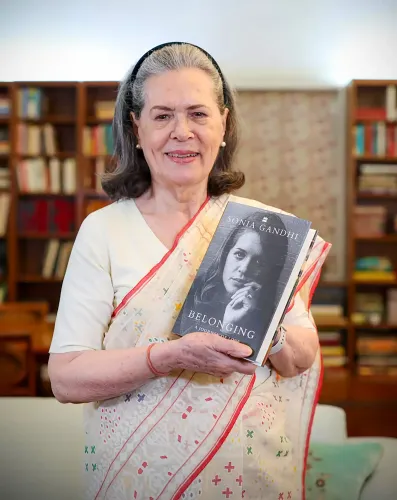
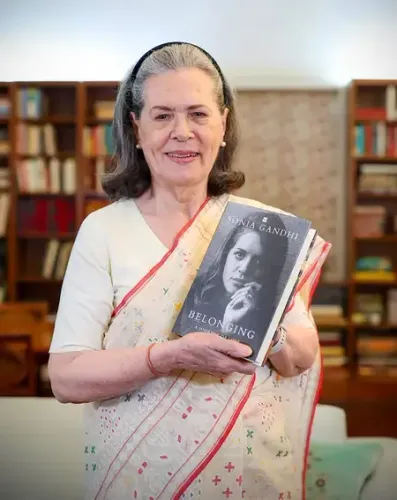
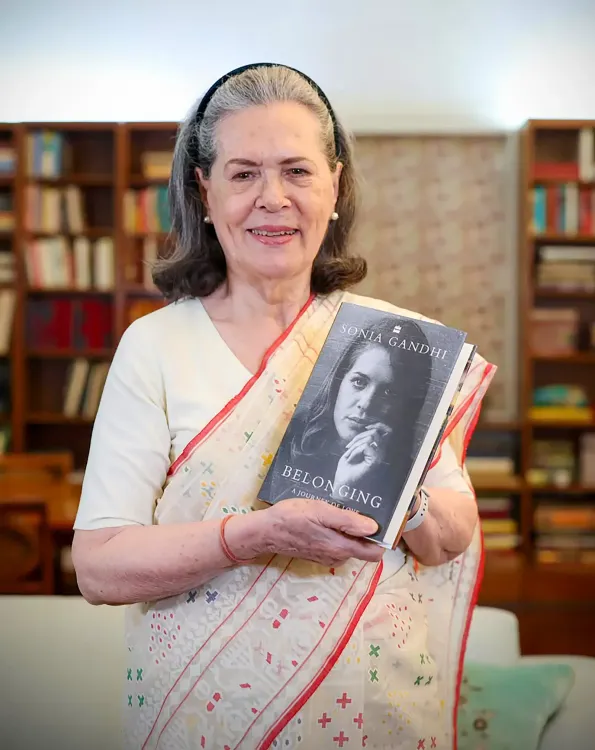
Sonia Gandhi memoir 'Belonging' opens Gandhi family secrets, skips key controversies
Synopsis
Sonia Gandhi's memoir 'Belonging' cracks open the Gandhi family's carefully guarded political world — but selectively. Her account of Pranab Mukherjee's PM ambitions, the 'two power centres' allegation, and the 1984 riots offers one side of contested history, while conspicuous silences on Bofors, the Kashmiri Pandit exodus, and UPA-era scams raise as many questions as the book answers.
Key Takeaways
Sonia Gandhi's memoir 'Belonging: A Journey of Love' was published on 15 November 2026 , offering rare personal and political candour from the Gandhi family .
Sonia writes she was 'shocked' by Pranab Mukherjee's hint at becoming Prime Minister in 2010 ; his daughter Sharmistha Mukherjee questioned whether the Gandhi family views the top office as its exclusive preserve.
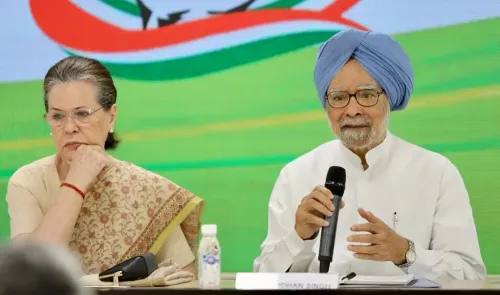
Sonia denies being a parallel power centre during the UPA government, asserting a clear division of roles with former PM Manmohan Singh .
The memoir attributes much of the 1975 Emergency's excesses to Sanjay Gandhi , and defends Rajiv Gandhi over the 1984 anti-Sikh riots .
Notable omissions include the Bofors-Quattrocchi affair , UPA-era scams , and the displacement of Kashmiri Pandits in the early 1990s .
The book's release coincides with Congress efforts to build political narrative around Rahul Gandhi's growing assertiveness.
Sonia Gandhi's newly published memoir, 'Belonging: A Journey of Love', has stirred fresh debate about the Indian National Congress (INC), the Gandhi family's hold on the party, and the exercise of power during the UPA years. Released on 15 November 2026, the book is being read as a rare moment of candour from a family that has, for decades, guarded its political secrets with considerable care.
The Pranab Mukherjee Revelation
Among the memoir's most discussed passages is Sonia Gandhi's account of a 2010 conversation with former President Pranab Mukherjee. 'On one occasion, in 2010, I think after expressing his frustration, he shocked me with the suggestion that perhaps it was time for a change at the top, which I understood as a hint of his long-held desire to become Prime Minister,' she writes.
The remark that she was 'shocked' drew an immediate response from Sharmistha Mukherjee, Pranab's daughter, who questioned why a leader of his experience and stature should not aspire to the top office. She pointedly asked whether the surprise stemmed from an assumption that the Prime Ministership belongs exclusively within the Gandhi-Nehru family. The exchange has revived a question the Congress has long been reluctant to address directly: does the party genuinely offer equal opportunity to senior leaders, or does the Gandhi family retain final authority over leadership succession?
The 'Two Centres of Power' Debate
The memoir revisits the long-standing allegation that Sonia Gandhi was the de facto power during the Manmohan Singh government. Sonia insists there was a clear division of responsibilities — former Prime Minister Manmohan Singh ran the government while she managed the party. She has also denied interfering in official files, administrative appointments, or executive decisions.
Critics, however, argue that her role as chairperson of the UPA, her oversight of the National Advisory Council (NAC), and the coordination mechanism between party and government made the distinction difficult to sustain in practice. The perception of a 'parallel power centre' was one of the most persistent criticisms of the UPA era and, notably, one of the BJP's most effective electoral arguments against the Congress. Sonia's account offers her perspective, but it is unlikely to close the debate.
Emergency, 1984, and the Family's Difficult Chapters
The book also engages — selectively, critics say — with some of the darkest episodes in Congress history. On the 1975 Emergency, Sonia reportedly places significant blame for its excesses on her late brother-in-law Sanjay Gandhi. On the anti-Sikh riots of 1984, she describes the events as tragic and acknowledges the failure to deliver timely justice, while seeking to defend her husband, the late Prime Minister Rajiv Gandhi, against allegations of complicity in the violence that followed Indira Gandhi's assassination.
Her treatment of these chapters has drawn sharp criticism. Several commentators have noted that the accounts, while personal, inevitably carry political weight — and that the manner in which responsibility is framed matters enormously for the historical record.
What the Memoir Leaves Out
Perhaps as revealing as what the book says is what it does not. The memoir is notably silent on the Bofors-Quattrocchi controversy, the multiple corruption scams that clouded the UPA's second term, questions about Sonia Gandhi's voter identification documents, and the government's handling of the Babri Masjid, Batla House episodes, and the 2002 Gujarat riots. Critically, while Sonia writes about Kashmiri traditions and culture, the memoir reportedly makes no mention of the displacement and suffering of Kashmiri Pandits, who were forced to flee the Valley in the early 1990s. These omissions are likely to fuel charges of a selective and self-serving account.
Timing, Politics, and the Rahul Gandhi Subtext
The memoir's timing has not gone unnoticed. It arrives at a moment when the Congress is actively constructing both a political and personal narrative around Rahul Gandhi, who has adopted an increasingly assertive public posture. Whether the book is designed to reinvigorate party cadres, burnish the Gandhi family's legacy, or add heft to Rahul's positioning is a matter of interpretation. What is certain is that it has generated the kind of public conversation about Congress's internal workings that the party rarely invites voluntarily.
Political memoirs are, by definition, partial accounts. No leader is expected to write a self-indictment. But when the subject governs a party that has shaped modern India, its history belongs to the public domain as much as to the family. 'Belonging' offers a guided glimpse — but the doors it has opened may prove harder to close than those it has kept shut.
Point of View
The Kashmiri Pandit exodus, and the UPA scand era are not incidental; they are structural choices that reveal what the family considers negotiable history. Congress has long accused opponents of rewriting the past, but selective remembering is its own form of distortion. The memoir deepens, rather than settles, the accountability question that has trailed the party for two generations.
NationPress
15 Nov 2026
Frequently Asked Questions
What is Sonia Gandhi's memoir 'Belonging: A Journey of Love' about?
'Belonging: A Journey of Love' is Sonia Gandhi's personal and political memoir, published in November 2026, covering her life within the Gandhi-Nehru family, the UPA years, and landmark events in Congress history. It is notable both for its candid passages on internal party dynamics and for the significant controversies it leaves unaddressed.
What did Sonia Gandhi reveal about Pranab Mukherjee's Prime Ministerial ambitions?
Sonia Gandhi writes that in 2010, Pranab Mukherjee shocked her by suggesting it was 'time for a change at the top,' which she interpreted as his desire to become Prime Minister. His daughter Sharmistha Mukherjee publicly challenged why Sonia was surprised, questioning whether the Gandhi family views the Prime Ministership as its dynastic entitlement.
Does the memoir address the 'two power centres' allegation against Sonia Gandhi?
Yes. Sonia Gandhi maintains there was a clear division of roles during the UPA years, with Manmohan Singh running the government and her managing the Congress party. Critics argue her chairmanship of the UPA and the National Advisory Council (NAC) made such a division difficult to sustain in practice, and the debate is unlikely to be resolved by her account.
What controversial episodes from Congress history does the memoir cover?
The memoir addresses the 1975 Emergency — attributing much of its excess to Sanjay Gandhi — and the 1984 anti-Sikh riots, with Sonia defending Rajiv Gandhi against allegations of complicity. It is notably silent on the Bofors-Quattrocchi controversy, UPA-era scams, and the displacement of Kashmiri Pandits in the early 1990s.
Why is the timing of the memoir's release considered significant?
The book has been released at a time when the Congress is actively building political and personal narratives around Rahul Gandhi, who has taken an increasingly aggressive public stance. Analysts suggest the memoir may serve to reinvigorate party cadres and add historical weight to the Gandhi family's political legacy ahead of future electoral cycles.