CM Nayab Saini Reviews Vision-2047 Roadmap for Haryana Cooperatives
Synopsis
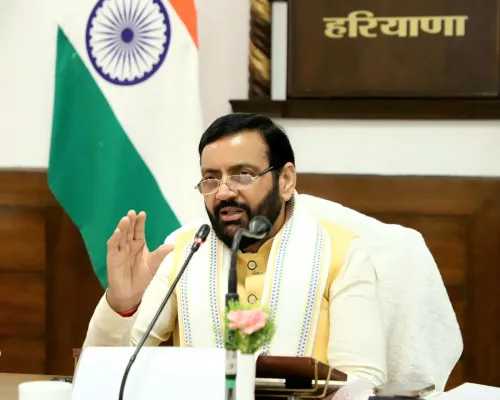
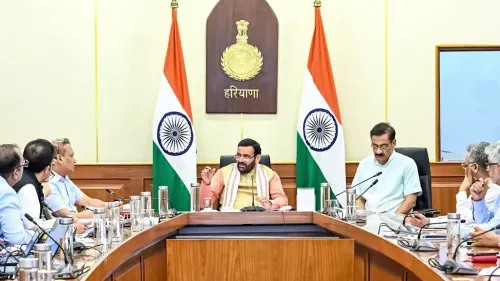
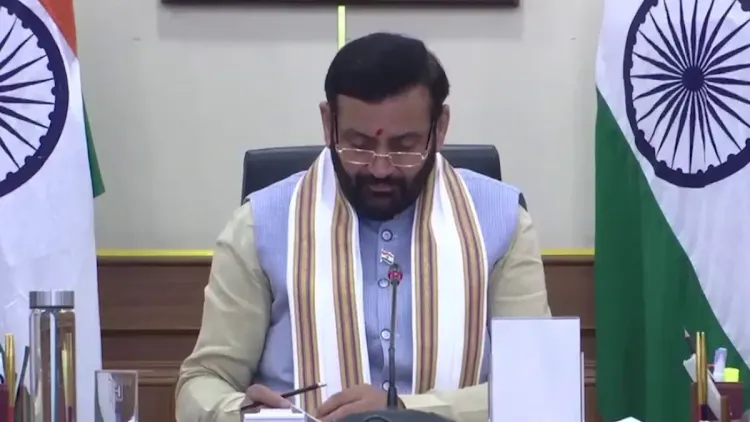
Chief Minister Nayab Saini chaired a Vision-2047 review meeting in Chandigarh on June 2, 2026, examining five-year roadmaps for Haryana's Cooperation and Food and Supply departments. He stressed the role of cooperative societies and self-help groups in achieving the Developed India-Developed Haryana goal and directed time-bound completion of all targets.
Key Takeaways
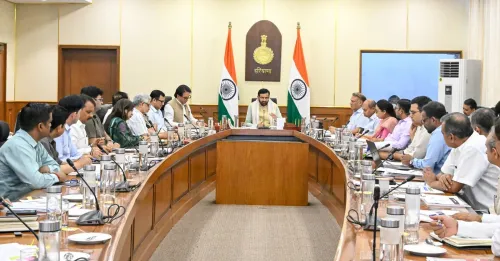
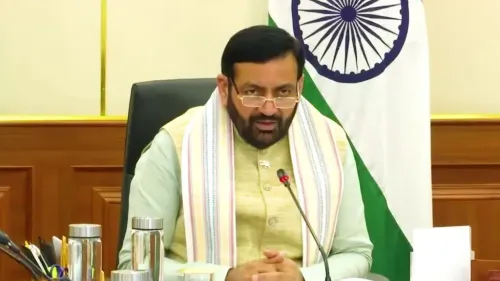
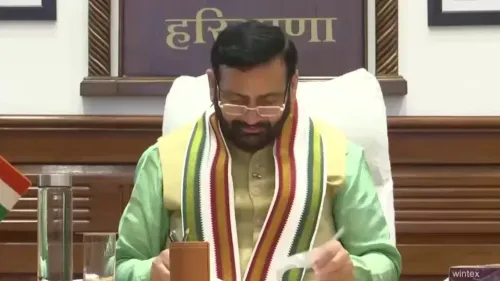
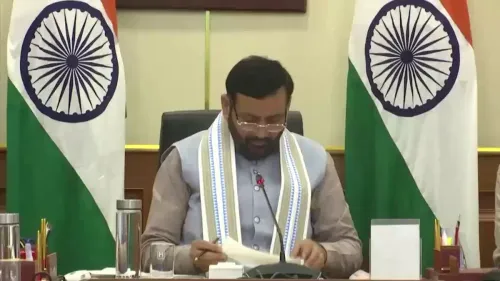
CM Nayab Saini chaired a Haryana Vision-2047 review meeting in Chandigarh on June 2, 2026 .
The meeting reviewed five-year roadmaps and action plans of the Cooperation Department and the Food and Supply Department .
The CM stated that cooperative societies, self-help groups, and rural institutions are central to achieving the Developed India-Developed Haryana vision.
Saini directed departments to complete all fixed targets in a time-bound manner .
The review is part of the state's alignment with the national Viksit Bharat@2047 framework launched by PM Modi in 2023 .
Haryana's cooperative movement has historical roots dating to the 1960s , with renewed focus through central schemes such as DAY-NRLM .
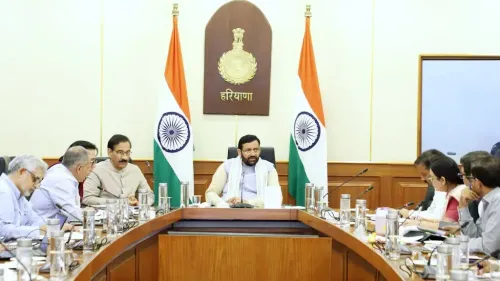
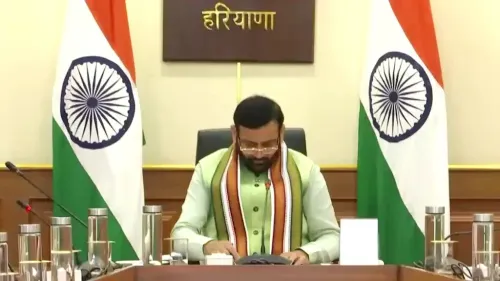
The Chief Minister's Office of Haryana announced on Tuesday, June 2, 2026, that Chief Minister Nayab Saini is chairing a high-level review meeting in Chandigarh under the Haryana Vision-2047 framework, examining the five-year roadmaps and action plans of the Cooperation Department and the Food and Supply Department.
Context
The meeting, convened under the state's long-term planning framework, is focused on the implementation status of sectoral roadmaps designed to translate Vision-2047 targets into time-bound deliverables. The Chief Minister's Office posted in Hindi: 'बैठक में मुख्यमंत्री ने कहा कि विकसित भारत-विकसित हरियाणा के संकल्प को साकार करने में सहकारी समितियों, स्वयं सहायता समूहों एवं ग्रामीण संस्थाओं की महत्वपूर्ण भूमिका है' — translated: 'At the meeting, the Chief Minister stated that cooperative societies, self-help groups, and rural institutions play a vital role in realising the resolve of a Developed India and a Developed Haryana.' CM Saini also directed that all fixed targets be met in a time-bound manner.
Policy Backdrop
The review is anchored in the national Viksit Bharat@2047 vision articulated by Prime Minister Narendra Modi in 2023, which prompted states across India — including Haryana — to develop corresponding long-term plans aligned with the 2047 centenary of Indian independence. Haryana Vision-2047 is the state's own adaptation of that framework, breaking overarching socio-economic goals into five-year action plans with periodic departmental monitoring. The practice of reviewing such roadmaps at the Chief Minister level signals administrative intent to hold departments accountable against measurable benchmarks.
Haryana has a deep-rooted cooperative tradition dating to the 1960s, and the state's cooperative sector was further energised under central schemes such as DAY-NRLM (Deendayal Antyodaya Yojana – National Rural Livelihoods Mission), launched in 2011, which institutionalised self-help groups as grassroots economic units. The Food and Supply Department manages the public distribution system and essential commodity supply chains, making it a critical pillar of rural welfare and food security in the state.
Stakeholders and Impact
The primary beneficiaries of the departments under review are cooperative societies, self-help groups (SHGs), and rural farming communities across Haryana's districts. Cooperative institutions serve as conduits for rural credit, collective marketing, and input supply, while SHGs provide financial inclusion for women and marginalised households. A strengthened action plan in the Food and Supply Department would directly affect the efficiency of the public distribution system serving millions of beneficiaries in the state.
Broader coordination between these two departments — cooperatives and food supply — could unlock synergies in procurement, storage, and last-mile delivery of essential commodities, particularly for rural populations. The emphasis on 'time-bound' target completion, as directed by CM Saini, suggests the state intends to move from planning to measurable execution ahead of the next review cycle.
What's Next
Observers will watch for the release of detailed five-year action plans from both departments and subsequent quarterly progress reports on cooperative sector reforms and modernisation of the public distribution system. Any linkages with upcoming central government budget allocations for the cooperative sector — a priority area for the Union government in recent years — will also be closely tracked. The outcome of today's review could shape departmental priorities and resource allocation for the remainder of the current fiscal cycle.
Point of View
Department-level accountability structures ahead of electoral cycles. By personally chairing the review, CM Nayab Saini is signalling political ownership of rural economic delivery — particularly through cooperatives and the public distribution system, both of which have direct bearing on agrarian and lower-income constituencies. The explicit invocation of 'time-bound' targets suggests the administration is aware of the gap between vision documents and on-ground outcomes, and is attempting to close it through top-down monitoring. How effectively the five-year roadmaps translate into verifiable quarterly milestones will determine whether Vision-2047 remains a planning exercise or becomes a genuine governance instrument.
NationPress
20 Sept 2026
Frequently Asked Questions
What is Haryana Vision-2047?
Haryana Vision-2047 is the state government's long-term socio-economic planning framework aimed at achieving comprehensive development in Haryana by 2047, aligned with the national Viksit Bharat@2047 initiative launched by PM Narendra Modi in 2023.
What did CM Nayab Saini say at the Vision-2047 meeting on June 2?
CM Nayab Saini stated that cooperative societies, self-help groups, and rural institutions play a vital role in realising the Developed India-Developed Haryana vision, and directed all departments to complete fixed targets in a time-bound manner.
Which departments were reviewed in the Haryana Vision-2047 meeting?
The meeting reviewed the five-year roadmaps and action plans of the Cooperation Department and the Food and Supply Department of the Haryana government.
What is the role of self-help groups in Haryana's development plan?
Self-help groups are identified as key grassroots institutions for financial inclusion and rural economic delivery under Haryana Vision-2047, consistent with their role under central schemes like DAY-NRLM since 2011.
Where was the Haryana Vision-2047 review meeting held?
The review meeting was held in Chandigarh, the capital of Haryana, under the chairmanship of Chief Minister Nayab Saini.