CM Saini Reviews Revenue Dept Welfare Schemes With DCs
Synopsis
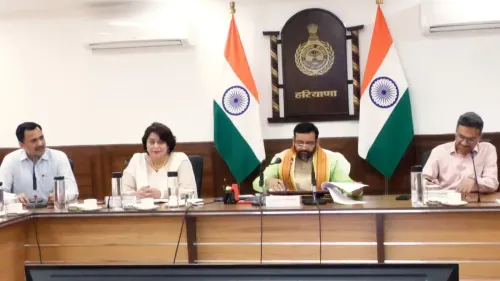
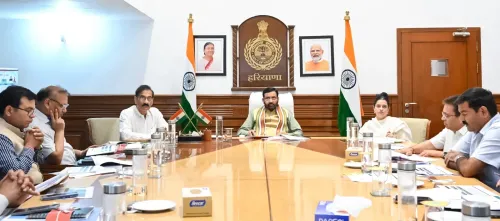
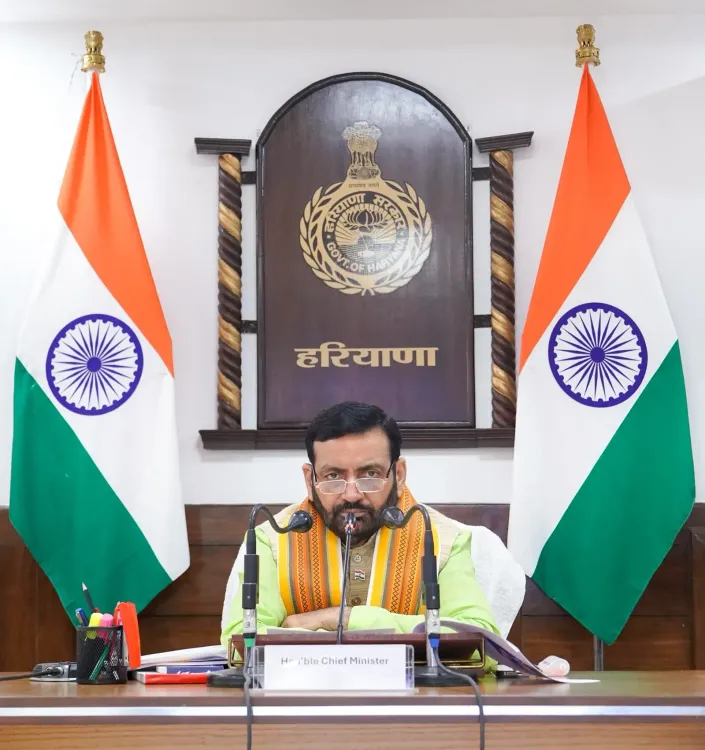
Haryana Chief Minister Nayab Singh Saini on 19 July 2026 held a review meeting with all district Deputy Commissioners and Municipal Corporation Commissioners, focusing on the progress of Revenue Department welfare schemes and strengthening technology-driven transparency in citizen services.
Key Takeaways
CM Nayab Singh Saini chaired a review meeting with all district Deputy Commissioners and Municipal Corporation Commissioners on 19 July 2026 .
The meeting reviewed progress and implementation of welfare schemes run by the Haryana Revenue Department .
Special emphasis was placed on strengthening technology-based, transparent systems for revenue services.
The stated goal is to make revenue-related work 'simple, swift, and easy' for ordinary citizens.
Quick resolution of citizen grievances related to revenue services was declared the government's top priority.
The inclusion of Municipal Corporation Commissioners extended the review's scope to urban service delivery.
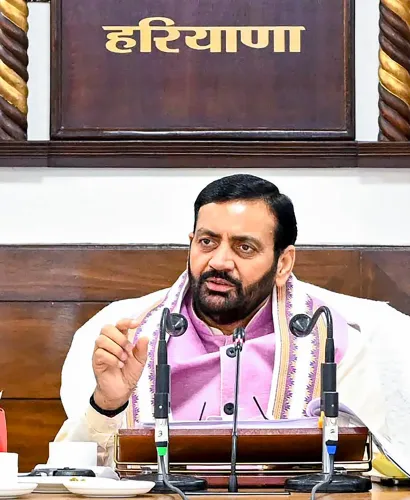
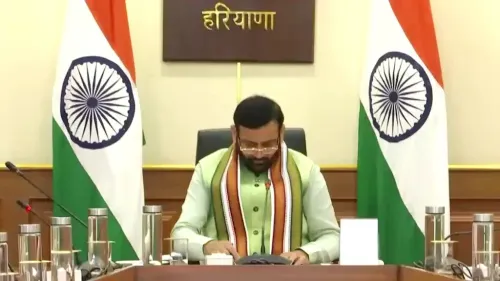
Haryana Chief Minister Nayab Singh Saini on Sunday, 19 July 2026, chaired a high-level review meeting with all district Deputy Commissioners and Municipal Corporation Commissioners to assess the progress and implementation of welfare schemes run by the Haryana Revenue Department. The meeting placed particular emphasis on strengthening technology-driven transparency to make revenue-related services faster and more accessible for ordinary citizens.
Context
Posting on X, CM Saini stated: 'आज सभी जिला उपायुक्तों एवं नगर निगम आयुक्तों के साथ आयोजित महत्वपूर्ण समीक्षा बैठक में राजस्व विभाग द्वारा संचालित विभिन्न जनकल्याणकारी योजनाओं की प्रगति एवं प्रभावी क्रियान्वयन की विस्तृत समीक्षा की।' ('Today, in an important review meeting held with all District Deputy Commissioners and Municipal Corporation Commissioners, the progress and effective implementation of various public welfare schemes run by the Revenue Department was reviewed in detail.')
He added that the meeting focused on 'making the technology-based transparent system even more robust, so that revenue-related work of the common people can be completed simply, swiftly, and easily.' CM Saini underlined that ensuring quick resolution of problems faced by 'my family members of the state' is the government's top priority.
Policy Backdrop
Haryana has been pursuing systematic digitisation of land records and revenue services since the early 2000s, accelerating under the national Digital India Land Records Modernization Programme — formerly the National Land Records Modernization Programme. The state computerised its jamabandi (land ownership records) and related revenue documents as part of a broader e-governance roadmap that gained momentum from 2014 onward.
Periodic review meetings between the Chief Minister and district-level officers are a standard oversight mechanism in Indian state administration, used to monitor execution of welfare and regulatory functions at the grassroots. Such meetings allow the state government to identify bottlenecks in service delivery and direct course corrections in real time.
Stakeholders and Impact
The primary beneficiaries of improved revenue administration are Haryana's landowners, farmers, and citizens who routinely need certificates, mutation entries, and other revenue-linked documents. Delays and opacity in these services have historically been a source of public grievance across Indian states, making technology-led reforms a key political as well as administrative priority.
Municipal Corporation Commissioners being included alongside Deputy Commissioners signals that the review extended beyond rural land records to urban revenue and civic service delivery — broadening the scope of accountability in this round of oversight.
What's Next
Attention will now turn to whether the state government releases district-level performance metrics on service turnaround times, and the rollout status of any upgraded online revenue portals that may have been discussed in the meeting. The inclusion of municipal commissioners suggests that urban service delivery timelines could also come under formal review in the weeks ahead.
For citizens, the immediate implication is a renewed administrative push to resolve pending revenue cases faster — a commitment CM Saini has framed as a personal priority for his government.
Point of View
CM Saini is broadening accountability beyond rural land records into urban civic services — a politically significant expansion given Haryana's growing urban voter base. The emphasis on technology-led transparency also aligns with the BJP's national narrative of 'minimum government, maximum governance,' lending the administrative exercise a dual political and policy purpose. Whether the meeting translates into measurable improvements in service turnaround times will determine its real impact on citizen experience.
NationPress
20 Jul 2026
Frequently Asked Questions
What was the review meeting chaired by Haryana CM Nayab Singh Saini about?
The meeting, held on 19 July 2026, reviewed the progress and implementation of welfare schemes run by the Haryana Revenue Department, with a focus on technology-based transparency and faster citizen services.
Who attended the Revenue Department review meeting called by CM Saini?
All district Deputy Commissioners and Municipal Corporation Commissioners of Haryana attended the review meeting.
What is the Haryana Revenue Department responsible for?
The Haryana Revenue Department manages land records, revenue collection, mutation entries, and the implementation of select welfare schemes for citizens across the state.
How has Haryana been improving its revenue services through technology?
Haryana has computerised land records and revenue documents under the Digital India Land Records Modernization Programme since the early 2000s, accelerating digitisation from 2014 onward to reduce delays and improve transparency.
What did CM Nayab Singh Saini say about citizen grievances in the meeting?
CM Saini stated that ensuring quick resolution of problems faced by the people of Haryana in revenue-related matters is his government's top priority.