CM Nayab Saini Thanks NGO for Widows, Disabled, Women Aid
Synopsis
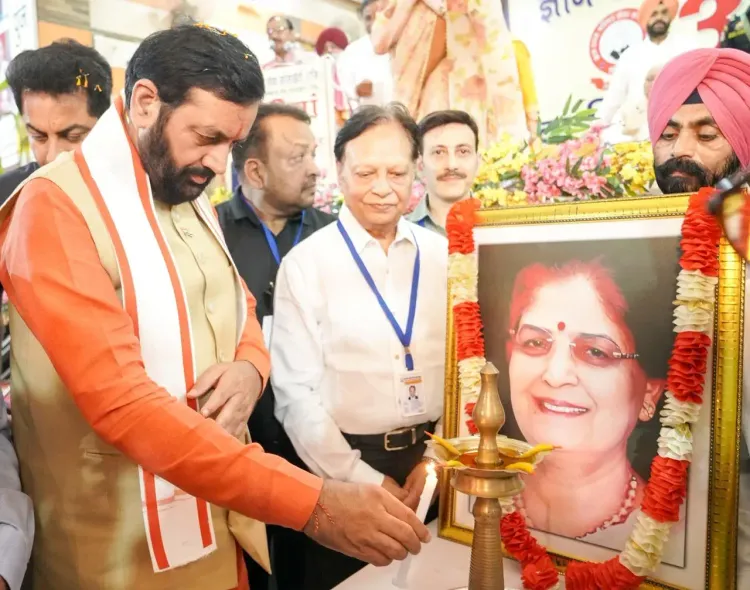
Haryana Chief Minister Nayab Singh Saini publicly thanked a charitable institution on June 14, 2026, for providing ration support to widows, bicycles to persons with disabilities, sewing machines to women, and educational aid to thousands of children, including during the COVID-19 pandemic.
Key Takeaways
Haryana CM Nayab Singh Saini acknowledged a charitable institution's welfare work in a post on June 14, 2026 .
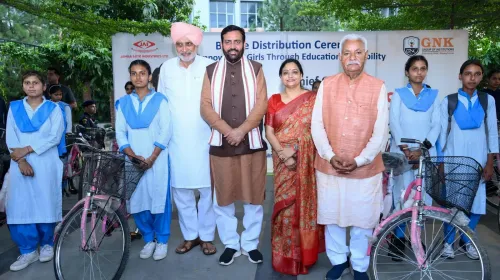
The institution provided ration support to widowed mothers and sisters, bicycles to persons with disabilities, and sewing machines to women.
Thousands of children received educational assistance through the organisation.
The institution maintained its service activities continuously through the COVID-19 pandemic and other disaster situations.
CM Saini expressed 'heartfelt gratitude' to all office-bearers, members, and volunteers of the institution.
The acknowledgment aligns with a broader pattern of BJP -ruled state governments publicly endorsing NGO contributions to social welfare.
Haryana Chief Minister Nayab Singh Saini on Sunday, June 14, 2026, publicly acknowledged a charitable institution for its sustained welfare work, praising its outreach to widowed women, persons with disabilities, women seeking livelihood skills, and thousands of children in need of educational support.
Context
In his post, CM Saini highlighted the range of assistance provided by the institution: ration support for widowed mothers and sisters (vidhwa mata-bahnon ko rashan sahayata), bicycles for persons with disabilities (divyangjan), sewing machines for women, and educational aid for thousands of children. He noted that the organisation continued its service work without interruption even during the COVID-19 pandemic and other disaster situations.
Saini expressed his 'heartfelt gratitude' to all office-bearers, members, and volunteers of the institution, calling their work 'praiseworthy and inspiring' (sarahniya evam prernadayi).
Policy Backdrop
The welfare categories singled out — widows, persons with disabilities, women's skill development, and children's education — mirror the priority segments of several Haryana government schemes, including widow pension disbursements and the state's disability support programmes. Charitable institutions that supplement these entitlements play a recognised role in last-mile delivery, particularly in rural and semi-urban districts.
During the COVID-19 pandemic from 2020 onwards, coordination between the Haryana state government and civil-society organisations became especially visible, as formal supply chains for ration and education were disrupted. Institutions that maintained continuity during that period earned particular credibility with state administrations.
Stakeholders and Impact
The direct beneficiaries cited in the post span four distinct vulnerable groups: widowed women who receive food security support, divyangjan (persons with disabilities) who gain mobility through bicycles, women who acquire income-generating skills through sewing machines, and children whose schooling is supported through educational assistance. Each of these groups corresponds to a recognised gap in public welfare delivery that non-governmental organisations have historically helped bridge.
The public acknowledgment by a sitting Chief Minister carries institutional weight, signalling state-level endorsement of the institution's model and potentially encouraging similar organisations to scale their outreach across Haryana.
What's Next
Observers will watch whether Haryana's upcoming assembly sessions or budget presentations include fresh allocations or formal partnership frameworks for registered charitable institutions working in widow welfare, disability support, and women's skilling. Chief ministerial recognition of this kind sometimes precedes formal memoranda of understanding or grant-in-aid arrangements between the state and civil-society bodies. The broader pattern of BJP-governed states publicly celebrating NGO contributions to social welfare suggests this acknowledgment fits a deliberate communication strategy around grassroots service delivery.
Point of View
Mobility aids, skill tools, and education support in a single post, Saini connects the institution's grassroots work to the BJP's broader 'Antyodaya' framing of reaching the last person in the queue. The specific mention of pandemic-era continuity is politically significant — it positions non-state actors as reliable partners rather than stopgaps, which could foreshadow formal state-NGO frameworks. Haryana's upcoming budget cycle will be the real test of whether this appreciation translates into structural support for such institutions.
NationPress
13 Sept 2026
Frequently Asked Questions
What did Haryana CM Nayab Singh Saini say about the charitable institution?
CM Nayab Singh Saini expressed heartfelt gratitude to the institution's office-bearers, members, and volunteers, calling their work 'praiseworthy and inspiring' for providing rations to widows, bicycles to persons with disabilities, sewing machines to women, and educational aid to thousands of children.
Which groups benefited from the charitable institution praised by CM Saini?
The institution provided support to four groups: widowed mothers and sisters (ration aid), persons with disabilities (bicycles), women (sewing machines), and thousands of children (educational assistance).
Did the institution work during the COVID-19 pandemic?
Yes, CM Saini specifically noted that the institution continued its service work without interruption during the COVID-19 pandemic and other disaster situations.
What is the significance of CM Saini publicly thanking an NGO?
Public acknowledgment by a sitting Chief Minister signals state-level endorsement of the institution's welfare model and may encourage similar organisations to expand their outreach across Haryana, sometimes preceding formal government partnerships.
What welfare schemes does Haryana run for widows and persons with disabilities?
Haryana operates widow pension disbursements and disability support programmes aimed at these groups; charitable institutions that supplement these entitlements help bridge last-mile delivery gaps, particularly in rural and semi-urban areas.