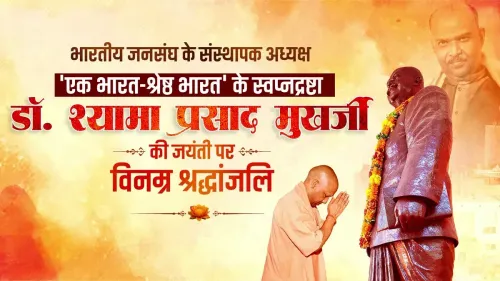
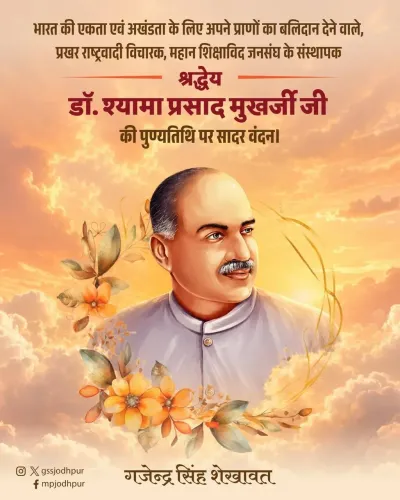
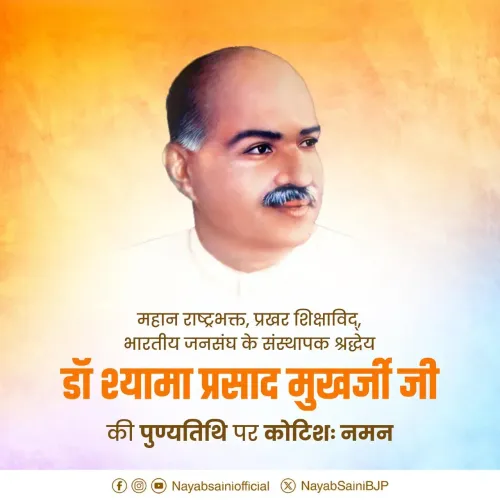
CM Nayab Saini Pays Tribute to Dr. Shyama Prasad Mukherjee on Birth Anniversary
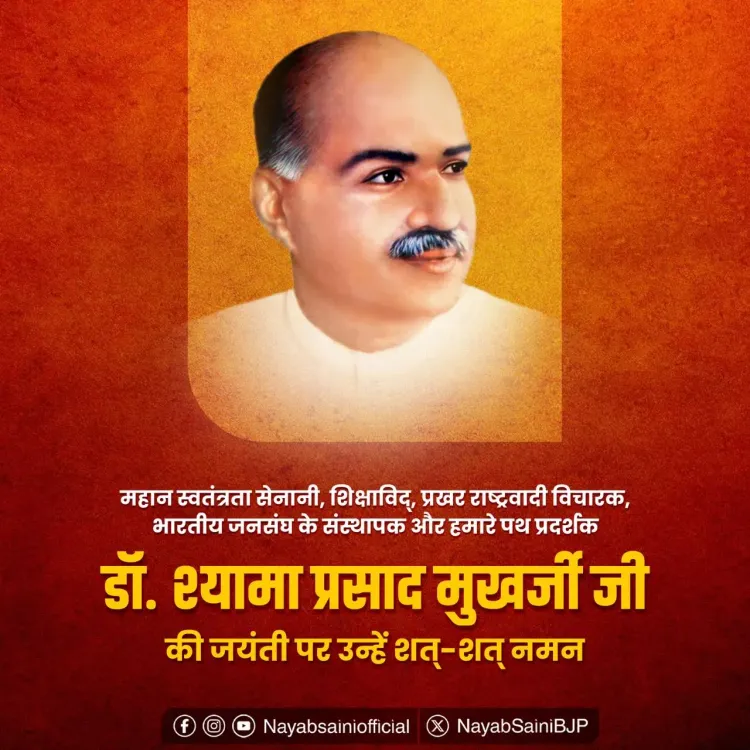
Synopsis
Haryana Chief Minister Nayab Singh Saini on 6 July 2026 honoured Dr. Shyama Prasad Mukherjee on his birth anniversary, invoking the Jana Sangh founder's famous slogan against dual constitutional arrangements and calling his legacy an enduring inspiration for national unity.
Key Takeaways
CM Nayab Singh Saini paid tribute to Dr.
Shyama Prasad Mukherjee on his birth anniversary on 6 July 2026 .
Saini quoted Mukherjee's iconic slogan opposing two emblems, two heads of state, and two constitutions within one nation.
Mukherjee founded the Bharatiya Jana Sangh in 1951 , the direct ideological predecessor of the BJP.
Mukherjee died in Srinagar in 1953 while protesting entry restrictions into Jammu and Kashmir .
The BJP's abrogation of Article 370 in August 2019 was presented as a fulfilment of Mukherjee's vision.
BJP leaders across states observe 6 July annually to reinforce the party's Jana Sangh ideological lineage.
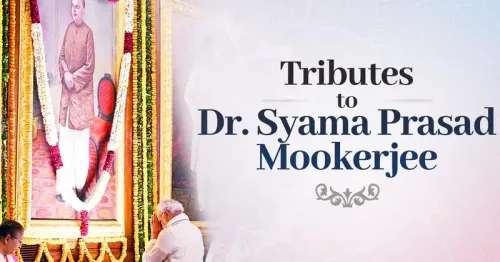
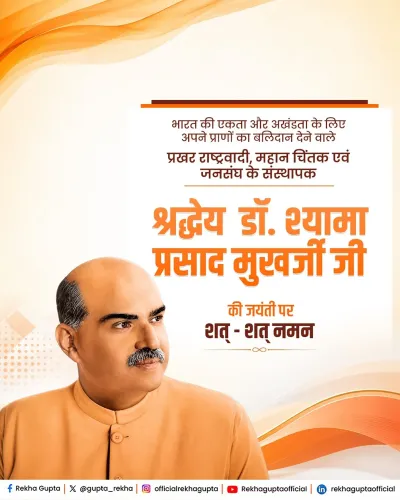
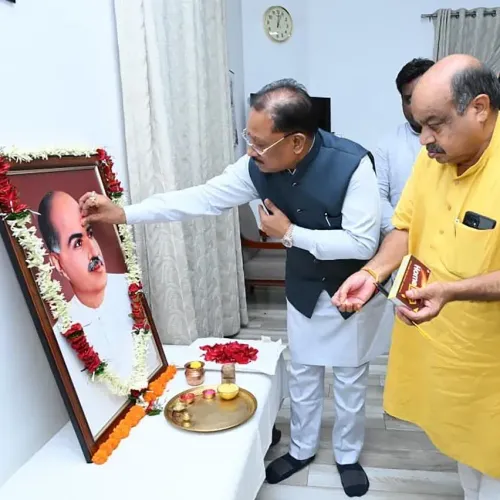
Haryana Chief Minister Nayab Singh Saini on Monday, 6 July 2026, paid tribute to Dr. Shyama Prasad Mukherjee on his birth anniversary, honouring the founder of the Bharatiya Jana Sangh as a 'great educationist, ardent nationalist thinker, and visionary leader' who dedicated his life to the unity and integrity of India.
Context
In his post, CM Saini quoted Mukherjee's defining slogan — 'Ek desh mein do nishan, do pradhan aur do samvidhan nahin chalenge' [One nation cannot have two emblems, two heads of state, and two constitutions] — to underscore the ideological foundations that Mukherjee championed. The tribute described Mukherjee's sacrifice, dedication, and commitment to the nation as an enduring inspiration for all citizens to fulfil their duties with the nation's interest paramount.
Saini's message called on people to draw inspiration from Mukherjee's legacy to 'faithfully discharge their duties keeping national interest supreme and to strengthen the unity and integrity of India.'
Policy Backdrop
Dr. Shyama Prasad Mukherjee founded the Bharatiya Jana Sangh in 1951 as a political platform to advance national integration and oppose regional separatism. He died in Srinagar in 1953 while protesting restrictions on entry into Jammu and Kashmir, which required a separate permit — the precise context for his famous slogan opposing dual constitutional arrangements.
The Bharatiya Jana Sangh later merged into the Janata Party and is regarded as the direct ideological predecessor of the Bharatiya Janata Party (BJP). The BJP government's abrogation of Article 370 in August 2019 was publicly framed by party leadership as the fulfilment of Mukherjee's vision of one nation, one constitution.
Stakeholders and Impact
BJP leaders across states issue tributes on 6 July each year to link the party's current governance agenda with its Jana Sangh origins. The practice forms a consistent strand of ideological messaging that frames national unity and rejection of dual constitutional arrangements as core party principles.
In Haryana, such statements reinforce cadre commitment and signal continuity with the broader national BJP narrative. Party workers, nationalist organisations, and students of political history are the primary audiences for such commemorations.
What's Next
Haryana BJP units are expected to organise commemorative programmes and seminars around 6 July to mark Mukherjee's birth anniversary. State government messaging is likely to continue linking Mukherjee's legacy to ongoing national integration and education initiatives in the days ahead.
As the BJP prepares for future electoral and organisational cycles, tributes of this nature serve to reinforce ideological continuity from the Jana Sangh era to the present — a pattern that will remain a fixture of party communication in Haryana and beyond.
Point of View
Using the Jana Sangh founder's slogan to draw a direct line from 1951 to the party's present governance narrative. The explicit invocation of the 'one nation, one constitution' slogan — years after Article 370's abrogation — signals that the BJP continues to mine Mukherjee's legacy for political identity rather than treating it as settled history. In Haryana, where the BJP holds power, such messaging also serves an inward-facing cadre-mobilisation function ahead of organisational cycles. The tribute reflects a broader pattern in which state-level BJP leaders align local political communication with the central party's foundational ideology.
NationPress
5 Oct 2026
Frequently Asked Questions
Who was Dr. Shyama Prasad Mukherjee?
Dr. Shyama Prasad Mukherjee was an educationist, nationalist thinker, and founder of the Bharatiya Jana Sangh in 1951. He opposed Article 370 and died in Srinagar in 1953 while protesting restrictions on entry into Jammu and Kashmir.
Why is 6 July significant for the BJP?
6 July is the birth anniversary of Dr. Shyama Prasad Mukherjee, founder of the Bharatiya Jana Sangh, the ideological predecessor of the BJP. BJP leaders across India mark the day with tributes to reinforce the party's foundational ideology of national unity.
What is the slogan 'Ek desh mein do nishan, do pradhan aur do samvidhan nahin chalenge'?
The slogan, attributed to Dr. Shyama Prasad Mukherjee, translates to 'One nation cannot have two emblems, two heads of state, and two constitutions.' It was a direct challenge to the special constitutional status of Jammu and Kashmir under Article 370.
What did Nayab Singh Saini say about Shyama Prasad Mukherjee?
Haryana CM Nayab Singh Saini described Mukherjee as a great educationist, ardent nationalist thinker, and visionary leader, and called his sacrifice and dedication an enduring inspiration for citizens to keep national interest supreme.
How is the Bharatiya Jana Sangh connected to the BJP?
The Bharatiya Jana Sangh, founded by Dr. Mukherjee in 1951, merged into the Janata Party and its members later formed the Bharatiya Janata Party in 1980. The BJP regards the Jana Sangh as its direct ideological predecessor.