CM Saini visits Ericsson in Sweden, eyes robotics for Haryana emergencies
Synopsis
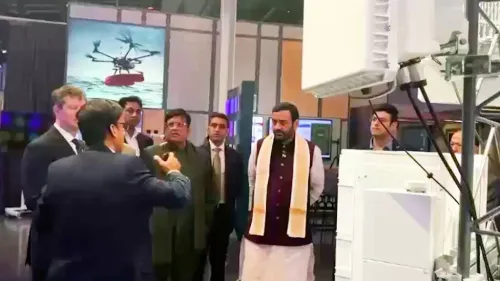
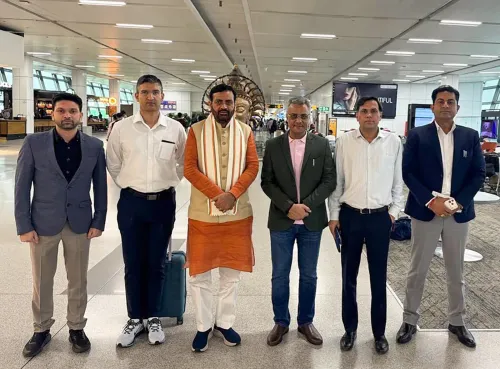
Haryana Chief Minister Nayab Singh Saini visited Ericsson in Sweden on 17 October 2026, observing advanced robotics designed for emergency response in remote areas — a visit that could shape the state's future disaster-management capabilities.
Key Takeaways
Haryana CM Nayab Singh Saini visited Ericsson's facility in Sweden on 17 October 2026 .
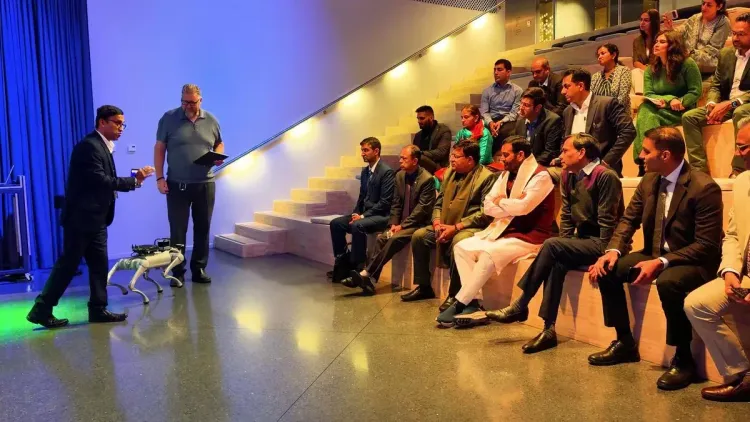
He observed robotics technologies developed specifically for handling emergencies in remote and inaccessible areas .
Ericsson is a Swedish telecom and networking giant with existing infrastructure partnerships inside India.
The visit aligns with a broader pattern of Indian state leaders scouting foreign technology for domestic disaster management.
No MoU or pilot project has been announced yet; follow-up developments are being watched.
Inside Ericsson's Sweden facility, Haryana Chief Minister Nayab Singh Saini got a close look on Saturday, 17 October 2026, at robotics systems purpose-built for one of emergency management's hardest problems — reaching people where humans simply cannot go.
Posting from Stockholm, Saini wrote that he 'observed modern robotics technologies at Ericsson in Sweden,' describing them as 'advanced technologies being developed to handle emergencies in remote and inaccessible areas' that 'can prove to be extremely beneficial in critical situations.' For a state like Haryana, which borders the Himalayas and contains flood-prone river belts, that framing carries real operational weight.
What Ericsson is building — and why Haryana is watching
Ericsson, the Swedish telecommunications and networking giant, has long extended its engineering footprint beyond conventional telecom into connectivity-dependent emergency systems. Robotic platforms that can operate in areas cut off by floods, landslides, or structural collapse depend critically on low-latency, resilient communications — precisely the infrastructure Ericsson develops. The convergence of robotics and ruggedised networking is what makes these systems viable in disaster corridors.
Ericsson maintains substantial operations and infrastructure partnerships inside India, giving any future Haryana tie-up a ready institutional pathway rather than a cold-start negotiation.
Haryana's interest in emergency tech — a pattern across Indian states
Saini's visit fits a clear trend: Indian state chief ministers and senior officials have increasingly taken international technology tours to scout tools for disaster management and public safety. The logic is straightforward — adapt and pilot abroad-proven technology locally rather than build from scratch. Haryana's geography, straddling the Yamuna basin and close to the Shivalik foothills, gives state planners genuine cause to invest in remote-area emergency capability.
The visit raises a natural next question: will it produce something concrete — a pilot project, a memorandum of understanding, or a procurement pathway? No such announcement has been made yet, but engagements of this kind by Indian state governments typically feed back into domestic emergency-framework planning within months.
A Haryana that can deploy a robot into a flood-cut village or a post-earthquake rubble field before a rescue team can safely arrive is not a distant policy vision — it is exactly the use-case Saini flagged in Stockholm. Whether Sweden's robotics find their way into the state's disaster-response kit now depends on what follows the visit.
Point of View
An international robotics scouting mission also carries political utility domestically. Ericsson's existing India footprint lowers the implementation barrier significantly, making a pilot more plausible than purely aspirational. The broader arc here is Indian federalism's growing appetite for bilateral tech engagement at the sub-national level — a trend that could eventually reshape how Indian states procure emergency technology.
NationPress
17 Oct 2026
Frequently Asked Questions
Why did Haryana CM Nayab Singh Saini visit Ericsson in Sweden?
Saini visited Ericsson's Sweden facility on 17 October 2026 to observe advanced robotics technologies being developed to manage emergencies in remote and inaccessible areas, with a view to exploring their potential use in Haryana.
What kind of robotics did Nayab Singh Saini see at Ericsson?
According to his post, he observed modern robotics systems designed to handle emergency situations in areas that are difficult or impossible for humans to reach — relevant for disaster scenarios like floods, landslides, or structural collapses.
Does Ericsson have operations in India?
Yes. Ericsson has significant telecom infrastructure operations and partnerships within India, which could provide an institutional pathway for any future collaboration with Haryana on emergency technology.
Will Haryana sign an MoU with Ericsson or Sweden for robotics?
No formal MoU or pilot project has been announced following Saini's visit. Possible follow-up agreements are being watched but remain unconfirmed.
Is Haryana at risk of the kind of remote-area emergencies these robots address?
Haryana borders the Shivalik foothills and contains flood-prone river belts along the Yamuna basin, giving the state practical reasons to invest in emergency technology capable of operating in cut-off or difficult terrain.