CM Sai's Chhattisgarh Sets ₹3,100/Qtl Paddy Rate, Nov 15 Start
Synopsis
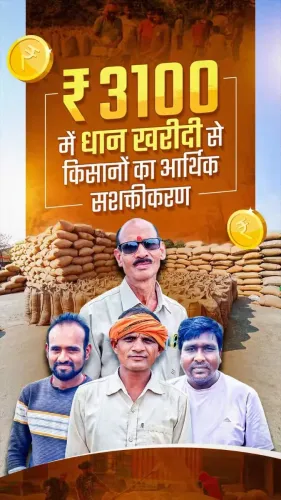
Chhattisgarh's CMO announces paddy procurement starting 15 November at ₹3,100 per quintal, capped at 21 quintals per acre, with 360 new procurement centres added to ease farmer access across the state under CM Vishnu Dev Sai.
Key Takeaways
Chhattisgarh will begin paddy procurement on 15 November 2026 , per an announcement by the Chief Minister's Office.
The procurement rate is set at ₹3,100 per quintal , with a maximum purchase limit of 21 quintals per acre .
360 new procurement centres are being opened to improve access for farmers across the state.
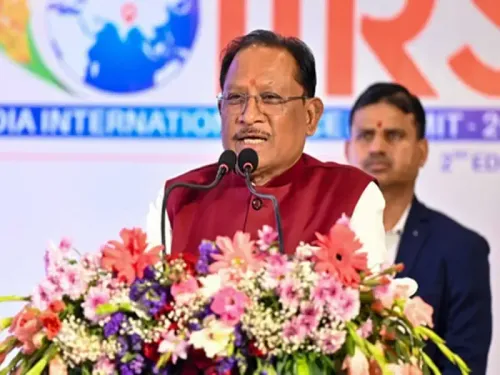
The initiative is credited to Chief Minister Vishnu Dev Sai and framed under the state's 'sushasan' (good governance) platform.
Chhattisgarh has operated decentralised paddy procurement since the early 2000s as a major rice-producing state in central India.
Timely payment disbursement and operational readiness of new centres by the November start date remain key benchmarks to watch.
Before the kharif harvest reaches the threshing floor, Chhattisgarh has already set the terms — and for the state's paddy farmers, those terms look significantly more assured this season. The Chief Minister's Office of Chhattisgarh announced on Wednesday, 28 October 2026 that the state government will launch its paddy procurement drive from 15 November, buying up to 21 quintals per acre at a rate of ₹3,100 per quintal — and is opening 360 new procurement centres to ease the selling process for farmers across the state.
The official post, shared in Hindi from the CMO handle, framed the announcement with a pointed phrase: 'Annadaata ka sammaan, sushasan sarkar ki pehchaan' — 'Respect for the food provider is the identity of good-governance government.' It credited Chief Minister Vishnu Dev Sai by name, stating the government 'is committed to ensuring a fair price for farmers' hard work and making the paddy procurement process smooth.'
What ₹3,100 per Quintal Means on the Ground
Paddy price announcements are never just numbers — they are the difference between a profitable season and a debt spiral for smallholder families. At ₹3,100 per quintal with a per-acre cap of 21 quintals, a farmer with even two acres of paddy land stands to receive up to ₹1,30,200 through the government procurement channel for that holding. The per-acre ceiling is a standard logistical tool that prevents bulk diversion and keeps the system focused on genuine cultivators.
Chhattisgarh has run decentralised paddy procurement under the central food security framework since the early 2000s, building one of the more extensive state-level procurement networks among rice-growing states. The addition of 360 new collection centres this cycle directly addresses the perennial rural complaint of long travel distances to sell produce — a friction point that often pushes farmers toward local traders at distressed prices.
360 New Centres and the Infrastructure Push
The centre-expansion announcement is arguably the most operationally consequential detail in the post. More procurement points mean shorter queues, reduced transport costs for farmers, and faster throughput for state agencies managing stock. For a large, partly forested state like Chhattisgarh — where interior agricultural pockets can be difficult to connect — proximity to a procurement centre is a genuine economic variable.
Rice-producing states routinely announce seasonal procurement calendars ahead of the kharif harvest to channel produce into government stocks and provide price assurance. What distinguishes this announcement is the simultaneous infrastructure expansion alongside the rate and timeline — signalling that the government is attempting to remove both the price risk and the logistics burden in one seasonal sweep.
Mid-November Rollout: What to Watch
The 15 November start date gives the administration roughly two and a half weeks to operationalise the new centres, verify farmer registrations, and deploy payment infrastructure. How quickly farmers receive payment after sale — and whether the new centres are genuinely functional on day one — will be the real test of the announcement's ambition. In past cycles, disbursement timelines have been a key pressure point. CM Sai's government has staked its 'sushasan' — good governance — branding on precisely this kind of delivery record.
For Chhattisgarh's paddy farmers, the calendar has been set and the price posted. The harvest season will judge whether the promise matches the payout.
Point of View
Expand the infrastructure, and attach it to the ruling party's 'sushasan' brand — all before a single grain is delivered. For CM Sai's BJP government, which came to power in late 2023 partly on a platform of farmer-welfare corrections, sustaining visible procurement momentum is essential to consolidating its rural base ahead of future electoral cycles. The 360-centre expansion is particularly notable because logistics, not just price, have historically been the gap between government procurement targets and actual uptake in Chhattisgarh's dispersed agricultural geography. The real measure of this policy's credibility will be disbursement speed — a variable the announcement does not yet address.
NationPress
28 Oct 2026
Frequently Asked Questions
When does paddy procurement start in Chhattisgarh in 2026?
Paddy procurement in Chhattisgarh is set to begin on 15 November 2026 , as announced by the Chief Minister's Office.
What is the paddy procurement rate in Chhattisgarh for 2026?
The Chhattisgarh government has announced a procurement rate of ₹3,100 per quintal for the current kharif season, with a maximum purchase of 21 quintals per acre.
How many new procurement centres is Chhattisgarh opening for paddy purchase?
360 new procurement centres are being added this season to make it easier for farmers to sell their paddy without travelling long distances.
Who is the Chief Minister of Chhattisgarh overseeing the paddy procurement scheme?
Vishnu Dev Sai is the Chief Minister of Chhattisgarh, and the procurement announcement has been made under his leadership.
What is the maximum paddy a farmer can sell to the Chhattisgarh government per acre?
Farmers can sell a maximum of 21 quintals per acre to the state government under this procurement cycle.