CM Sai's Seva Sankalp Takes PMMVY Aid to Chhattisgarh Mothers
Synopsis
The Chhattisgarh CMO on 24 September 2026 highlighted how the PMMVY's Rs 5,000 maternity cash assistance is reaching pregnant women through the state's Seva Sankalp Abhiyan, framing it as evidence of 'double engine' BJP governance under CM Vishnu Deo Sai.
Key Takeaways
PMMVY provides Rs 5,000 cash assistance to pregnant and lactating women for their first child, launched nationally in 2017 .
The Seva Sankalp Abhiyan is Chhattisgarh's active campaign to push Central and state welfare scheme benefits directly to eligible beneficiaries.
Chief Minister Vishnu Deo Sai is associated with the Seva Sankalp Abhiyan outreach effort.
The 'double engine' framing signals coordinated implementation between the BJP -led state and Central governments.
Chhattisgarh's rural and tribal populations are the primary target audience for improved last-mile scheme delivery.
State-level utilisation reports and upcoming health department reviews will be key to assessing actual beneficiary reach.
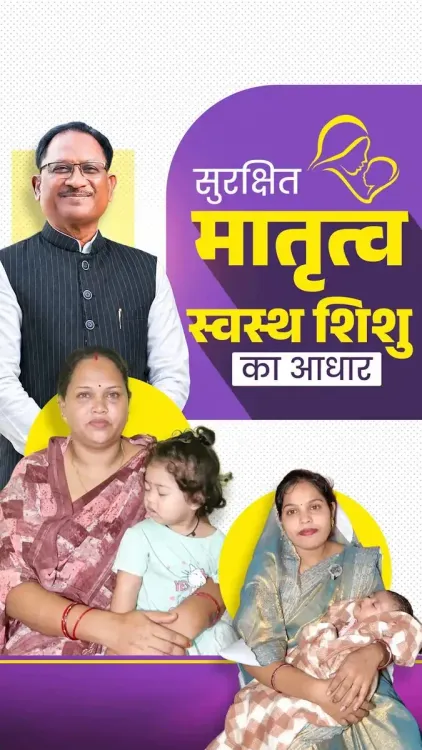
For pregnant women in Chhattisgarh navigating the financial strain of maternity, a central government cash transfer is now arriving with renewed state-level muscle — and the Chief Minister's Office of Chhattisgarh made that promise visible on Thursday, 24 September 2026.
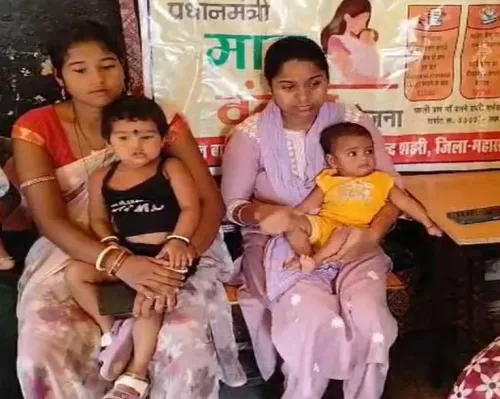
The post highlights how the Pradhan Mantri Matru Vandana Yojana (PMMVY) — the Central government's flagship maternity benefit programme — is being actively channelled to eligible beneficiaries through Seva Sankalp Abhiyan, the state's dedicated outreach campaign. The message, carrying the hashtag #SevaKiKahani ('a story of service'), frames the effort as proof that 'double engine government' — a BJP phrase denoting alignment between the state and Centre — delivers on ground.
What PMMVY Offers and Who It Reaches
Launched in 2017 under the National Food Security Act, PMMVY provides Rs 5,000 in cash assistance to pregnant and lactating women for their first child — money intended to offset wage loss during pregnancy and support nutritional needs. The scheme targets women who are most vulnerable to skipping ante-natal care due to economic pressure.
Chhattisgarh, a state with significant tribal and rural populations, has historically faced challenges in last-mile delivery of Central welfare programmes. That is precisely the gap Seva Sankalp Abhiyan is designed to close — ensuring paperwork, eligibility verification, and actual disbursement reach women who might otherwise fall through the cracks.
Seva Sankalp Abhiyan — The State's Delivery Engine
The Seva Sankalp Abhiyan is a Chhattisgarh government campaign launched under Chief Minister Vishnu Deo Sai to systematically identify and serve eligible beneficiaries across both Central and state welfare schemes. Rather than waiting for citizens to come to government offices, the campaign pushes outreach to villages and communities.
The 'double engine' framing is deliberate political messaging — it signals that a BJP government in Raipur and a BJP government in New Delhi operate in coordinated tandem, removing bureaucratic friction that can stall Central scheme funds at the state border. Whether that coordination produces measurably better outcomes than peer states is a question that upcoming Chhattisgarh health department reviews and utilisation reports will need to answer.
Women's Welfare as a Political Touchstone
The post fits a broader pattern visible across BJP-governed states since 2014 — repeated, high-visibility amplification of women-centric Central schemes as evidence of 'good governance.' PMMVY sits alongside programmes like Ujjwala (LPG cylinders) and Ayushman Bharat as a recurring proof point in this narrative.
For Chhattisgarh specifically, maternal health metrics remain a critical area — the state's rural and tribal communities have historically recorded higher maternal mortality than urban India. Getting cash into a pregnant woman's hands before delivery, rather than as a reimbursement months later, can make a tangible difference to nutrition and care-seeking behaviour. That is the human core of what this post is pointing toward.
The real measure of Seva Sankalp Abhiyan's reach will come when the state publishes beneficiary numbers and coverage data. Until then, the campaign is a stated intent with genuine policy machinery behind it — and Chhattisgarh's mothers are its most direct audience.
Point of View
Positioning Centre-state alignment as a governance advantage rather than a constitutional default. However, the real policy test lies in beneficiary coverage data: Chhattisgarh's tribal and rural maternal health indicators have historically lagged, making scheme outreach a genuine public health imperative beyond political messaging. Analysts will watch whether Seva Sankalp Abhiyan produces verifiable improvements in PMMVY enrolment before the next state budget cycle.
NationPress
24 Sept 2026
Frequently Asked Questions
What is Pradhan Mantri Matru Vandana Yojana (PMMVY)?
PMMVY is a Central government maternity benefit scheme launched in 2017 that provides Rs 5,000 in cash assistance to pregnant and lactating women for their first child, aimed at supporting nutrition and offsetting wage loss during pregnancy.
What is Seva Sankalp Abhiyan in Chhattisgarh?
Seva Sankalp Abhiyan is a Chhattisgarh government outreach campaign under Chief Minister Vishnu Deo Sai that works to ensure eligible beneficiaries actually receive the benefits of Central and state welfare schemes.
Who is the Chief Minister of Chhattisgarh in 2026?
Vishnu Deo Sai is the Chief Minister of Chhattisgarh and is associated with the Seva Sankalp Abhiyan welfare delivery campaign.
How much money does a pregnant woman get under PMMVY?
Under PMMVY, eligible pregnant and lactating women receive Rs 5,000 as direct cash assistance for their first child to support nutritional and healthcare needs during pregnancy.
What does 'double engine government' mean in Chhattisgarh welfare schemes?
'Double engine government' is a BJP phrase referring to the alignment between a BJP-led state government and the BJP-led Central government, which is said to reduce bureaucratic friction in delivering Central scheme benefits at the state level.