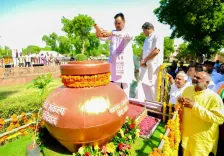
CM Samrat Choudhary Champions Modi's Welfare Schemes at Seva Yatra
Synopsis
Bihar Chief Minister Samrat Choudhary amplified PM Narendra Modi's welfare message during the Seva Sankalp Abhiyan, citing PMAY, Ujjwala, PM-KISAN, and PM Surya Ghar Yojana as evidence that a service-driven ethos ensures benefits reach the poor without leakage.
Key Takeaways
Bihar CM Samrat Choudhary quoted PM Modi at the Seva Sankalp Abhiyan / Seva Yatra on 24 September 2026 .
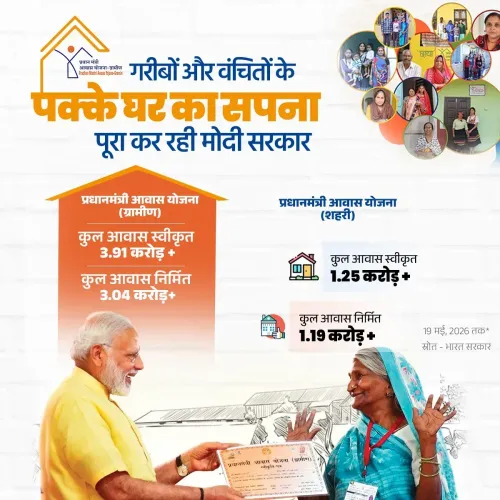
Modi's words cite 4 crore pucca houses under Pradhan Mantri Awas Yojana as a benchmark of service-led governance.
PM Ujjwala Yojana (2016) is highlighted for freeing poor women from smoke-filled kitchens through subsidised LPG connections.
PM-KISAN (2019) and PM Surya Ghar Muft Bijli Yojana (2024) are cited as further proof of direct, no-leakage delivery.
The BJP's Seva Sankalp Abhiyan uses state-level leaders to amplify the Centre's welfare narrative in key states like Bihar.
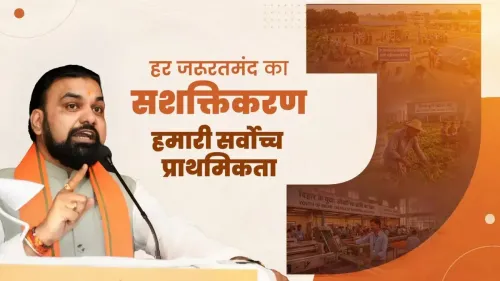
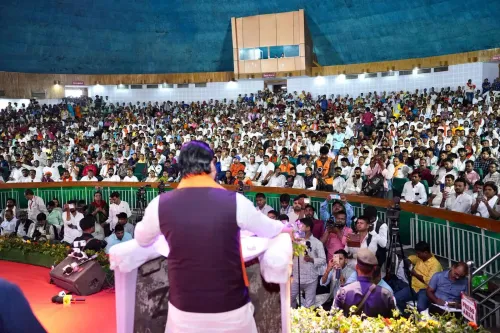
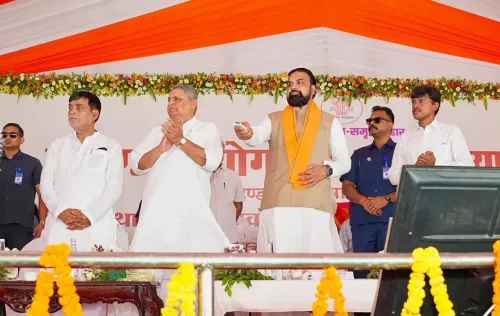
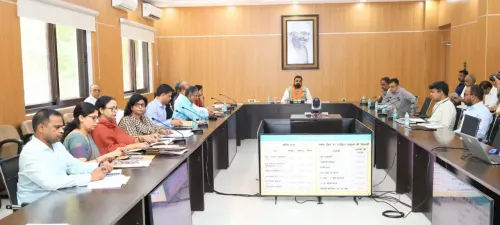
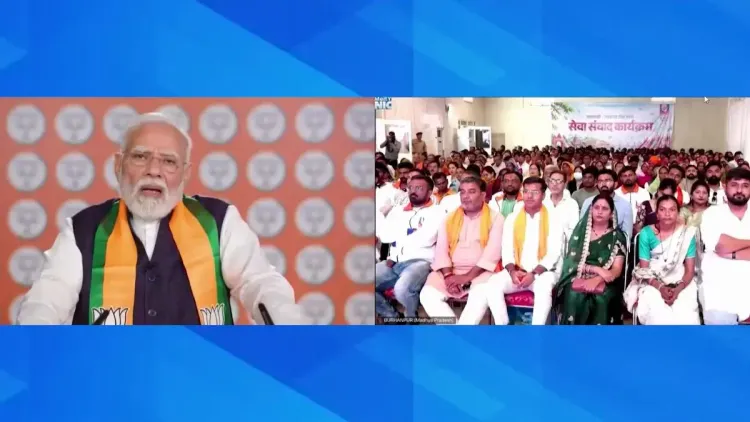
Bihar Chief Minister Samrat Choudhary turned to the language of moral purpose on Thursday, 24 September 2026, quoting Prime Minister Narendra Modi to argue that a spirit of service — not bureaucratic process — is what drives welfare to the doorstep of India's poorest citizens. The occasion: the #SevaSankalpAbhiyan and #SevaYatra, an outreach campaign that has state-level BJP leaders publicly making the case for the Centre's social delivery record.
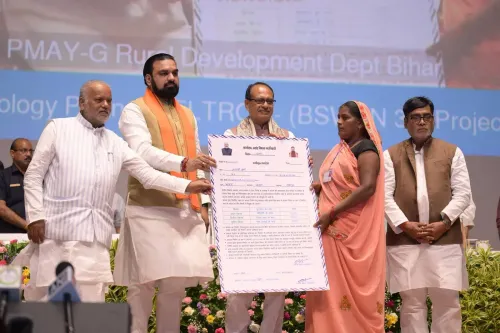
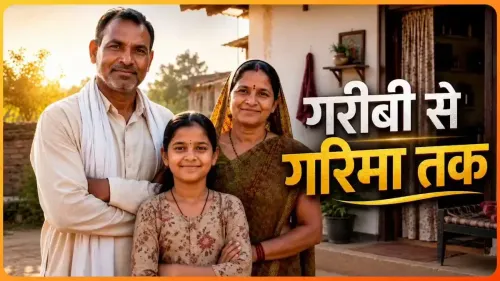
Choudhary shared Modi's words verbatim: 'Jab seva ka bhaav hota hai tabhi 4 crore garibon ko pakke ghar milte hain' — 'It is only when there is a spirit of service that 4 crore poor families receive pucca houses.' The quote stitches together four flagship programmes — Pradhan Mantri Awas Yojana, PM Ujjwala Yojana, PM-KISAN, and PM Surya Ghar Muft Bijli Yojana — as proof of a governance model that reaches without leaking.
Four Schemes, One Argument: No Dilution, No Diversion
The rhetorical spine of the quoted passage is the phrase 'bina dilution, bina diversion' — benefits reaching beneficiaries without being siphoned off or diluted along the way. It is a direct invocation of the Direct Benefit Transfer architecture that the Modi government has built since 2014, routing cash and subsidies straight to Aadhaar-linked bank accounts and bypassing traditional intermediaries.
Each scheme named carries its own weight. Pradhan Mantri Awas Yojana, launched in 2015 with rural and urban arms, targets housing for the economically marginalised. PM Ujjwala Yojana, introduced in 2016, replaced open-fire cooking for below-poverty-line households — especially women — with subsidised LPG connections. PM-KISAN, rolled out in 2019, delivers fixed annual cash instalments directly into farmers' accounts. And PM Surya Ghar Muft Bijli Yojana, announced in 2024, pushes rooftop solar to households with a promise of free electricity units.
Why Bihar's CM Is the Messenger Right Now
Bihar is among the states with the highest concentration of PMAY, Ujjwala, and PM-KISAN beneficiaries — which makes Choudhary a pointed choice of amplifier for this message. The Seva Sankalp Abhiyan is designed precisely to move party leaders into the field, connecting welfare delivery to a political narrative of service-first governance ahead of future electoral cycles.
The move also speaks to a well-worn BJP playbook: state chief ministers echo the Prime Minister's framing during mass-outreach drives, reinforcing the idea that the Centre's welfare architecture and the state's implementation are part of a seamless, unified effort. In Bihar, where poverty-alleviation programmes have historically faced last-mile challenges, the 'no dilution, no diversion' message carries particular local resonance.
Service as political brand, welfare data as electoral armour. The Seva Yatra is both outreach and argument — and Samrat Choudhary is making sure Bihar hears it clearly.
Point of View
Insulating the narrative from bureaucratic or fiscal critiques. For Bihar specifically, where poverty metrics remain among the most challenging in India, aligning with the Centre's 'no dilution, no diversion' record serves a dual purpose: it signals governance competence to voters and reinforces the Modi-Choudhary political axis ahead of the next electoral cycle. The Seva Sankalp Abhiyan functions as both a ground-connect exercise and a live stress-test of how well that welfare story travels in the field.
NationPress
24 Sept 2026
Frequently Asked Questions
What is Seva Sankalp Abhiyan?
Seva Sankalp Abhiyan is a BJP-led outreach campaign in which party leaders and government officials connect with citizens to highlight Central welfare schemes and the 'spirit of service' in governance. It runs alongside field programmes like the Seva Yatra.
What did CM Samrat Choudhary post about welfare schemes?
Bihar Chief Minister Samrat Choudhary shared a quote from PM Narendra Modi arguing that a service-oriented approach is what ensures welfare programmes like PMAY, Ujjwala Yojana, PM-KISAN, and PM Surya Ghar reach the poor without leakage or diversion.
What is Pradhan Mantri Ujjwala Yojana?
Pradhan Mantri Ujjwala Yojana, launched in 2016, provides subsidised LPG connections to below-poverty-line households — particularly women — to replace traditional, smoke-generating cooking fuels and improve health outcomes.
What is PM Surya Ghar Muft Bijli Yojana?
PM Surya Ghar Muft Bijli Yojana, announced in 2024, is a rooftop solar scheme that offers subsidised installations to households, with beneficiaries receiving free electricity units as part of the government's push for renewable energy adoption.
How does PM-KISAN benefit farmers?
PM-KISAN, introduced in 2019, provides a fixed annual income support directly into the bank accounts of landholding farmer families through a Direct Benefit Transfer mechanism, reducing dependence on intermediaries.