CM Samrat Choudhary Extends Father's Day Wishes
Synopsis
Bihar Chief Minister Samrat Choudhary marked Father's Day on June 21, 2026, with a Hindi tribute on X, calling fathers the living embodiment of sacrifice, love, values, and devotion, and extending warm wishes to all on Pitri Divas.
Key Takeaways
Bihar Chief Minister Samrat Choudhary posted a Father's Day tribute on X on June 21, 2026 .
The message was written in Hindi and used the poetic imagery of a father standing in the sun to give shade to his children.
He described fathers as the embodiment of 'sacrifice, love, values, and devotion' ( त्याग, प्रेम, संस्कार और समर्पण ).
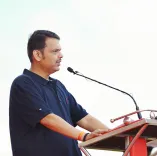
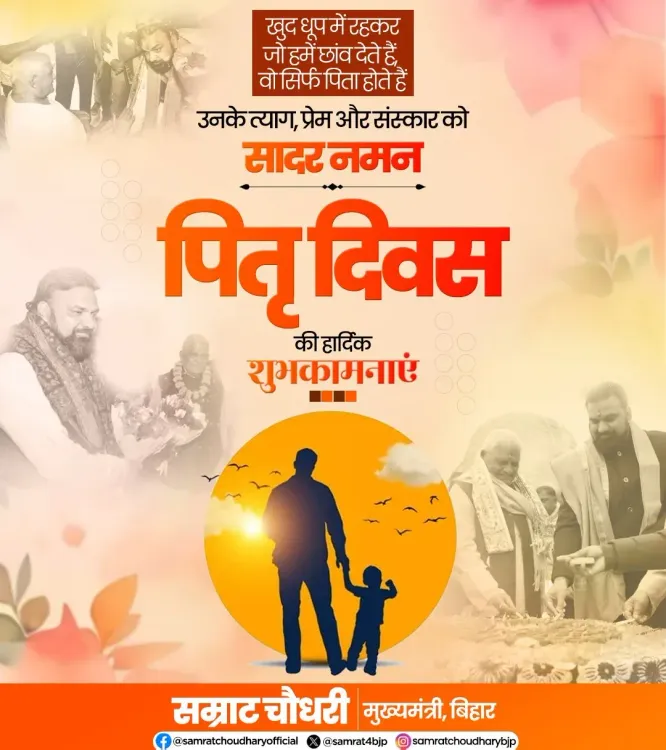
The post was tagged #पितृ_दिवस and #HappyFathersDay and accompanied by an image.
Father's Day is observed on the third Sunday of June each year in India and globally.
The post is consistent with a broader pattern of BJP leaders using social media for culturally resonant, family-values messaging.
Bihar Chief Minister Samrat Choudhary marked Father's Day on Sunday, June 21, 2026, sharing a heartfelt tribute on X that celebrated fathers as embodiments of sacrifice, love, values, and devotion.
The Message
Posting in Hindi, the Chief Minister wrote: 'खुद धूप में रहकर, जो हमें छांव देते हैं, वो सिर्फ पिता होते हैं' — meaning, 'Those who stand in the sun themselves, yet give us shade, are only fathers.' He extended warm wishes to all on the occasion of Pitri Divas, describing fathers as the living embodiment of 'sacrifice, love, values, and devotion.'
The post, tagged #पितृ_दिवस and #HappyFathersDay, was accompanied by an image and went out in the morning hours, reaching a wide audience across social media platforms.
Context
Father's Day is observed annually on the third Sunday of June across India and several other countries, honoring the role of fathers and father figures in family and society. In India, the occasion is widely acknowledged both in personal circles and in public life, with cultural and emotional resonance cutting across regions and communities.
The date — June 21 — also coincides with the summer solstice, lending the Chief Minister's imagery of 'standing in the sun' an additional layer of poetic weight, though the verse itself is a widely appreciated sentiment in Hindi literary tradition.
Policy Backdrop
Indian political leaders across the spectrum have long used social media to participate in cultural and familial observances, viewing such outreach as a way to connect with constituents on shared values rather than partisan lines. BJP leaders in particular have consistently used platforms to amplify messaging around family, tradition, and cultural identity.
Such posts form part of a broader digital communication strategy that complements policy announcements, allowing elected representatives to maintain a human, accessible presence with voters between major governance milestones.
Stakeholders and Impact
The message resonates with Indian families broadly, cutting across caste, class, and regional lines. For a state like Bihar — with a large diaspora within India and abroad — such culturally grounded messaging from the Chief Minister carries both symbolic and political significance.
Observers note that ceremonial social media engagement by state heads reinforces the image of governance that is attentive to both policy and people, particularly around occasions that carry deep emotional meaning for voters.
What's Next
With several major cultural observances on the calendar — including Raksha Bandhan and Diwali — similar outreach from state leaders across India is expected in the months ahead. Such messaging, while ceremonial, forms a consistent thread in the political communication fabric of Indian public life, reflecting the value placed on family and tradition in electoral discourse.
Point of View
Culturally grounded, and deliberately non-divisive. For a BJP Chief Minister in Bihar, where family and tradition are powerful electoral touchstones, such messaging reinforces a brand of governance that presents itself as rooted in Indian cultural life. The poetic Hindi verse also signals a conscious effort to communicate in the register of the electorate rather than bureaucratic language. While ceremonial in nature, these posts collectively build a persona of accessibility and cultural sensitivity that complements harder policy messaging.
NationPress
21 Jun 2026
Frequently Asked Questions
Why did Bihar CM Samrat Choudhary post about Father's Day?
Bihar Chief Minister Samrat Choudhary posted a Father's Day tribute on June 21, 2026, to mark Pitri Divas and extend wishes to all, in keeping with the tradition of Indian political leaders acknowledging major cultural and familial observances on social media.
What did Samrat Choudhary say on Father's Day?
He shared a Hindi verse meaning 'Those who stand in the sun themselves, yet give us shade, are only fathers,' and called fathers the embodiment of sacrifice, love, values, and devotion.
When is Father's Day celebrated in India?
Father's Day, also called Pitri Divas, is celebrated on the third Sunday of June each year in India, aligning with the global observance of the occasion.
What is Pitri Divas?
Pitri Divas is the Hindi name for Father's Day, an annual observance honoring fathers for their sacrifice and guidance, celebrated on the third Sunday of June in India.
Does Samrat Choudhary regularly post cultural greetings on social media?
Yes, like many Indian political leaders, Samrat Choudhary uses social media to share greetings on cultural and national occasions, which is a common outreach practice among BJP leaders to connect with voters on shared family values.