CM Samrat Choudhary Marks World Biodiversity Day
Synopsis
Bihar Chief Minister Samrat Choudhary marked World Biodiversity Day on 22 May with a Hindi message calling biodiversity the foundation of human life, culture, and the future, urging all citizens to pledge protection of nature and wildlife for coming generations.
Key Takeaways
Bihar Chief Minister Samrat Choudhary issued a public message on World Biodiversity Day, 22 May , via social media.
He described biodiversity as 'the foundation for protecting human life, culture, and the future,' not merely an environmental concern.
World Biodiversity Day is observed annually on 22 May , established by the UN General Assembly in 2000 .
India ratified the Convention on Biological Diversity in 1994 and enacted the Biological Diversity Act in 2002 .
State governments, including Bihar , manage forests and wildlife under the federal framework created by the 2002 Act .
The message called on citizens to collectively pledge conservation of nature, wildlife, and the environment for future generations.
Bihar Chief Minister Samrat Choudhary on Friday, 22 May issued a message marking World Biodiversity Day, calling on citizens to pledge the protection of nature, wildlife, and the environment for future generations.
Context
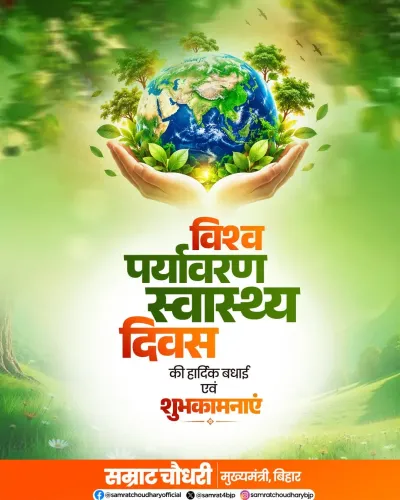
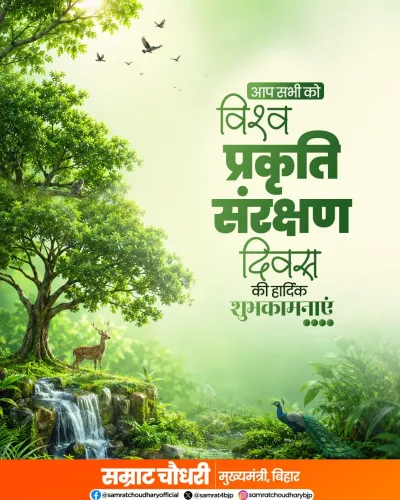
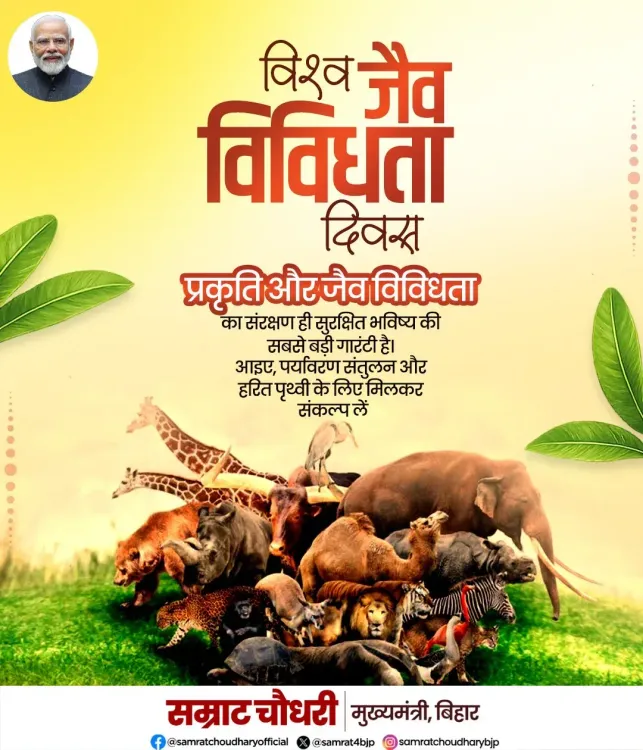
Posting in Hindi on the occasion, CM Choudhary wrote: 'विश्व जैव विविधता दिवस पर यह संदेश है कि प्रकृति ने पृथ्वी पर प्रत्येक जीव को समान रूप से जीवन जीने का अधिकार और अवसर प्रदान किया है' ['On World Biodiversity Day, the message is that nature has given every living being on Earth an equal right and opportunity to live']. He further described biodiversity not merely as the balance of the environment, but as 'the foundation for protecting human life, culture, and the future.' The post was accompanied by an image and tagged with hashtags including #BiodiversityDay and #SaveNature.
World Biodiversity Day, observed every year on 22 May, was established by the United Nations General Assembly in 2000 to raise awareness about the importance of conserving biological diversity. The date commemorates the adoption of the text of the Convention on Biological Diversity (CBD) in 1992.
Policy Backdrop
India ratified the Convention on Biological Diversity in 1994, committing to the conservation of biological resources, their sustainable use, and equitable sharing of benefits. To give domestic effect to this commitment, Parliament enacted the Biological Diversity Act in 2002, which established the National Biodiversity Authority and mandated the creation of State Biodiversity Boards across all states, including Bihar.
Under this federal framework, state governments bear direct responsibility for managing forests, wildlife sanctuaries, and community reserves within their territories. Bihar's State Biodiversity Board is the nodal body for implementing the Act's provisions at the ground level, working with rural communities and local forest departments.
Stakeholders and Impact
The call to action in CM Choudhary's message is directed at the broader public, but the most immediate stakeholders are Bihar's rural communities and the state forest department, which together manage the state's biodiversity heritage. Rural populations in Bihar depend significantly on forest produce, wetlands, and agricultural biodiversity for their livelihoods and food security.
Public messaging from state leaders on global environmental days has become an established practice across India, reflecting the expectation that state administrations visibly align with national and international conservation commitments. Such messages also serve to reinforce cultural narratives around the relationship between communities and nature — a theme CM Choudhary explicitly invoked by linking biodiversity to 'human life, culture, and the future.'
What's Next
Observers will watch whether World Biodiversity Day 2026 prompts any concrete policy announcements from the Bihar government — such as new notifications on protected areas, species recovery programmes, or biodiversity heritage site designations. The Bihar State Biodiversity Board's activities in the coming weeks will indicate whether the message translates into administrative action. At the national level, India continues to work toward its commitments under the Kunming-Montreal Global Biodiversity Framework, which sets targets for protecting 30 per cent of land and ocean areas by 2030.
Point of View
Biodiversity board initiatives, or community reserve declarations in Bihar — will determine its policy weight. The post also reflects the increasing use of social media by state chief ministers to demonstrate alignment with India's international environmental commitments.
NationPress
6 Oct 2026
Frequently Asked Questions
Why is World Biodiversity Day celebrated on 22 May?
World Biodiversity Day is observed on 22 May every year because the United Nations General Assembly designated this date in 2000 to commemorate the adoption of the text of the Convention on Biological Diversity on 22 May 1992 .
What did Bihar CM Samrat Choudhary say on World Biodiversity Day 2026?
CM Samrat Choudhary posted a Hindi message stating that nature gives every living being an equal right to life and called biodiversity 'the foundation for protecting human life, culture, and the future,' urging citizens to pledge conservation of nature and wildlife.
What is India's law on biodiversity conservation?
India enacted the Biological Diversity Act in 2002 to regulate access to biological resources and establish the National Biodiversity Authority and State Biodiversity Boards , following its ratification of the Convention on Biological Diversity in 1994 .
What is the role of Bihar's State Biodiversity Board?
The Bihar State Biodiversity Board is the nodal body for implementing the Biological Diversity Act, 2002 at the state level, working with rural communities and the forest department to manage and conserve the state's biological resources.
What is the Kunming-Montreal Global Biodiversity Framework?
The Kunming-Montreal Global Biodiversity Framework is an international agreement under the Convention on Biological Diversity that sets a target of protecting 30 per cent of the world's land and ocean areas by 2030 , to which India is a signatory.