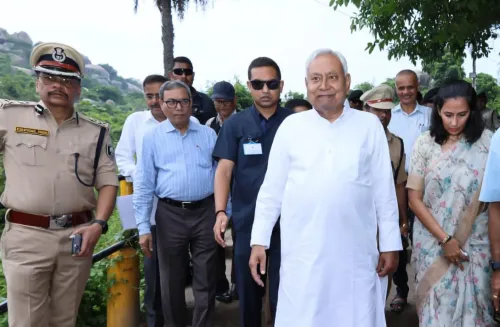
CM Samrat Choudhary hails new Mokama rail bridge over Ganga
Synopsis
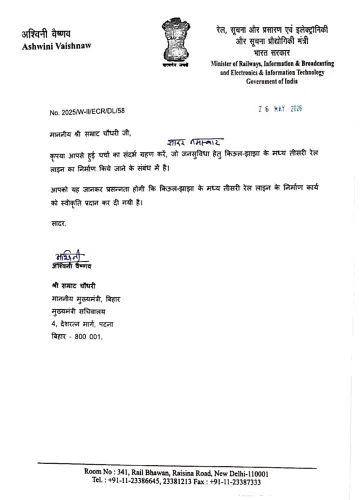
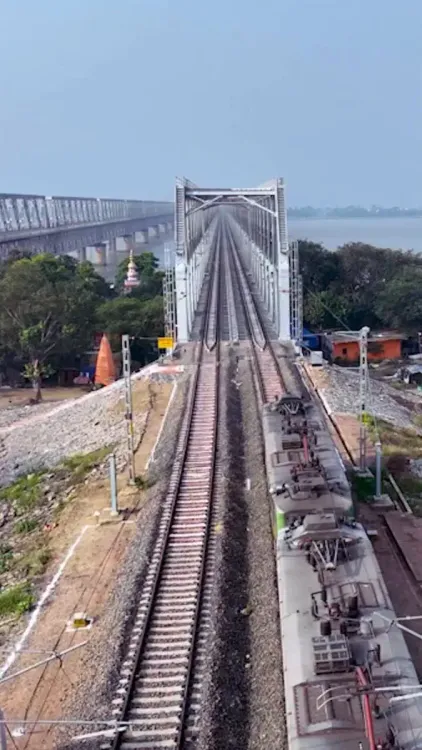
Bihar CM Samrat Choudhary has welcomed the commissioning of a new ₹2,400 crore double-line rail bridge at Mokama, parallel to the historic Rajendra Setu. The structure adds two more rail lines across the Ganga, boosting passenger and freight capacity between north and south Bihar and strengthening links to north-east India.
Key Takeaways
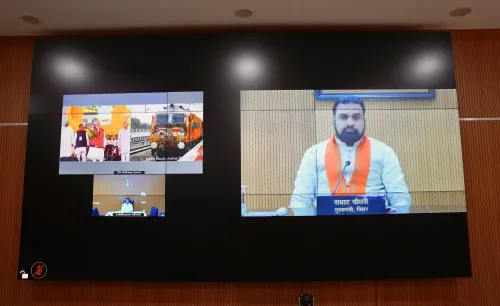
A new double-line rail bridge over the Ganga at Mokama , costing approximately ₹2,400 crore , has been commissioned and is now operational.
The bridge runs parallel to the existing Rajendra Setu , bringing the total number of rail lines on this crossing to three .
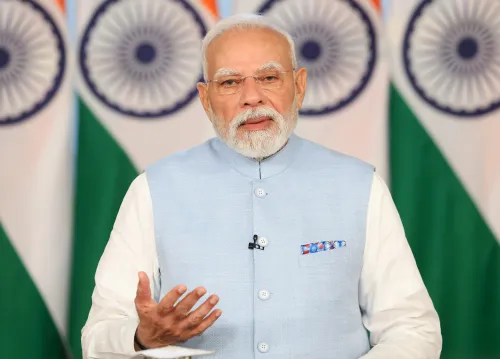
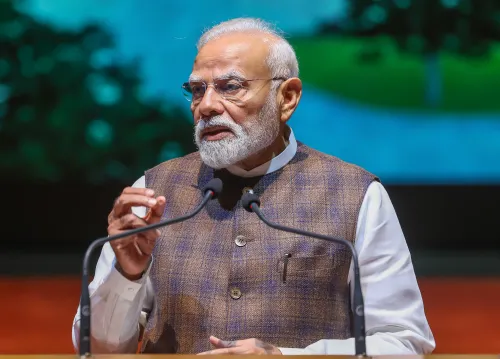
Bihar CM Samrat Choudhary credited PM Narendra Modi and Railway Minister Ashwini Vaishnaw for the project.
The infrastructure is expected to improve both passenger and freight train operations between north and south Bihar.
The bridge is also projected to strengthen Bihar's rail connectivity with north-east India .
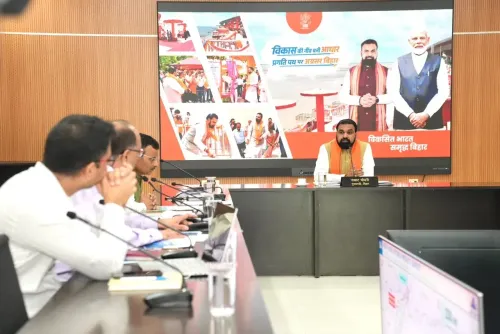
A ₹2,400 crore double-line rail bridge across the Ganga at Mokama is now operational — and Bihar Chief Minister Samrat Choudhary says it is a transformational moment for the state's rail network. The new structure runs parallel to the iconic Rajendra Setu, and together they now put three rail lines on one of Bihar's most critical river crossings for the first time.
Three lines where one once struggled
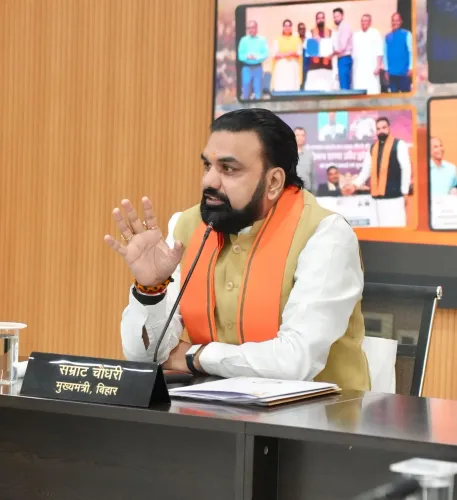
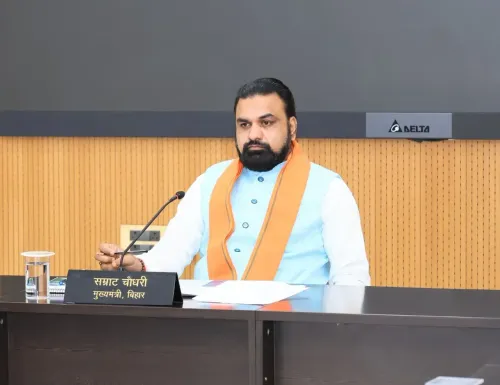
Choudhary took to X on Sunday, October 4, 2026, thanking Prime Minister Narendra Modi and Railway Minister Ashwini Vaishnaw for commissioning the new bridge. In his post, he wrote: 'The operationalisation of the newly built double-line rail bridge parallel to Rajendra Setu on the Ganga at Mokama will give new strength to Bihar's rail network.' The project, he noted, will ease movement for both passenger and freight trains — a bottleneck that has long frustrated commuters and logistics planners alike.
The Rajendra Setu at Mokama is one of the oldest rail-road bridges in eastern India, carrying enormous traffic between north and south Bihar. For decades, its single-line rail capacity constrained train frequencies on a corridor that connects the heartland of Bihar to eastern and north-eastern India. The addition of a dedicated double-line rail bridge changes that arithmetic entirely.
North-South Bihar divide — now bridged in a new way
The Ganga has historically acted as a hard geographic boundary within Bihar, separating the fertile north from the industrially and administratively significant south. Rail connectivity across the river has always been a premium, with limited crossing points absorbing disproportionate traffic volumes. The new bridge directly addresses that pressure, promising smoother scheduling and reduced delays for trains running through Mokama — a key junction on the Patna–Bhagalpur and Patna–Muzaffarpur corridors.
With the old Rajendra Setu now complemented by the new double-line structure, the combined capacity on this stretch jumps significantly. Freight operators moving goods between the north-eastern states and the rest of India will also benefit, as Choudhary specifically highlighted that the bridge will 'strengthen Bihar's rail connectivity with north-east India.'
What ₹2,400 crore buys Bihar
The investment figure — approximately ₹2,400 crore — reflects the engineering scale of bridging the Ganga at this width and depth. River-crossing rail infrastructure of this kind typically involves years of geological survey, foundation work in shifting riverbeds, and weather-window-dependent construction cycles. That the project has reached operational status is itself a logistical milestone. For Bihar, a state that has consistently pushed for parity in rail infrastructure investment compared to other large states, this project signals meaningful follow-through.
Bihar's rail network has seen incremental expansion over the past decade, but chokepoints at river crossings have remained persistent. The Mokama bridge removes one of the most significant of those chokepoints — and sets a template for future Ganga-crossing projects the state may seek to accelerate.
For millions of passengers who ride this corridor daily, the promise is simple: fewer delays, more trains, and a crossing that finally matches the demand placed on it.
Point of View
The timing is politically useful — a visible, large-ticket project that CM Choudhary can directly attribute to central government patronage. More broadly, the project fits into a national pattern of prioritising river-crossing infrastructure in eastern India, where the Ganga has long been a bottleneck for economic integration. The real test will be whether operational improvements in train frequency and freight throughput materialise within the next two to three timetable cycles.
NationPress
5 Oct 2026
Frequently Asked Questions
What is the new Mokama rail bridge over the Ganga?
It is a newly built double-line rail bridge at Mokama in Bihar, constructed at a cost of approximately ₹2,400 crore, running parallel to the existing Rajendra Setu. It has been commissioned and is now operational, bringing the total rail lines on this Ganga crossing to three.
What is the cost of the Mokama double-line rail bridge?
The new rail bridge at Mokama has been built at a cost of approximately ₹2,400 crore, as stated by Bihar Chief Minister Samrat Choudhary.
How does the new Mokama bridge help Bihar's rail network?
The bridge adds two new rail lines alongside the existing Rajendra Setu, significantly increasing capacity for passenger and freight trains between north and south Bihar and improving connections with north-east India.
What is the Rajendra Setu at Mokama?
The Rajendra Setu is one of the oldest rail-road bridges in eastern India, located at Mokama where the Ganga flows between north and south Bihar. The new double-line rail bridge has been built parallel to it.
Who commissioned the Mokama Ganga rail bridge?
The project was commissioned under the central government, with Bihar CM Samrat Choudhary thanking Prime Minister Narendra Modi and Railway Minister Ashwini Vaishnaw for its operationalisation.