CM Samrat Choudhary Hands Out Jobs Under 'Medal Lao, Naukri Pao'
Synopsis
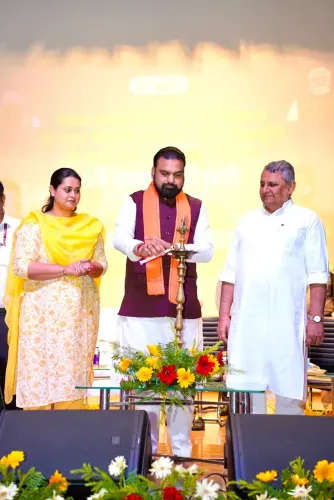
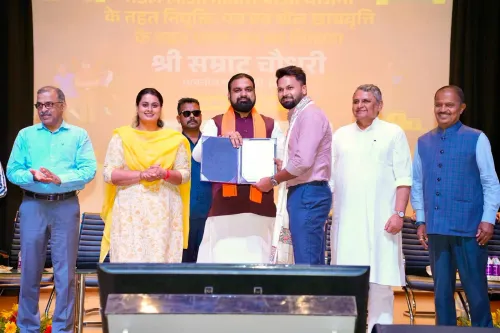
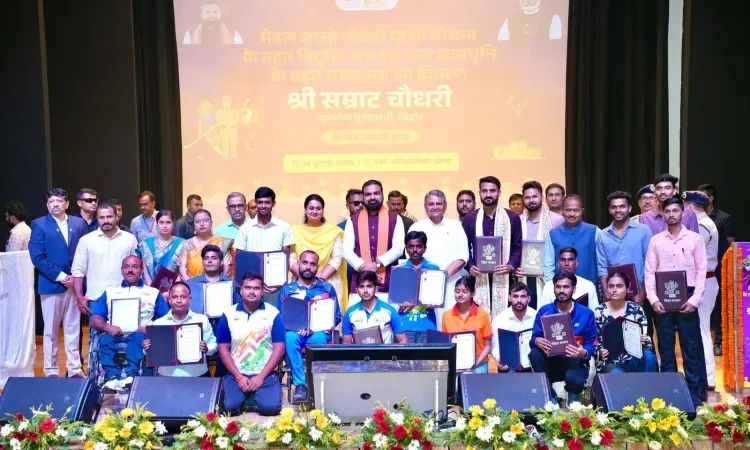
Bihar Chief Minister Samrat Choudhary handed appointment letters and scholarship selection letters to national and international medal-winning athletes under the 'Medal Lao, Naukri Pao' scheme at Energy Auditorium, Patna, pledging panchayat-level talent hunts and world-class infrastructure to make Bihar India's top-ranked sporting state.
Key Takeaways
Bihar CM Samrat Choudhary distributed appointment letters and sports scholarship selection letters to athletes at Energy Auditorium, Patna on 24 July 2026 .
Letters were issued under the 'Medal Lao, Naukri Pao' scheme, which awards government jobs to athletes winning medals at national or international events.
The Bihar government has committed to running special talent-identification campaigns in every panchayat across the state.
CM Choudhary set an explicit goal of making Bihar the number-one state in national-level sports .
The state aims to produce athletes capable of competing at the Olympics, Asian Games, Commonwealth Games , and other global platforms.
Bihar's push mirrors the federal Khelo India framework and intensifies competition with established sporting states like Haryana and Maharashtra .
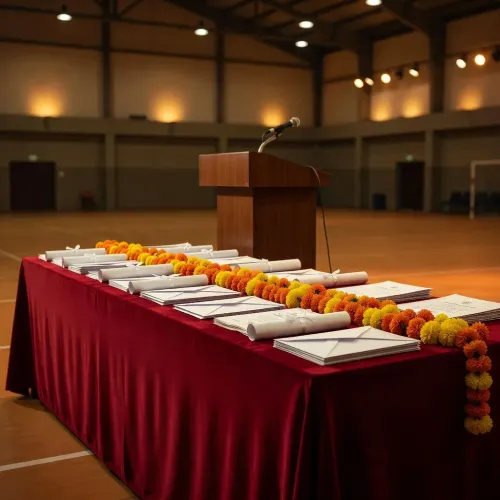
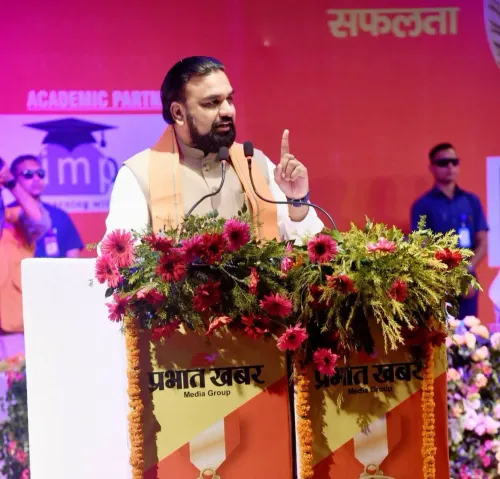
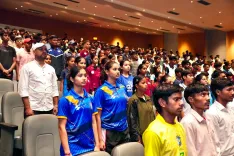
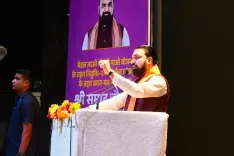
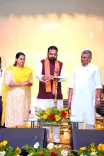
Bihar Chief Minister Samrat Choudhary on Friday, 24 July 2026 distributed appointment letters and sports scholarship selection letters to athletes who have excelled at national and international competitions, at a Bihar Sports Department event held at Energy Auditorium, Patna. The letters were issued under the state's flagship 'Medal Lao, Naukri Pao' scheme, which directly links podium finishes to government employment.
Context
Addressing the gathering, CM Choudhary reaffirmed the Bihar government's resolve to run special talent-identification drives in every panchayat across the state. In his post, he stated: 'Hamara lakshya spasht hai — rashtriya star ke khelon mein Bihar ko number-1 banana' ('Our goal is clear — to make Bihar number one in national-level sports'). He also called for the development of modern, world-class sports infrastructure to support young athletes.
The Chief Minister emphasised that Bihar's athletes should bring glory to the state and the nation on global platforms including the Olympics, FIFA World Cup, Asian Games, Commonwealth Games, and the Indian Premier League.
Policy Backdrop
The 'Medal Lao, Naukri Pao' scheme is a Bihar government initiative that offers guaranteed government jobs and scholarship support to athletes who win medals at recognised national or international sporting events. The scheme is part of a broader trend across Indian states of using public employment as an incentive to drive sports participation and performance.
At the national level, the Khelo India programme, launched by the Government of India in 2017, provides a federal framework for grassroots talent identification, annual competitions, and scholarship support — a structure that state-level schemes such as Bihar's are designed to complement. The panchayat-level scouting drive announced by CM Choudhary mirrors Khelo India's bottom-up approach to unearthing talent from rural and semi-urban areas.
Stakeholders and Impact
The immediate beneficiaries are the athletes who received appointment letters and scholarship selection letters at the Patna event — young men and women who have already demonstrated performance at the national or international level. Going forward, the panchayat-level identification campaigns are intended to reach aspiring athletes in Bihar's roughly 8,000-plus gram panchayats, many of which currently lack structured sports programmes.
Bihar's ambition to reach the top national ranking places it in direct competition with states such as Haryana and Maharashtra, which have long-established sports ecosystems, dedicated academies, and a track record of producing Olympic and Commonwealth Games medallists. The success of Bihar's model will depend heavily on the pace and quality of infrastructure investment alongside the employment incentive.
What's Next
Attention will now turn to the rollout of the panchayat-level talent identification campaigns and whether the state budget allocates dedicated funding for new sports infrastructure projects. The performance of Bihar athletes at upcoming national championships and multi-sport events such as the Asian Games will serve as an early test of whether the scheme is translating into measurable results on the field.
If the panchayat scouting model is implemented at scale, it could become a replicable template for other states seeking to broaden their sports talent pipeline beyond urban centres — and could sharpen inter-state competition at the National Games and other All-India tournaments in the years ahead.
Point of View
Naukri Pao' event is more than a routine felicitation — it is a political signal that the BJP-led state government intends to use sports as a vehicle for youth employment and state pride ahead of future electoral cycles. By anchoring the promise at the panchayat level, CM Choudhary is extending the party's grassroots outreach into a domain — rural youth aspiration — that has historically been underserved in Bihar. The explicit benchmark of becoming 'number one' in national sports sets a measurable, public accountability standard, which is both politically bold and administratively demanding. Whether the state can build the infrastructure and institutional capacity to match that ambition will determine whether this becomes a genuine policy legacy or remains an aspirational headline.
NationPress
24 Jul 2026
Frequently Asked Questions
What is the 'Medal Lao, Naukri Pao' scheme in Bihar?
'Medal Lao, Naukri Pao' is a Bihar government scheme that provides government job appointment letters and sports scholarships to athletes who win medals at national or international sporting competitions.
What happened at the Bihar Sports Department event on 24 July 2026?
Bihar Chief Minister Samrat Choudhary distributed appointment letters and sports scholarship selection letters to medal-winning athletes at Energy Auditorium in Patna under the 'Medal Lao, Naukri Pao' scheme.
What is Bihar's goal for national-level sports?
CM Samrat Choudhary has stated that Bihar's goal is to become the number-one state in national-level sports, supported by panchayat-level talent identification drives and world-class sports infrastructure.
How does Bihar plan to identify sports talent at the grassroots level?
The Bihar government has announced special talent-identification campaigns to be run in every panchayat across the state, aiming to scout athletes from rural and semi-urban areas.
How does Bihar's sports scheme relate to the Khelo India programme?
Bihar's state-level 'Medal Lao, Naukri Pao' scheme and its panchayat-level scouting drive complement the central government's Khelo India programme, which has supported grassroots sports development and talent identification across Indian states since 2017.