Chhattisgarh CMO: Raigarh Bihan SHGs craft eco-Rakhis
Synopsis
Self-help group women under Chhattisgarh's Bihan programme in Raigarh are crafting eco-friendly Rakhis for Raksha Bandhan, the Chief Minister's Office announced on 24 July 2026, linking rural livelihoods, environmental conservation, and women's empowerment ahead of the festival.
Key Takeaways
The Chief Minister's Office of Chhattisgarh highlighted the initiative on 24 July 2026 via its official X account.
Women members of Bihan -affiliated self-help groups in Raigarh district are producing eco-friendly Rakhis for Raksha Bandhan .
The effort carries a dual message of environmental conservation and women's self-reliance , encapsulated in the phrase 'Rakhi ka bandhan, prakriti ka sanrakshan'.
The activity aligns with the national Lakhpati Didi scheme, which targets one crore rural women earning at least Rs 1 lakh annually through SHGs.
Bihan is Chhattisgarh's implementation of the National Rural Livelihood Mission , active since 2011 .
The Women and Child Development Department of Chhattisgarh is a key agency supporting these SHG-led livelihood activities.
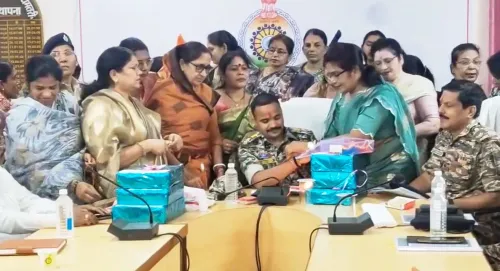
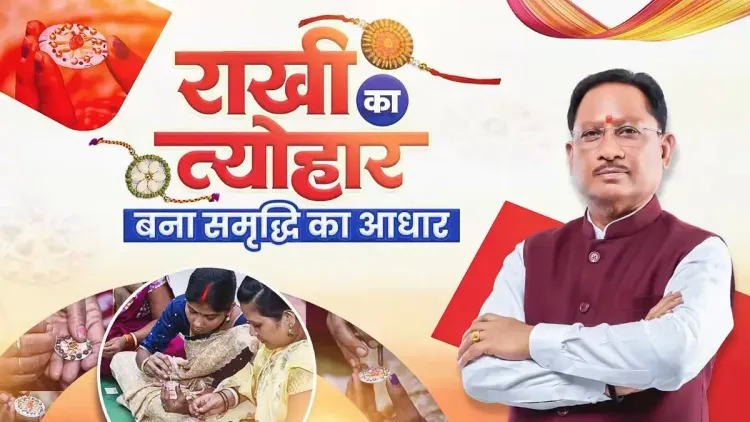
The Chief Minister's Office of Chhattisgarh highlighted on 24 July 2026 that self-help group members affiliated with the Bihan programme in Raigarh district are crafting special eco-friendly Rakhis ahead of Raksha Bandhan, blending environmental conservation with a message of women's empowerment.
The post, shared on the official CMO handle, read: 'Rakhi ka bandhan, prakriti ka sanrakshan' ('The bond of Rakhi, the protection of nature'), describing how the deedis — as women SHG members are affectionately called — are preparing distinctive Rakhis that carry a message of love, environmental protection, and women's self-reliance.
Context
The initiative comes from Raigarh, a district in eastern Chhattisgarh where the Bihan programme has an active network of rural women's self-help groups. By channelling the festive demand for Rakhis into a locally produced, eco-conscious product, the groups are demonstrating how traditional celebrations can be reimagined as livelihood opportunities. The effort also carries a symbolic charge: Raksha Bandhan, a festival centred on the bond between siblings, is here extended to a bond with nature.
Policy Backdrop
Bihan is Chhattisgarh's implementation of the national National Rural Livelihood Mission (NRLM), launched in 2011 to build and capacitate women's self-help groups across India. The state's effort dovetails with the Lakhpati Didi scheme, announced in 2023, which aims to enable one crore rural women to earn at least Rs 1 lakh annually by diversifying their livelihoods through SHG platforms. The Women and Child Development Department of Chhattisgarh, tagged in the post, is a key implementing agency for these programmes in the state.
Indian states have increasingly used cultural festivals as launchpads for SHG-made products, simultaneously generating income and promoting sustainability. Chhattisgarh's approach aligns with the national vocabulary of Atmanirbhar Nari and Viksit Bharat, embedding rural women's economic participation within a broader development narrative.
Stakeholders and Impact
The primary beneficiaries are the rural women of Raigarh who belong to Bihan-affiliated self-help groups. For them, festival-linked production cycles offer a predictable seasonal income stream outside of agriculture. The eco-friendly Rakhis also speak to urban and semi-urban consumers increasingly seeking sustainable alternatives to plastic-heavy festive products.
Chief Minister Vishnu Deo Sai, in office since December 2023, has positioned rural livelihoods and women's empowerment as central planks of his administration. The CMO's amplification of this grassroots activity signals institutional backing for SHG-led enterprise at the highest level of the state government.
What's Next
The spotlight on Raigarh's eco-Rakhis could encourage similar SHG clusters in other Chhattisgarh districts to develop festival-linked eco-products, strengthening the state's pipeline toward its Lakhpati Didi targets. Observers will watch whether the state government formalises market linkages — connecting these SHG products to urban retail or e-commerce platforms — to sustain income beyond the festive season. Progress reports on Chhattisgarh's Lakhpati Didi enrolment numbers will be a key indicator of whether such cultural-livelihood integrations are translating into measurable economic gains for rural women.
Frequently Asked Questions
What is the Bihan programme in Chhattisgarh?
Bihan is Chhattisgarh's state-level implementation of the National Rural Livelihood Mission, launched nationally in 2011. It supports the formation and capacity building of women's self-help groups to generate sustainable livelihoods in rural areas.
Why are Raigarh SHG women making eco-friendly Rakhis?
Women affiliated with the Bihan programme in Raigarh district are crafting special eco-friendly Rakhis ahead of Raksha Bandhan to combine festive production with a message of environmental conservation and women's economic empowerment.
What is the Lakhpati Didi scheme?
Lakhpati Didi is a national initiative announced in 2023 that aims to help one crore rural women earn at least Rs 1 lakh annually by diversifying their income through self-help group platforms.
Who is the Chief Minister of Chhattisgarh in 2026?
Vishnu Deo Sai has been the Chief Minister of Chhattisgarh since December 2023 and has prioritised rural livelihoods and women's empowerment as key policy areas of his administration.
How do self-help groups benefit from festival-linked products like eco-Rakhis?
Festival seasons create predictable demand cycles that allow SHG members to earn seasonal income beyond agriculture. Eco-friendly products also appeal to sustainability-conscious consumers, potentially opening urban and e-commerce markets for rural producers.