Rajnath Singh hails Cabinet nod to BHAVYA Rasayan Scheme
Synopsis
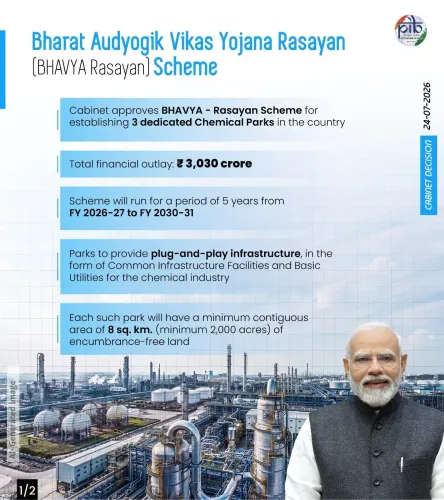
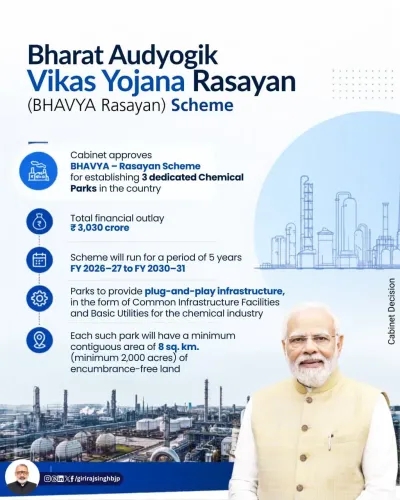
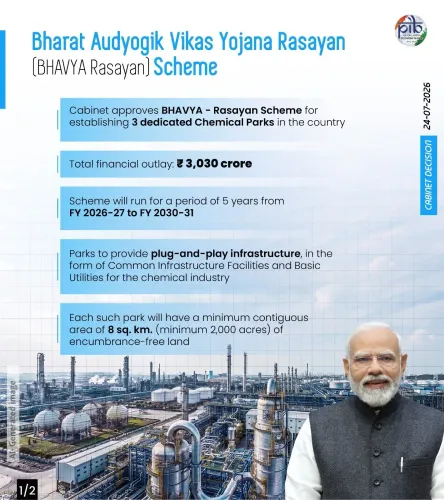
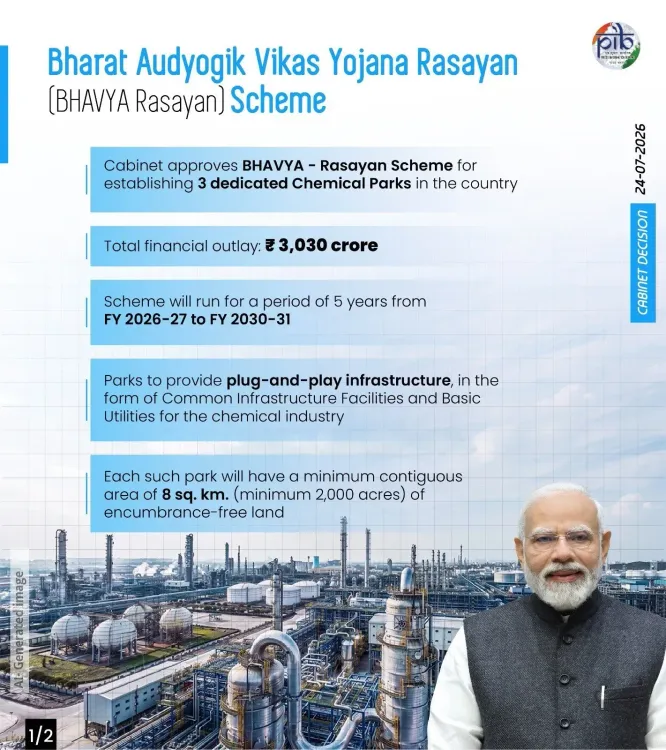
The Union Cabinet on 24 July 2026 approved the BHAVYA Rasayan Scheme to establish world-class chemical parks across India, aiming to strengthen the chemical value chain, attract domestic and global investment, generate large-scale employment, and advance the Aatmanirbhar and Viksit Bharat vision.
Key Takeaways
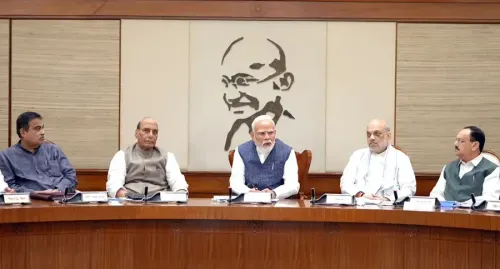
The Union Cabinet chaired by PM Narendra Modi approved the BHAVYA Rasayan Scheme on 24 July 2026 .
The scheme aims to establish world-class chemical parks to transform India's chemical manufacturing landscape.
Key goals include attracting domestic and global investment , generating large-scale employment , and integrating India into global value chains .
The scheme incorporates modern environmental infrastructure , reflecting a sustainability-focused industrial policy design.
The approval aligns with the Aatmanirbhar Bharat and Viksit Bharat frameworks that have guided Indian manufacturing policy since 2020.
Implementation details including park locations , state MoUs, and budget outlays are yet to be formally announced.
Union Defence Minister Rajnath Singh on Friday, 24 July 2026 welcomed the Union Cabinet's approval of the BHAVYA Rasayan Scheme, describing it as a landmark decision that will transform India's chemical manufacturing sector through the creation of world-class chemical parks.
Context
The Union Cabinet, chaired by Prime Minister Narendra Modi, cleared the BHAVYA Rasayan Scheme on 24 July 2026. Singh, in his post on X, said the decision 'will strengthen the entire chemical value chain, attract significant domestic and global investments, generate large-scale employment, and promote sustainable industrial development with modern environmental infrastructure.'
The minister credited PM Modi for what he called a 'forward looking decision,' underlining the scheme's alignment with the broader vision of Aatmanirbhar (self-reliant) and Viksit Bharat (developed India).
Policy Backdrop
The approval builds on over a decade of cluster-based industrial policy in India's chemicals and petrochemicals sector. The Petroleum, Chemicals and Petrochemicals Investment Regions policy, notified in 2007, first sought to develop integrated chemical industry clusters with shared infrastructure. The Make in India initiative, launched in September 2014, further positioned the chemicals sector as a priority manufacturing destination.
The Aatmanirbhar Bharat programme, announced in May 2020, reinforced the push to reduce import dependence — particularly on China — and build resilient domestic supply chains. Production Linked Incentive schemes introduced from 2020 onwards extended similar investment incentives to multiple manufacturing sectors. The BHAVYA Rasayan Scheme appears to carry forward this policy lineage by combining infrastructure creation with sustainability and environmental norms inside dedicated chemical parks.
Stakeholders and Impact
The scheme is expected to benefit chemical manufacturers, industrial investors, and the broader manufacturing workforce across India. By establishing world-class chemical parks, the government aims to simultaneously attract foreign direct investment and scale up domestic production capacity, reducing the country's reliance on imported chemicals.
The emphasis on 'modern environmental infrastructure' signals that the scheme incorporates sustainability requirements alongside industrial growth targets — a design feature consistent with recent Indian industrial policy that has sought to balance output expansion with environmental compliance. Large-scale employment generation in the chemicals value chain is cited as a direct anticipated outcome.
What's Next
Details on the specific locations of the proposed chemical parks, state-level implementation agreements, environmental clearance timelines, and the total budget outlay are expected to emerge through official announcements from the Ministry of Chemicals and Fertilizers and in forthcoming Union Budget documents. The pace of state-level MoU signings and land allocation will be a key indicator of how quickly the scheme moves from cabinet approval to ground-level implementation.
India's ability to integrate these new chemical parks into global value chains — a stated objective of the scheme — will depend on how competitively the parks are positioned against established chemical manufacturing hubs in China, South Korea, and Germany. The scheme's success will also hinge on investor confidence in regulatory predictability and infrastructure delivery timelines.
Point of View
Particularly from China. By combining infrastructure creation with environmental compliance requirements, the scheme signals a maturation of Indian industrial policy beyond pure incentive-driven approaches. Rajnath Singh's public endorsement — unusual given that chemicals policy typically falls under a separate ministry — underscores the cross-cabinet political weight the Modi government is placing on manufacturing self-reliance as a signature agenda. The scheme's real test will be whether park development timelines and investor uptake match the ambition of the cabinet resolution.
NationPress
24 Jul 2026
Frequently Asked Questions
What is the BHAVYA Rasayan Scheme?
The BHAVYA Rasayan Scheme is a Union Cabinet-approved initiative to establish world-class chemical parks across India, aimed at strengthening the chemical value chain, attracting investment, generating employment, and promoting sustainable industrial development.
When did the Cabinet approve the BHAVYA Rasayan Scheme?
The Union Cabinet approved the BHAVYA Rasayan Scheme on 24 July 2026 , in a meeting chaired by Prime Minister Narendra Modi.
What are the main objectives of the BHAVYA Rasayan Scheme?
The scheme aims to attract domestic and global investment into India's chemicals sector, generate large-scale employment, integrate India into global value chains, and promote sustainable industrial development through modern environmental infrastructure inside dedicated chemical parks.
How does BHAVYA Rasayan Scheme relate to Aatmanirbhar Bharat?
The scheme is explicitly aligned with the Aatmanirbhar Bharat self-reliance programme and the Viksit Bharat vision, continuing a policy thread that seeks to reduce India's import dependence in the chemicals sector and build resilient domestic supply chains.
Where will the chemical parks under BHAVYA Rasayan Scheme be located?
Specific locations for the chemical parks under the BHAVYA Rasayan Scheme have not yet been officially announced; details on park sites, state-level agreements, and budget outlays are expected in subsequent government notifications.