BHAVYA-Rasayan Scheme: Cabinet clears ₹3,030 crore for 3 chemical parks
Synopsis
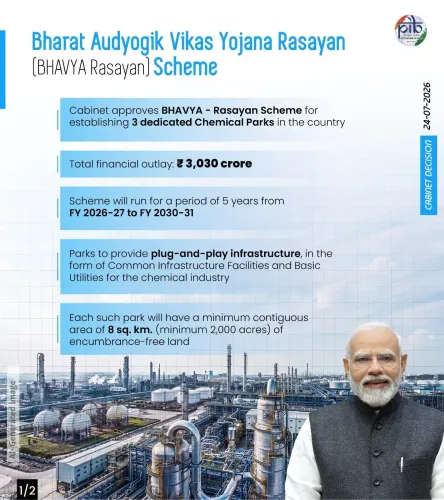
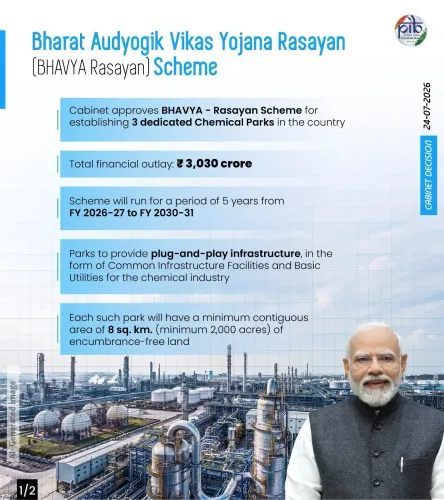
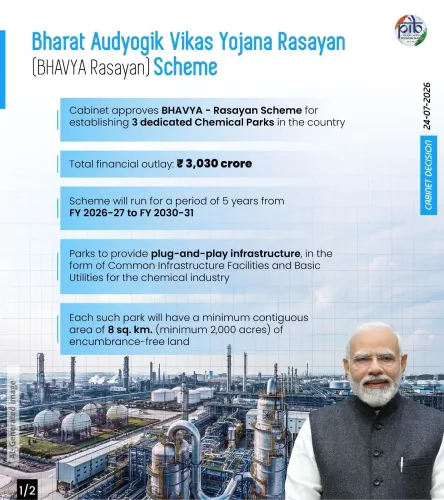
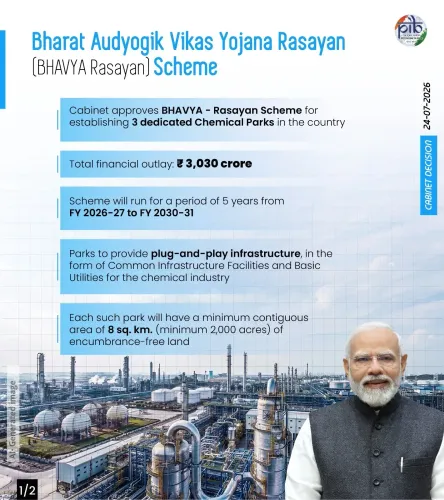
The Cabinet has committed ₹3,030 crore to build three large-scale Chemical Parks — each at least 8 sq. km. — with shared effluent treatment, hazardous waste management, and plug-and-play utilities. It is one of the most structured attempts yet to cluster India's fragmented chemical sector and plug it into global supply chains, with states required to put in ₹500 crore each to unlock central funding.
Key Takeaways
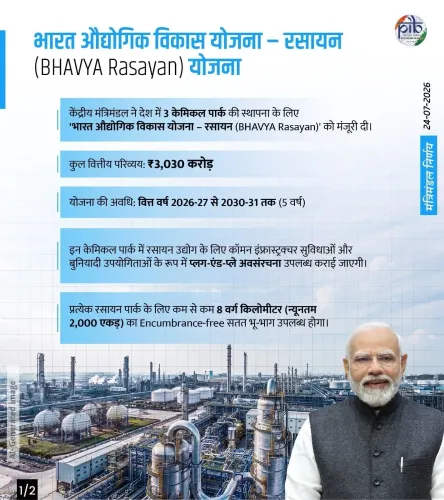
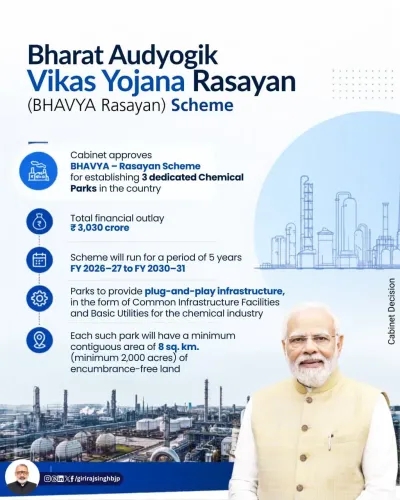
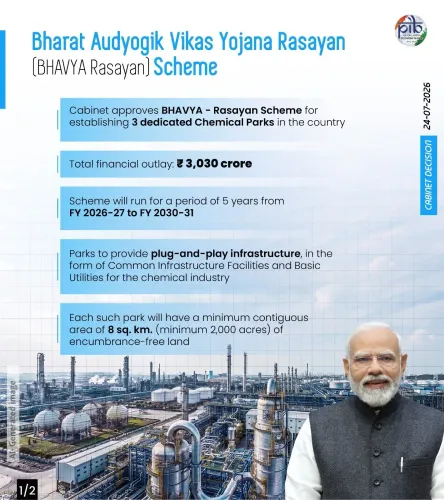
The Union Cabinet approved the BHAVYA-Rasayan Scheme on 25 July 2025 with a total outlay of ₹3,030 crore .
The scheme funds three dedicated Chemical Parks , with the Centre contributing up to ₹1,000 crore per park .
State governments must contribute a minimum of ₹500 crore per park to qualify under the Challenge Route .
Each park requires at least 8 sq. km. (2,000 acres) of contiguous, encumbrance-free land.
Parks will offer plug-and-play infrastructure including common effluent treatment and hazardous waste management facilities.
The scheme runs from FY 2026-27 to FY 2030-31 and targets export growth, import substitution, and employment generation.
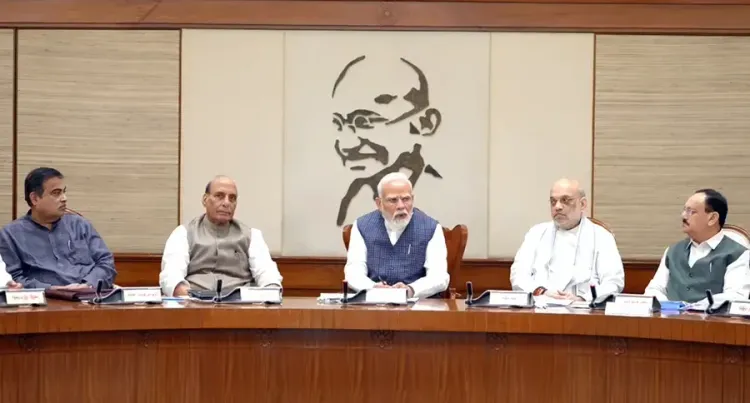
The Union Cabinet, chaired by Prime Minister Narendra Modi, on 25 July 2025 approved the Bharat Audyogik Vikas Yojana Rasayan (BHAVYA-Rasayan) Scheme, committing ₹3,030 crore to establish three dedicated Chemical Parks across India. The decision, formalised after the Cabinet meeting in New Delhi, marks a significant push to modernise and cluster India's chemical manufacturing sector.
Scheme Structure and Funding
Of the total outlay, ₹3,000 crore is earmarked for developing common infrastructure and basic utilities inside the parks, while the remaining ₹30 crore covers administrative expenditure. The scheme runs for five years, from FY 2026-27 to FY 2030-31, and was first announced in the Union Budget for FY 2026-27.
The Centre will provide a grant of up to ₹1,000 crore per park, subject to a minimum matching contribution of ₹500 crore from the respective State Government. Parks will be selected through a Challenge Route, ensuring competitive allocation among states.
What the Parks Will Look Like
Each Chemical Park must have a minimum contiguous area of 8 sq. km. (at least 2,000 acres) of encumbrance-free land. The parks are designed to offer plug-and-play infrastructure — shared facilities and utilities that chemical manufacturers can tap into without building their own captive systems.
Centralised facilities will include common effluent treatment plants, treatment, storage and disposal facilities, and hazardous waste management infrastructure. According to an official statement, this is expected to improve compliance with environmental regulations and foster eco-friendly industrial growth.
Why It Matters for Indian Industry
India's chemical sector supplies inputs to agriculture, textiles, pharmaceuticals, nutraceuticals, construction, automobiles, and electronics — virtually every major manufacturing vertical. The BHAVYA-Rasayan Scheme is designed to accelerate growth across the entire value chain, from upstream raw materials to downstream finished goods and ancillary industries.
Shared infrastructure is expected to lower logistics costs and improve cost competitiveness, enabling Indian chemical companies to integrate more effectively into global value chains. Officials indicated the scheme aims to drive both higher exports and greater import substitution — a dual objective that aligns with the broader 'Atmanirbhar Bharat' framework.
Employment and Viksit Bharat Goals
The government projects that growth in the chemical sector will have a cascading effect on downstream industries, generating employment and contributing to the Viksit Bharat @ 2047 vision. The scheme is also designed to attract domestic and foreign investment and expand overall production capacity in the sector.
Notably, this initiative follows a broader pattern of the Centre using dedicated park models — similar to the approach taken in electronics and semiconductors — to achieve scale and shared-cost efficiencies. Whether state governments mobilise the required ₹500 crore minimum contribution will be a key determinant of how quickly the three parks take shape.
Point of View
And the shared-infrastructure approach addresses a real bottleneck for mid-sized chemical manufacturers who cannot afford captive effluent treatment. But the ₹500 crore state contribution threshold is a meaningful hurdle: only a handful of states with existing chemical industry clusters — Gujarat, Maharashtra, Andhra Pradesh — are likely to move fast. The risk is that the three parks end up concentrated in states already well-served, while laggard states get left behind. The Viksit Bharat framing is aspirational; the execution test will be whether the Challenge Route produces genuine competition or merely ratifies pre-determined outcomes.
NationPress
22 Oct 2026
Frequently Asked Questions
What is the BHAVYA-Rasayan Scheme approved by the Cabinet?
The BHAVYA-Rasayan Scheme, formally the Bharat Audyogik Vikas Yojana Rasayan, is a five-year central government programme approved on 25 July 2025 to establish three dedicated Chemical Parks in India with a total investment of ₹3,030 crore. The Centre will fund up to ₹1,000 crore per park, with states required to contribute at least ₹500 crore each.
How will the three Chemical Parks be selected?
Parks will be allocated through a Challenge Route, meaning state governments must competitively apply and demonstrate readiness, including providing a minimum contiguous area of 8 sq. km. of encumbrance-free land and committing ₹500 crore in matching funds.
What infrastructure will the Chemical Parks provide?
The parks will offer plug-and-play infrastructure including common effluent treatment plants, treatment, storage and disposal facilities, and hazardous waste management systems. These shared utilities are designed to lower costs for chemical manufacturers and improve environmental compliance.
Which industries will benefit from the BHAVYA-Rasayan Scheme?
The scheme targets the broader chemical value chain, which supplies inputs to agriculture, textiles, pharmaceuticals, nutraceuticals, construction, automobiles, and electronics. Both upstream producers and downstream manufacturers, as well as ancillary industries, are expected to benefit.
When will the scheme run and what is the budget breakdown?
The scheme runs from FY 2026-27 to FY 2030-31. Of the ₹3,030 crore total, ₹3,000 crore is for common infrastructure and utilities inside the parks, while ₹30 crore covers administrative costs.