CM Samrat Choudhary Highlights PM Insurance Schemes on Mann Ki Baat
Synopsis
Bihar Chief Minister Samrat Choudhary amplified PM Modi's Mann Ki Baat by highlighting PMSBY — offering Rs 2 lakh accident cover for just Rs 20 per year — and PMJJBY, with over 58 crore people now enrolled under the accidental insurance scheme.
Key Takeaways
Pradhan Mantri Suraksha Bima Yojana (PMSBY) offers accidental death and disability cover of up to Rs 2 lakh for an annual premium of just Rs 20 .
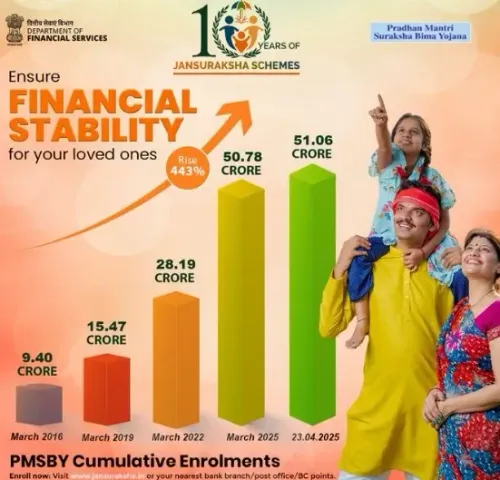
More than 58 crore people have enrolled under PMSBY since its launch.
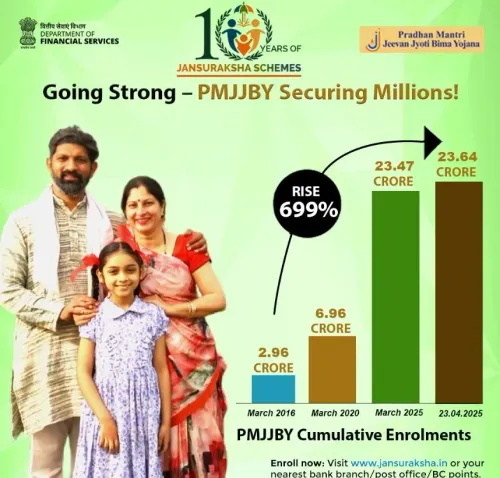
Pradhan Mantri Jeevan Jyoti Bima Yojana (PMJJBY) provides a life insurance cover of Rs 2 lakh to the policyholder's family upon death.
Both schemes were launched in May 2015 and are linked to subscribers' bank accounts with auto-debit of premiums.
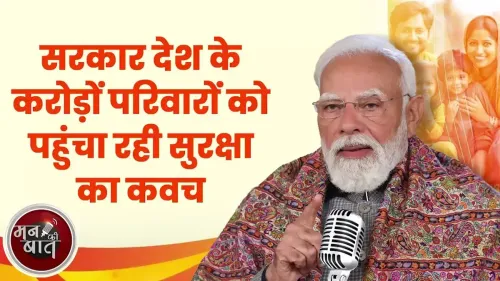
Bihar CM Samrat Choudhary shared the post in the context of PM Modi's Mann Ki Baat radio address on June 28, 2026 .
The schemes are designed to extend formal social security to low-income, informal, and rural populations historically excluded from insurance.
Bihar Chief Minister Samrat Choudhary on Sunday, June 28, 2026, amplified Prime Minister Narendra Modi's Mann Ki Baat programme by spotlighting two flagship social security insurance schemes — Pradhan Mantri Suraksha Bima Yojana (PMSBY) and Pradhan Mantri Jeevan Jyoti Bima Yojana (PMJJBY) — noting that the former has now enrolled more than 58 crore beneficiaries across India.
Context
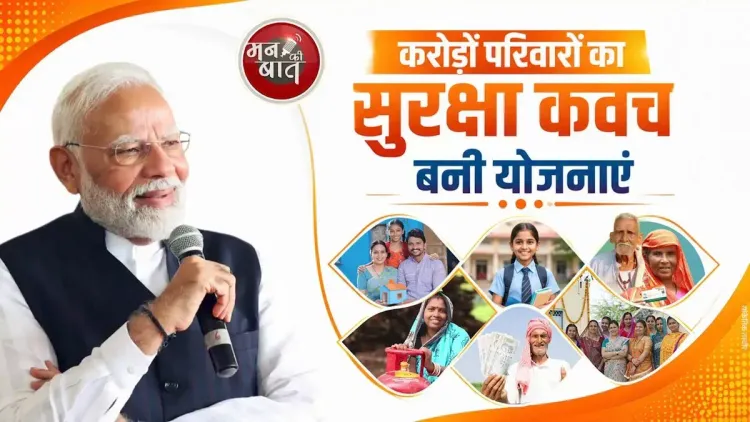
Choudhary's post, shared in Hindi on X, drew attention to the affordability at the core of PMSBY: an annual premium of just Rs 20 that provides accidental death and disability cover of up to Rs 2 lakh. Translating the sentiment for a wider audience, he wrote: 'केवल 20 रुपये के सालाना premium... उस पर दो लाख रुपये तक का दुर्घटना बीमा' ('A yearly premium of just Rs 20... and on that, accidental insurance cover of up to Rs 2 lakh'). The post was tied explicitly to the Prime Minister's monthly radio address, Mann Ki Baat, under the hashtag #MannKiBaat.
Alongside PMSBY, Choudhary highlighted Pradhan Mantri Jeevan Jyoti Bima Yojana (PMJJBY), a life insurance scheme that provides a cover of Rs 2 lakh to the family of a policyholder upon the individual's death. He described both schemes as equally significant pillars of the Centre's financial inclusion architecture.
Policy Backdrop
Both schemes were launched by the Modi government in May 2015 as part of a broader push to bring low-income and unbanked populations into a formal social security net. PMSBY is a one-year accidental insurance policy renewable annually, available to bank account holders aged 18 to 70, while PMJJBY is a renewable term life insurance for those aged 18 to 50, carrying an annual premium of Rs 436.
The schemes are administered through partner banks and are linked directly to subscribers' savings accounts, with premiums auto-debited each year. The government has periodically revised premium rates to keep the schemes financially sustainable while maintaining broad accessibility. The enrolment figure of 58 crore-plus under PMSBY cited by Choudhary underscores the scale at which these instruments have penetrated the mass market, particularly in rural and semi-urban India.
Stakeholders and Impact
Bihar, one of India's most populous and economically vulnerable states, stands to benefit disproportionately from such low-cost insurance schemes, given that a large share of its workforce is engaged in informal labour, agriculture, and migrant work — segments historically excluded from formal insurance. By amplifying these schemes, Choudhary reinforces the BJP's outreach narrative in a state where the party is a key partner in the ruling National Democratic Alliance (NDA) government.
For ordinary families, the schemes offer a rare safety net: in the event of an accidental death or sudden demise of the earning member, a lump-sum payout of Rs 2 lakh can provide critical short-term financial relief. Insurance penetration in rural India remains low, and government-backed micro-insurance products like these are among the few instruments accessible to daily-wage earners and small farmers.
What's Next
With Mann Ki Baat serving as a regular platform for the Prime Minister to communicate directly with citizens, senior BJP leaders at the state level — including Chief Ministers — routinely echo the programme's themes on social media to maximise reach. Choudhary's post is consistent with that pattern and signals continued state-level advocacy for the Centre's financial inclusion agenda ahead of the next round of enrolment drives.
As the government eyes deeper penetration in states like Bihar, Uttar Pradesh, and Jharkhand, the focus is likely to shift toward last-mile delivery — ensuring that those already enrolled receive timely claim settlements, and that awareness campaigns reach first-generation bank account holders who may not yet have opted in.
Point of View
He reinforces the NDA's unified messaging strategy, where state-level leaders function as force-multipliers for Central schemes. The 58-crore enrolment figure is a potent data point: it frames PMSBY not as a niche welfare product but as a mass-scale achievement comparable to Aadhaar or Jan Dhan in terms of reach. The dual mention of PMSBY and PMJJBY also signals a push to reframe the BJP's welfare narrative around financial resilience for the poor, not just cash transfers.
NationPress
28 Jun 2026
Frequently Asked Questions
What is Pradhan Mantri Suraksha Bima Yojana and who can apply?
Pradhan Mantri Suraksha Bima Yojana (PMSBY) is a government-backed accidental insurance scheme offering cover of up to Rs 2 lakh for an annual premium of Rs 20. It is available to bank account holders aged 18 to 70 years.
How many people have enrolled in PMSBY so far?
As highlighted by Bihar CM Samrat Choudhary on June 28, 2026, more than 58 crore people have enrolled in PMSBY since its launch in May 2015.
What is the difference between PMSBY and PMJJBY?
PMSBY provides accidental death and disability cover of Rs 2 lakh for Rs 20 per year, while PMJJBY is a life insurance scheme that pays Rs 2 lakh to the family of the policyholder upon death due to any cause, with an annual premium of Rs 436.
What did Bihar CM Samrat Choudhary say about Mann Ki Baat?
Bihar CM Samrat Choudhary posted on X on June 28, 2026, echoing PM Narendra Modi's Mann Ki Baat programme by highlighting the low-cost insurance benefits of PMSBY and PMJJBY for ordinary citizens.
How can I enrol in Pradhan Mantri Suraksha Bima Yojana?
Eligible individuals can enrol in PMSBY through their bank branch, net banking portal, or mobile banking app. The annual premium of Rs 20 is auto-debited from the linked savings account each year.