PM Modi Backs Small Island States on Climate Equity
Synopsis
Prime Minister Narendra Modi on June 28, 2026, reaffirmed India's solidarity with Small Island Developing States, declaring that nations least responsible for climate change must not bear its heaviest costs, and calling for climate action rooted in fairness, responsibility, and equity.
Key Takeaways
PM Modi asserted that nations contributing least to climate change must not bear its greatest burden.
He called for global climate action guided by fairness, responsibility, and equity .
India pledged ongoing support for the concerns of Small Island Developing States (SIDS) .
The statement aligns with India's long-standing position on Common But Differentiated Responsibilities (CBDR-RC) under the UNFCCC.
SIDS collectively account for less than 1% of global greenhouse gas emissions yet face existential climate threats.
India has backed SIDS through platforms including the International Solar Alliance and Coalition for Disaster Resilient Infrastructure .
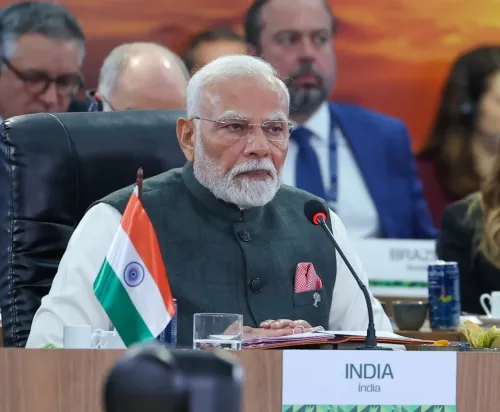
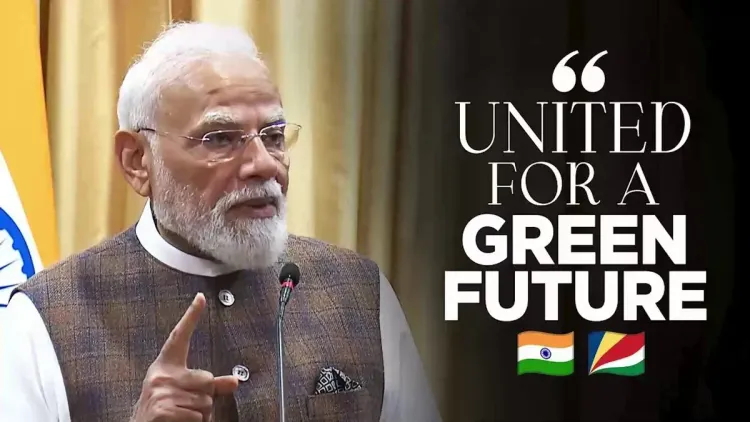
Prime Minister Narendra Modi on Sunday, June 28, 2026, voiced strong support for Small Island Developing States (SIDS), asserting that nations which have contributed the least to climate change must not bear the greatest burden of its consequences, and pledging India's continued solidarity with vulnerable island nations on global climate platforms.
Context
In his post, Prime Minister Modi stated: 'Those who have contributed the least to climate change should not bear the greatest burden of its consequences. Climate action must be guided by fairness, responsibility and equity.' He added that India will 'always work to ensure that the concerns of the Small Island Developing States' are heard and addressed at the international level.
Small Island Developing States — a grouping of low-lying coastal and island nations across the Pacific, Caribbean, Atlantic, Indian Ocean, and South China Sea — are among the most acutely threatened by rising sea levels, intensifying cyclones, and ocean acidification, despite collectively accounting for less than 1% of global greenhouse gas emissions.
Policy Backdrop
India has long positioned itself as a voice for the Global South in multilateral climate negotiations, arguing that historical emitters — primarily wealthy industrialised nations — must shoulder a disproportionately larger share of mitigation costs and climate finance. This principle is enshrined in the United Nations Framework Convention on Climate Change (UNFCCC) as 'Common But Differentiated Responsibilities and Respective Capabilities' (CBDR-RC).
Under PM Modi, India has championed platforms such as the International Solar Alliance (ISA) and the Coalition for Disaster Resilient Infrastructure (CDRI), both of which have specific relevance for island and coastal developing nations seeking clean energy transitions and infrastructure resilience. India has also consistently pressed developed economies at successive COP summits to fulfil long-standing climate finance commitments to vulnerable nations.
The post's reference to a linked video or external content suggests the statement may accompany a formal address, a bilateral meeting with SIDS representatives, or a multilateral engagement, though the specific occasion has not been detailed in the post itself.
Stakeholders and Impact
SIDS — which include nations such as Maldives, Fiji, Tuvalu, Vanuatu, Barbados, and dozens of others — have repeatedly called on larger developing economies like India to amplify their voices in forums such as the G20, COP, and the United Nations General Assembly. India's explicit backing lends diplomatic weight to SIDS demands for enhanced climate finance, loss-and-damage compensation, and technology transfer from developed countries.
For India, aligning with SIDS also reinforces its broader foreign policy goal of leading the Global South — a coalition of developing and emerging economies — while maintaining credibility as a responsible climate actor that balances development imperatives with environmental commitments.
What's Next
With major climate negotiations and multilateral summits on the calendar, PM Modi's statement is likely to be cited as a diplomatic signal ahead of any upcoming UNFCCC or UN engagement where SIDS concerns — particularly around loss-and-damage financing and adaptation funding — are expected to be central flashpoints. India's sustained advocacy for equity-based climate action could shape coalition-building between large emerging economies and the most vulnerable island nations in the months ahead.
Point of View
Timed to signal solidarity with the world's most vulnerable nations ahead of likely multilateral engagement. By invoking the language of 'fairness, responsibility and equity,' the Prime Minister is reinforcing the CBDR-RC principle — a cornerstone of developing-nation climate strategy — against pressure from wealthy countries to universalise mitigation burdens. Aligning with SIDS also serves a dual purpose: it builds diplomatic capital with a broad coalition of UN member states while positioning India as a moral counterweight to historical emitters. This pattern of equity-first climate messaging has been a consistent thread in Modi's international engagements and is likely to intensify as global climate finance negotiations grow more contentious.
NationPress
28 Jun 2026
Frequently Asked Questions
What did PM Modi say about Small Island Developing States and climate change?
PM Modi said that nations which have contributed the least to climate change should not bear its greatest burden, and pledged that India will always work to ensure the concerns of Small Island Developing States (SIDS) are addressed in global climate forums.
What are Small Island Developing States (SIDS)?
Small Island Developing States (SIDS) are a group of low-lying coastal and island nations across the Pacific, Caribbean, Atlantic, and Indian Ocean that face severe threats from climate change — including rising sea levels and intensifying storms — despite contributing less than 1% of global greenhouse gas emissions.
What is India's position on climate equity and developing nations?
India has consistently argued that historical emitters — primarily wealthy industrialised countries — must bear a larger share of climate mitigation costs and finance, in line with the UNFCCC principle of Common But Differentiated Responsibilities and Respective Capabilities (CBDR-RC).
How has India supported Small Island Developing States on climate issues?
India has backed SIDS through initiatives such as the International Solar Alliance (ISA) and the Coalition for Disaster Resilient Infrastructure (CDRI) , and has amplified their demands for climate finance and loss-and-damage compensation at global summits including successive COP conferences.
Why is PM Modi's climate equity statement significant?
The statement signals India's continued leadership of the Global South in climate diplomacy and is likely to influence coalition-building between large developing economies and vulnerable island nations ahead of upcoming UNFCCC and UN negotiations on climate finance and adaptation funding.