Shivraj Chouhan raises MGNREGA work days to 125, pushes last-mile delivery
Synopsis
Shivraj Singh Chouhan used the National Rural Development Conference to raise MGNREGA work days to 125 and set a hard accountability standard — no bribery, no delay, no exclusion. With 10 crore women already in SHGs and a 6-crore Lakhpati Didi target on the horizon, the Centre is signalling a shift from building rural infrastructure to making it work for the last person in the queue.
Key Takeaways
Shivraj Singh Chouhan directed officials on 28 June to ensure annual funds of more than ₹1.5 lakh per beneficiary under MGNREGA and Viksit Bharat – GRAM-G reach panchayats without leakage.
MGNREGA guaranteed work days have been raised from 100 to 125 days per year.
The government targets 6 crore Lakhpati Didis ; 3 crore have already been created and 10 crore rural women are linked to Self-Help Groups .
Ministry Secretary Rohit Kansal cited 8 lakh km of rural roads and 3 crore pucca houses built over the last 12 years .
Day two of the National Rural Development Conference will see state Rural Development Ministers join plenary deliberations.
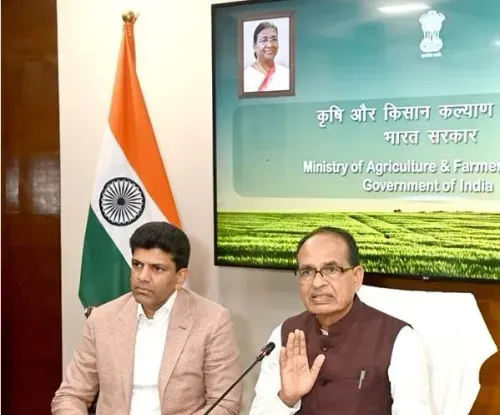
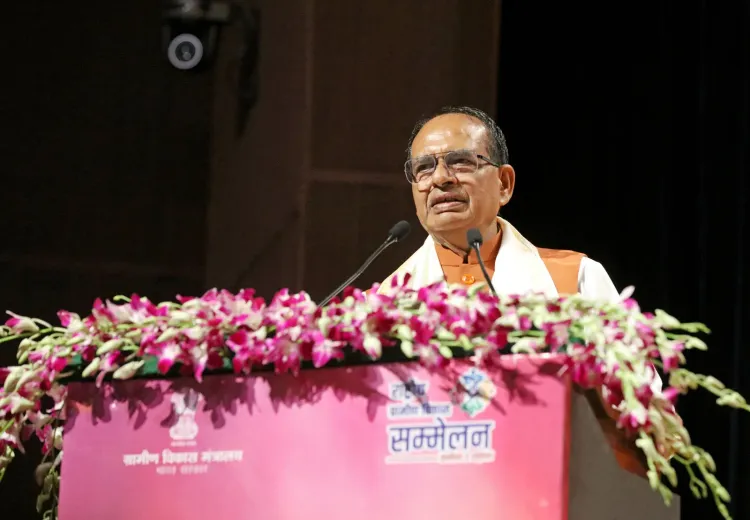
Rural Development Minister Shivraj Singh Chouhan on Sunday, 28 June directed senior officials to ensure that the annual allocation of more than ₹1.5 lakh per beneficiary under the Viksit Bharat – GRAM-G and MGNREGA schemes flows directly to panchayats and is deployed effectively for village-level development. The directive came at the inauguration of the two-day National Rural Development Conference in New Delhi.
Key Announcements at the Conference
Chouhan confirmed that the number of guaranteed work days under the Mahatma Gandhi National Rural Employment Guarantee Act (MGNREGA) has been raised from 100 to 125 days per year. He underscored that the government's resolve is that no eligible labourer should be left without employment. Addressing officers, he invoked Prime Minister Narendra Modi's guiding principle: 'the government should not be seen only in files but in the lives of the people.'
He stressed that scheme formulation alone is insufficient — delivery without bribery, without procedural delay, and without exclusion of deserving beneficiaries is the true measure of governance.
Women's Empowerment and Rural Livelihoods
The minister highlighted significant progress under the National Rural Livelihoods Mission (NRLM), noting that crores of women have increased their incomes by joining Self-Help Groups (SHGs), and that lakhs of Lakhpati Didis — rural women earning over ₹1 lakh annually — have already emerged. The government's target is to scale this to 6 crore Lakhpati Didis.
Chouhan called for moving rural women beyond traditional cottage industries such as papad and pickle-making into food processing, agri-business, the service sector, and digital platforms, arguing that only this broader integration can make rural entrepreneurship the true backbone of Viksit Bharat.
Twelve Years of Rural Infrastructure: What the Data Shows
Ministry of Rural Development Secretary Rohit Kansal presented a sweeping account of departmental achievements over the past 12 years: nearly 8 lakh kilometres of rural roads constructed, 3 crore pucca houses built, 3 crore Lakhpati Didis created, and 10 crore rural women linked to SHGs.
Kansal cautioned, however, that the department now stands at a critical inflection point. Collective thinking is needed for the next decade on asset maintenance, scheme saturation, and further improving the Ease of Living for rural citizens — signalling a shift in focus from construction to consolidation.
Conference Structure and What Comes Next
The inaugural day was structured around scheme implementation reviews, state-wise progress assessments, best-practice presentations, and sessions on technology and AI adoption in rural delivery. Dedicated halls covered Pradhan Mantri Awas Yojana (Gramin), Pradhan Mantri Gram Sadak Yojana (PMGSY), and the National Social Assistance Programme (NSAP), among others.
On the second and final day, Rural Development Ministers from all states and union territories are set to join plenary sessions, bringing political leadership into deliberations that so far have been driven by bureaucratic review. The conference's outcomes are expected to shape implementation priorities for rural schemes in the coming financial year.
Point of View
But the harder problem — identified by Chouhan himself — is delivery fidelity, not scheme design. The 12-year achievement data presented by Kansal is genuinely substantial, yet the secretary's own caution about asset maintenance and scheme saturation signals that the era of headline construction targets may be giving way to the less photogenic work of upkeep and inclusion. The Lakhpati Didi programme has real momentum, but scaling from 3 crore to 6 crore will require integrating women into digital and formal markets, not just SHG membership rolls. The conference's real test is whether the second day's political plenary produces binding state-level commitments — or remains another well-attended review.
NationPress
28 Jun 2026
Frequently Asked Questions
What change has been made to MGNREGA work days?
The guaranteed number of work days under MGNREGA has been increased from 100 to 125 days per year, as announced by Rural Development Minister Shivraj Singh Chouhan at the National Rural Development Conference on 28 June. The stated aim is to ensure no eligible rural labourer is left without employment.
What is the Viksit Bharat – GRAM-G scheme?
Viksit Bharat – GRAM-G is a rural employment and development scheme under which, along with MGNREGA, an annual provision of more than ₹1.5 lakh per beneficiary is channelled to panchayats. It is framed as a key pillar of Prime Minister Narendra Modi's Viksit Bharat vision for village-level development.
What is the government's Lakhpati Didi target?
The government aims to create 6 crore Lakhpati Didis — rural women earning more than ₹1 lakh annually through Self-Help Groups and allied activities. As of the conference, 3 crore Lakhpati Didis have already been created, with 10 crore rural women linked to SHGs overall.
What did Rural Development Secretary Rohit Kansal say at the conference?
Secretary Rohit Kansal highlighted that over the past 12 years, nearly 8 lakh kilometres of rural roads have been built, 3 crore pucca houses constructed, and 10 crore rural women linked to Self-Help Groups. He also noted that the department must now focus on asset maintenance, scheme saturation, and improving Ease of Living rather than just new construction.
Who is attending the National Rural Development Conference and what happens on day two?
The two-day conference in New Delhi brings together officials and Rural Development Ministers from both the Centre and all states and union territories. Day one focused on scheme reviews and best practices; on day two, state-level political leadership joins plenary sessions to deliberate on implementation priorities.