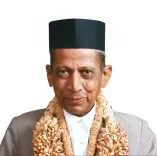
CM Samrat Choudhary marks 151 years of Vande Mataram
Synopsis
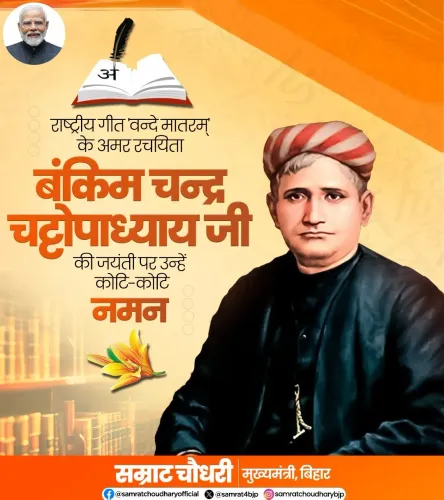
Bihar Chief Minister Samrat Choudhary marked the 151st anniversary of Vande Mataram on 7 November 2026, calling the national song a symbol of India's unity, pride and patriotism. Composed by Bankim Chandra Chatterjee and adopted by the Constituent Assembly in 1950, the song remains a cornerstone of India's national identity.
Key Takeaways
Bihar CM Samrat Choudhary extended greetings on the 151st anniversary of Vande Mataram on 7 November 2026 .
He described the song as 'a symbol of India's unity, pride and patriotism' — not merely a song.
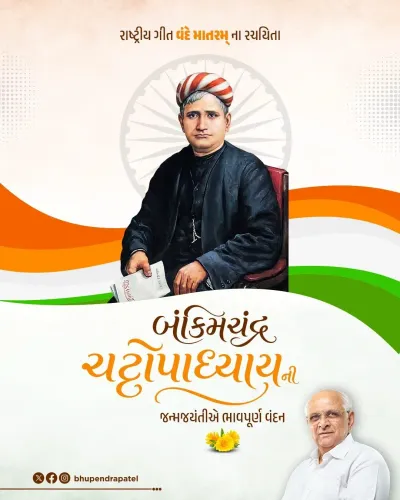
Vande Mataram was composed by Bankim Chandra Chatterjee , a 19th-century Bengali novelist, in his work Anandamath .
The Constituent Assembly adopted Vande Mataram as India's national song on 24 January 1950 .
Marking national-symbol anniversaries is a common practice among Indian political leaders across party lines.
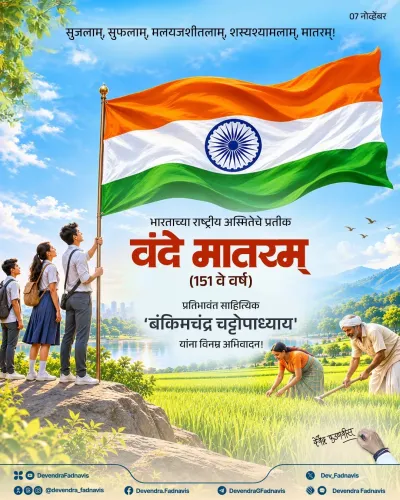
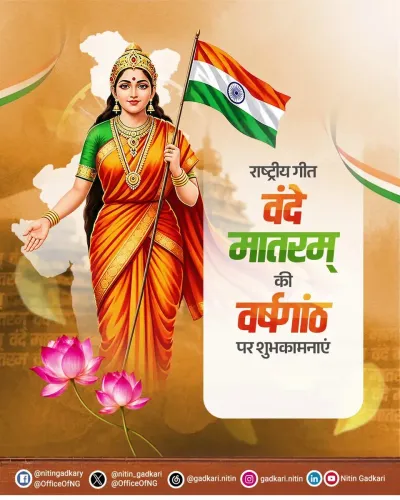
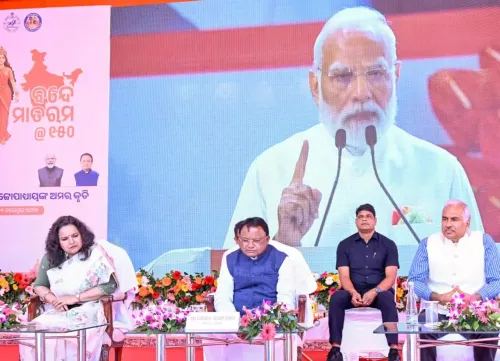
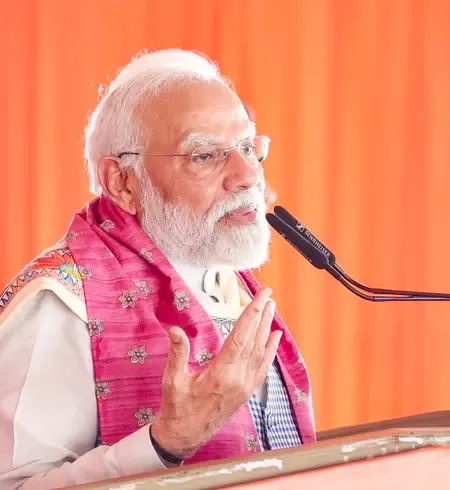
One hundred and fifty-one years after Bankim Chandra Chatterjee first gave India its most stirring declaration of devotion, the song continues to resonate in the halls of power. Bihar Chief Minister Samrat Choudhary marked the occasion on Saturday, 7 November 2026, extending warm greetings to citizens on the 151st anniversary of Vande Mataram.
Posting on X, CM Choudhary wrote in Hindi: 'वंदे मातरम् केवल एक गीत नहीं, बल्कि भारत की एकता, गौरव और राष्ट्रभक्ति का प्रतीक है' — 'Vande Mataram is not merely a song, but a symbol of India's unity, pride and patriotism.' He called the moment a 'gauravshali avasar' — a glorious occasion.
From Chatterjee's pen to a nation's anthem
The song was composed by Bankim Chandra Chatterjee, the towering 19th-century Bengali novelist and poet, as part of his celebrated novel Anandamath. What began as literary verse became a battle cry during the independence movement, sung in defiance at protest marches and in the shadow of colonial rule. The Constituent Assembly formally adopted Vande Mataram as India's national song on 24 January 1950 — just two days before the Republic came into being — cementing its place alongside the national anthem as one of the country's two defining musical declarations.A tradition of marking national symbols
CM Choudhary's post follows a well-established pattern among Indian political leaders of marking anniversaries of independence-era national symbols on social media. The practice cuts across party lines and serves as a public reaffirmation of shared national identity. For the BJP, cultural heritage milestones carry particular ideological resonance, often woven into the party's broader emphasis on civilisational pride. As Bihar's chief minister and a senior BJP leader, Choudhary's message reaches a state with deep historical ties to the independence movement — a geography where the echoes of Vande Mataram once rang loudest. One hundred and fifty-one years on, the two words remain exactly what Chatterjee intended them to be: a greeting addressed to the motherland herself.Point of View
Commemorating national cultural milestones is never merely ceremonial — it reinforces the party's core ideological emphasis on civilisational pride and Hindu cultural nationalism. Vande Mataram, with its contested but deeply emotive history, is a particularly potent symbol in that framework. By amplifying its anniversary, Choudhary also signals continuity with the independence-era nationalist tradition, positioning the BJP as the inheritor of that legacy in a state like Bihar where such symbolism carries electoral weight.
NationPress
7 Nov 2026
Frequently Asked Questions
When was Vande Mataram composed and by whom?
Vande Mataram was composed by Bankim Chandra Chatterjee , a 19th-century Bengali novelist, as part of his novel Anandamath . The song is widely believed to have been written around 1875 , making 2026 its 151st anniversary.
What is the difference between India's national anthem and national song?
India's national anthem is 'Jana Gana Mana', composed by Rabindranath Tagore. 'Vande Mataram', composed by Bankim Chandra Chatterjee, is India's national song. Both were adopted by the Constituent Assembly on 24 January 1950 .
Why did Samrat Choudhary post about Vande Mataram?
Bihar Chief Minister Samrat Choudhary posted on X to mark the 151st anniversary of Vande Mataram , extending greetings to citizens and calling the song a symbol of national unity, pride and patriotism.
What does Vande Mataram mean in English?
'Vande Mataram' translates from Sanskrit as 'I bow to thee, Mother' or 'I salute the Motherland' — an invocation of India personified as a mother goddess.
When was Vande Mataram adopted as India's national song?
The Constituent Assembly formally adopted Vande Mataram as India's national song on 24 January 1950 , two days before India became a Republic on 26 January 1950.