CM Samrat Choudhary meets Jamui victim, vows verdict in one month
Synopsis
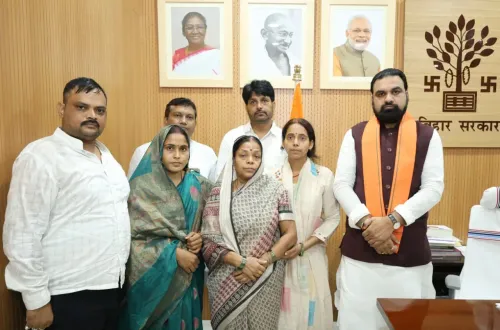
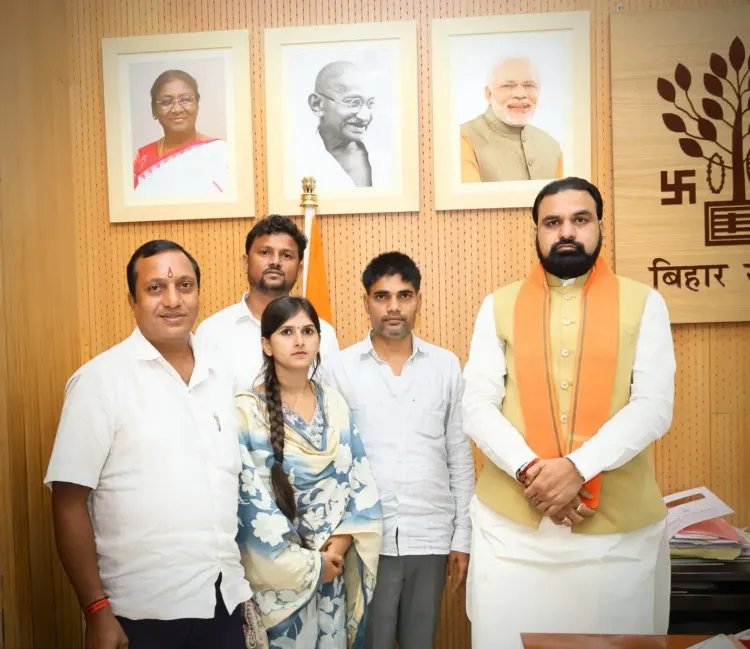
Bihar Chief Minister Samrat Choudhary met a Jamui victim and her family at his official residence on September 24, assured the girl of fearless progress, and committed to the strictest punishment for all accused within one month through a speedy trial under the POCSO framework.
Key Takeaways
Bihar CM Samrat Choudhary personally met the Jamui victim and her family at Lok Sevak Avas on September 24, 2026 .
He assured the victim she could move forward 'without fear' and promised the family swift justice.
The family expressed satisfaction with the Bihar Police 's action taken so far.
Choudhary committed to the 'strictest possible punishment' for all accused within one month via a speedy trial.
The case falls under the POCSO Act, 2012 , which mandates designated special courts for time-bound trials involving child victims.
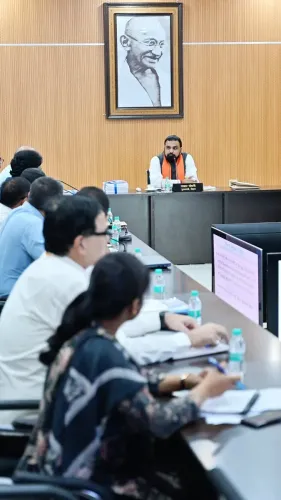
Bihar Chief Minister Samrat Choudhary sat across from a young girl from Jamui and her family on Thursday, September 24 — not in a secretariat, but at his official residence, Lok Sevak Avas — and made a promise that the state would deliver the harshest possible punishment to every accused within one month.
In a post on X, Choudhary said he met the victim and her family at his official residence and reassured the girl to move forward fearlessly. He wrote: 'Beti ko nirbhay hokar aage badhne aur parivar ko sheeghra nyay ka bharosa dilaya' — 'I gave the daughter the courage to move forward without fear, and assured the family of swift justice.' The family, he added, expressed satisfaction with the action taken by the police so far.
A one-month deadline for the harshest sentence
The Chief Minister's most pointed commitment was the timeline: a speedy trial to be concluded within one month, with the 'strictest possible punishment' for all those found guilty. Such assurances by a sitting CM carry institutional weight — they signal to both the judiciary and law enforcement that the state government is watching the pace of proceedings closely.
Cases involving child victims in India fall under the Protection of Children from Sexual Offences (POCSO) Act, 2012, which mandates time-bound trials through designated special courts. The law already envisions a 60-day trial period as a benchmark; a one-month commitment from the Chief Minister sets the bar higher than the statutory default.
Why a CM's visit signals more than comfort
When an Indian state's Chief Minister personally visits a crime victim's family, it activates a political accountability chain that a bureaucratic directive alone cannot. The optics compress distance between the highest office and the most vulnerable citizen. But the visit also creates a public record — and a public clock. The Bihar police, the state's prosecution machinery, and the POCSO court now operate in the knowledge that this case has been watched from the top.
Jamui, a district in eastern Bihar, has historically grappled with governance and law-enforcement challenges. A direct intervention from Patna underscores the seriousness with which the state is treating this particular case.
The real test of this commitment will come in the weeks ahead — whether Bihar's judicial machinery can actually complete trial proceedings and deliver a verdict within the promised window, and whether that verdict holds up to scrutiny.
Point of View
Choudhary is calibrating political capital against institutional capacity. If Bihar's courts deliver, it becomes a governance credential; if they do not, the shortfall is equally visible. The intervention also reflects a broader BJP state-government pattern of projecting decisive, executive-led responses to crimes against women and children as a political differentiator.
NationPress
24 Sept 2026
Frequently Asked Questions
What did Bihar CM Samrat Choudhary promise in the Jamui victim case?
Bihar CM Samrat Choudhary promised the strictest possible punishment for all accused within one month through a speedy trial, after meeting the victim and her family at his official residence on September 24, 2026.
What is the POCSO Act and how does it apply to the Jamui case?
The Protection of Children from Sexual Offences (POCSO) Act, 2012 mandates time-bound trials in designated special courts for offences against minors. The Jamui case, involving a child victim, would be tried under this legislation.
Where did CM Samrat Choudhary meet the Jamui victim's family?
The meeting took place at Lok Sevak Avas, the official residence of the Bihar Chief Minister, on September 24, 2026.
What is Jamui and why is the case significant?
Jamui is a district in eastern Bihar. The case drew direct intervention from the Chief Minister, signalling its seriousness and placing Bihar's law enforcement and judiciary under heightened public scrutiny.
Did the Jamui victim's family express confidence in the police?
Yes. According to CM Samrat Choudhary's post, the family expressed satisfaction with the action taken by the Bihar Police so far.