CM Samrat Choudhary Vows Zero Tolerance on Child Trafficking
Synopsis
Bihar CM Samrat Choudhary addressed an eastern regional conference on missing children and human trafficking in Patna on 8 August 2026, citing recovery of over 1,200 missing children, real-time case monitoring via Sahyog Shivir, and the launch of Naya Savera 3.0 for survivor rehabilitation and skill development.
Key Takeaways
Over 1,200 missing children have been recovered under Bihar's child protection drive, as stated by CM Samrat Choudhary.
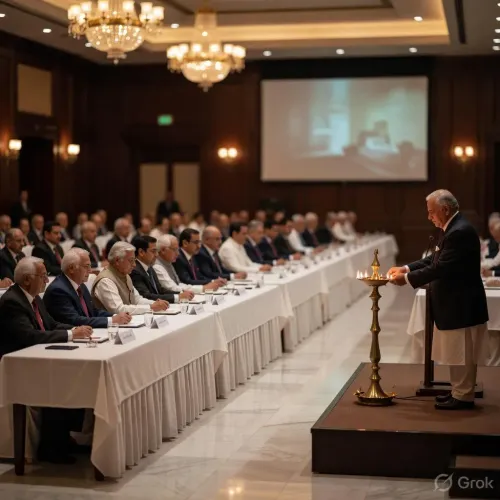
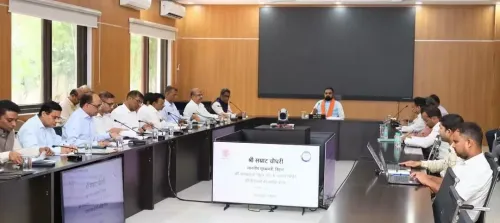
The Eastern Regional Conference on Missing Children and Human Trafficking was held at Gyan Bhawan, Patna on 8 August 2026 , organised by the Bihar Home Department.
Sahyog Shivir enables real-time monitoring of missing-children cases across the state.
Naya Savera 3.0 focuses on rehabilitation, skill development, and ensuring a dignified life for trafficking survivors — not just their rescue.
Bihar's strategy frames employment and skill development as tools to prevent trafficking, not merely to support victims after the fact.
The regional conference format aims to build coordinated responses across eastern Indian states that share migration and trafficking corridors.
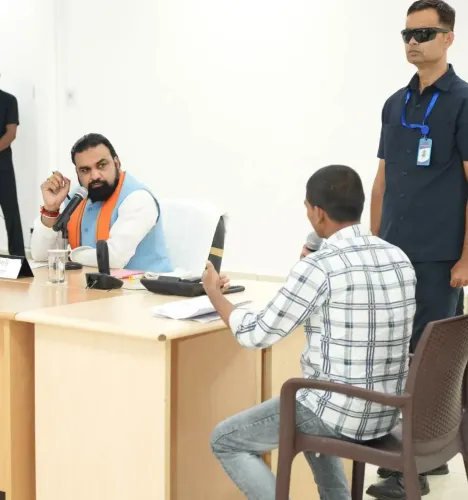
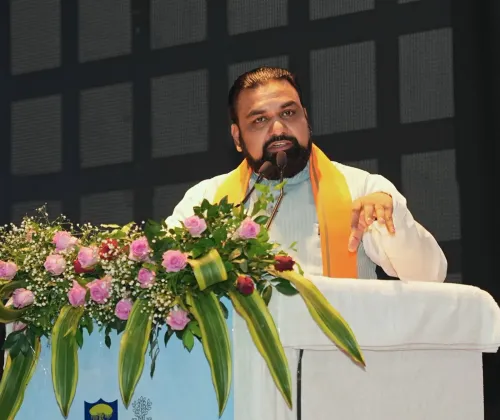
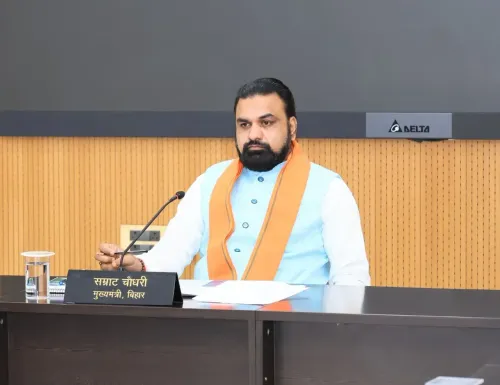
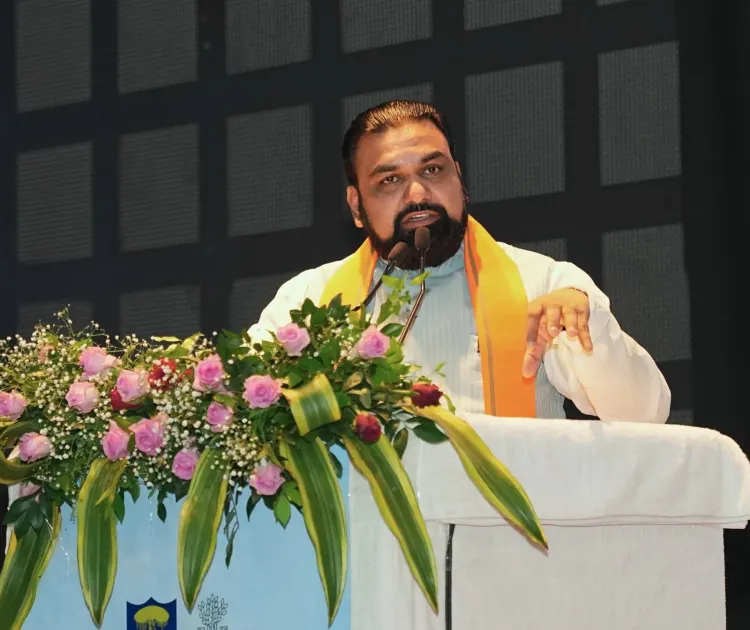
Over 1,200 missing children recovered, a real-time monitoring system running, and a rehabilitation programme now in its third phase — Bihar Chief Minister Samrat Choudhary laid out the state's anti-trafficking scorecard on Saturday, 8 August 2026, addressing the Eastern Regional Conference on Missing Children and Human Trafficking at Gyan Bhawan, Patna.
Speaking at the conference organised by the Bihar Home Department, CM Choudhary declared that the state operates a zero-tolerance policy on child protection and human trafficking. 'Bacchon ki suraksha evam manav tskari ki roktham ke liye Bihar Sarkar ki zero tolerance neeti hai' — 'Bihar's government has a zero-tolerance policy for child protection and the prevention of human trafficking,' he said, framing the fight not as a law-and-order matter alone but as a social compact the state has made with its most vulnerable citizens.
How 'Sahyog Shivir' Tracks Cases in Real Time
At the operational core of Bihar's response is Sahyog Shivir, a mechanism the Chief Minister described as enabling real-time monitoring of missing-children cases. The idea — a live, centralised tracking system rather than paper files moving between desks — reflects a broader push by Indian states to modernise how police and welfare agencies handle disappearances, which in eastern India are often entangled with migration corridors and trafficking networks. Bihar sits at a geographic crossroads that makes it both a source and transit state in those networks.
Naya Savera 3.0: Beyond Recovery, Towards Dignity
Recovery alone, Choudhary stressed, is not enough. The third iteration of the state's flagship victim-support programme, Naya Savera 3.0 — 'New Dawn 3.0' — places explicit emphasis on rehabilitation, skill development, and what the CM called a 'dignified life' for survivors. The progression to a third phase signals that the programme has moved past pilot status and is being institutionalised as a standing feature of Bihar's welfare architecture.
Employment and skill development were also highlighted as prevention tools, not just post-rescue remedies — an acknowledgement that trafficking thrives where economic desperation does. Bihar's approach aligns with the broader national framework under the Immoral Traffic Prevention Act and POCSO, while adding state-specific operational layers.
The eastern regional format of the conference matters: bringing together officials from states that share migration and trafficking corridors turns a state-level initiative into a coordinated regional response. What emerges from those inter-state conversations — data-sharing protocols, joint operations, unified victim-support standards — will determine whether the numbers improve further.
Point of View
Showcasing a third-phase programme with a concrete recovery figure ahead of the next electoral cycle is also a governance-credibility play in a state where welfare delivery is a defining political currency. The test will be whether inter-state data-sharing and joint operations — the harder institutional work — actually follow the conference room declarations.
NationPress
22 Sept 2026
Frequently Asked Questions
What is Naya Savera 3.0 in Bihar?
Naya Savera 3.0 is Bihar's third-phase victim-support programme that focuses on the rehabilitation, skill development, and dignified resettlement of survivors of human trafficking and missing-children cases, going beyond just physical recovery.
What is Sahyog Shivir and how does it work?
Sahyog Shivir is a Bihar government mechanism for real-time monitoring of missing-children cases, enabling police and welfare agencies to track cases centrally rather than through slow paper-based processes.
How many missing children has Bihar recovered?
Bihar CM Samrat Choudhary stated that more than 1,200 missing children have been recovered so far under the state's child protection initiatives.
What was the Eastern Regional Conference on Human Trafficking about?
The conference, organised by the Bihar Home Department at Gyan Bhawan in Patna on 8 August 2026, brought together officials from eastern Indian states to coordinate responses to missing children and human trafficking, which cut across state borders through shared migration corridors.
What is Bihar's policy on human trafficking?
Bihar maintains a declared zero-tolerance policy on human trafficking and child protection, combining law enforcement action with rehabilitation programmes and skill development to address both rescue and prevention.