CM Samrat Choudhary Orders Revival of Bihar's Sugar Sector
Synopsis
Bihar CM Samrat Choudhary, at a Sugarcane Industry Department review on 22 June 2026, ordered the revival of 9 closed sugar mills, establishment of 25 new mills, and development of Champaran as a premier national sugarcane production zone.
Key Takeaways
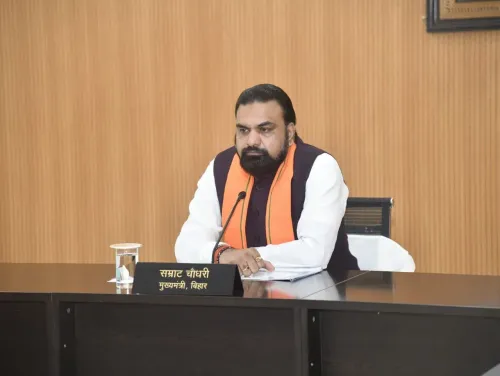
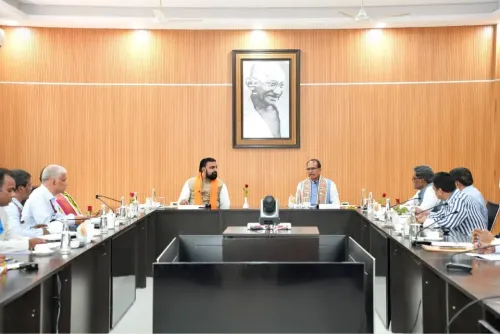
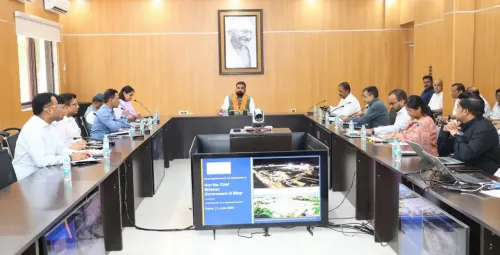
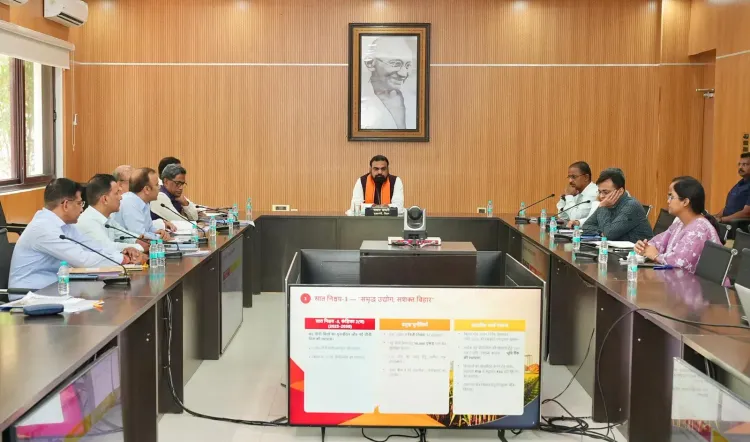
CM Samrat Choudhary chaired a Sugarcane Industry Department review at Sankalp Sabhagar , Patna, on 22 June 2026 .
He directed officials to develop Champaran as one of India's leading sugarcane production regions.
Revival of 9 closed sugar mills in Bihar was ordered on a fast-track basis.
Establishment of 25 new sugar mills across the state was also directed.
The move is expected to benefit sugarcane farmers and sugar mill workers who lost livelihoods during past closures.
Bihar's sugar mill closures began in the late 1990s due to accumulated losses and outdated technology.
The Chief Minister's Office of Bihar announced on Monday, 22 June 2026 that Chief Minister Samrat Choudhary chaired a review meeting of the Sugarcane Industry Department at Sankalp Sabhagar in Patna, issuing directives to develop Champaran as a leading sugarcane production zone, revive 9 closed sugar mills, and fast-track the establishment of 25 new sugar mills across the state.
Context
The post, shared by the official handle of the Chief Minister's Office, states that CM Choudhary directed officials 'ganne udyog vibhag ki samiksha baithak mein' (in the sugarcane industry department review meeting) to work swiftly on three fronts: positioning Champaran among India's premier sugarcane-producing regions, restarting the state's 9 defunct sugar mills, and setting up 25 new mills. The meeting was held at Sankalp Sabhagar, the venue routinely used for high-level state government reviews in Patna.
Champaran, located in north-western Bihar, carries deep historical association with sugarcane cultivation and was the site of the landmark indigo and agrarian movements of the early twentieth century. The region's agro-climatic conditions make it a natural candidate for scaled-up cane output.
Policy Backdrop
Bihar's sugar industry entered a prolonged decline from the late 1990s onward, as mills accumulated losses and technology became obsolete, leading to large-scale closures that displaced thousands of workers and left farmers without local processing facilities. Successive state governments have periodically announced revival packages, but implementation has remained uneven.
The current push mirrors a broader national policy direction encouraging states to expand sugarcane-based value addition — including ethanol blending — to raise rural incomes and reduce dependence on sugar imports or inter-state procurement. Bihar's directives align with that wider framework, targeting both rehabilitation of idle assets and fresh industrial capacity.
Stakeholders and Impact
The two groups most directly affected are sugarcane farmers and sugar mill workers. Farmers in Champaran and adjoining districts currently lack adequate local crushing capacity, forcing them to sell cane at lower prices or let it go unharvested. Restarting the 9 closed mills would restore livelihoods for workers who lost employment during the closures.
The proposed 25 new mills, if established, would significantly expand Bihar's crushing capacity, potentially attracting private investment and generating downstream employment in transport, packaging, and ancillary industries. State budget allocations and any public-private partnership frameworks for these projects will be closely watched by industry stakeholders.
What's Next
Officials from the Sugarcane Industry Department are expected to prepare detailed project reports and initiate tender processes for both the revival of closed mills and the construction of new ones. The pace of budget allocations in the state's upcoming fiscal cycle will be a key indicator of how seriously the directives translate into ground-level action.
Analysts will watch whether Champaran receives a dedicated development package — including irrigation support, seed distribution, and road connectivity — to underpin the ambition of making it a national-level sugarcane hub. The success of this initiative could set a template for agro-industrial revival in other lagging regions of Bihar.
Point of View
Mill revival, and new capacity — signals a deliberate attempt to recast Bihar's agrarian economy around industrial value addition rather than raw commodity output. The simultaneous targeting of 9 defunct mills and 25 greenfield units is politically significant: it addresses both legacy grievances of displaced workers and the aspirations of a new investor class. However, Bihar has seen similar announcements before, and the credibility of this push will hinge on whether concrete budget lines and PPP frameworks follow. If executed, it could meaningfully shift rural income dynamics in one of India's most agriculture-dependent states.
NationPress
23 Jun 2026
Frequently Asked Questions
What did Bihar CM Samrat Choudhary announce about sugar mills?
CM Samrat Choudhary directed officials to revive 9 closed sugar mills and establish 25 new sugar mills in Bihar, while also developing Champaran as a major national sugarcane production zone.
Why did Bihar's sugar mills close down?
Bihar's sugar mills began closing in the late 1990s due to accumulated financial losses and outdated technology, leading to large-scale unemployment among mill workers and reduced income for sugarcane farmers.
What is the significance of Champaran for sugarcane in Bihar?
Champaran in north-western Bihar has historically favourable agro-climatic conditions for sugarcane cultivation and is being targeted for development into one of India's premier cane-producing regions.
Where was the Bihar sugarcane industry review meeting held?
The review meeting was held at Sankalp Sabhagar in Patna , the official venue used by the Bihar state government for high-level departmental reviews.
How does Bihar's sugar mill revival plan connect to national policy?
Bihar's push aligns with India's broader policy of expanding sugarcane-based value addition, including ethanol blending , to raise rural incomes and reduce dependence on inter-state sugar procurement.