Shekhawat invokes 'Yato Dharmastato Jayah' on duty and justice
Synopsis
Union Culture and Tourism Minister Gajendra Singh Shekhawat on 22 June 2026 invoked the Mahabharata verse 'Yato Dharmastato Jayah', defining dharma as duty, justice, equanimity, dialogue, and empathy — reflecting the BJP-led government's continued emphasis on indigenous philosophical frameworks in cultural policy.
Key Takeaways
Gajendra Singh Shekhawat , Union Culture and Tourism Minister, posted on 22 June 2026 invoking the Sanskrit verse Yato Dharmastato Jayah from the Mahabharata .
He defined dharma across five dimensions: Duty, Justice, one's nature ( swabhav ), equanimity ( sambhav ), dialogue ( samvad ), and empathy ( samvedna ).
The verse Yato Dharmastato Jayah also appears on the emblem of India's Supreme Court , underscoring its centrality to the nation's institutional identity.
The post aligns with the Ministry of Culture's broader agenda of foregrounding civilizational heritage through schemes like Ek Bharat Shreshtha Bharat .
The National Education Policy 2020 similarly incorporated traditional Indian knowledge systems and value-based learning from ancient texts.
Shekhawat is a Lok Sabha MP from Jodhpur, Rajasthan , a region with deep historical and cultural heritage significance.
Union Culture and Tourism Minister Gajendra Singh Shekhawat on Monday, 22 June 2026, shared a reflection on the ancient Sanskrit verse Yato Dharmastato Jayah — 'Where there is dharma, there is victory' — drawing from the Mahabharata to articulate a multi-layered understanding of duty, justice, and compassion.
Context
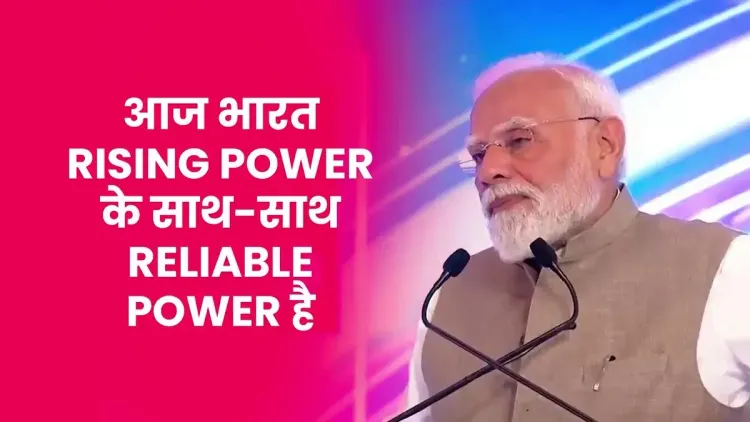
In his post, Shekhawat quoted the verse and offered an expansive reading: 'Dharma means Duty, Justice; dharma means one's nature and equanimity (swabhav, sambhav); dharma means dialogue and empathy (samvad, samvedna).' The formulation moves beyond a strictly religious reading, presenting dharma as a civic and ethical framework applicable to public life. The minister posted alongside a video, suggesting the message may have been delivered as part of a speech or event, though the specific occasion has not been publicly confirmed.
Policy Backdrop
The invocation of scriptural concepts in official communication has been a consistent feature of cultural policy since 2014, when the Bharatiya Janata Party came to power at the Centre. The Ministry of Culture has expanded flagship programmes such as Ek Bharat Shreshtha Bharat to foreground India's civilizational heritage and philosophical traditions in national identity narratives. The National Education Policy 2020 also incorporated traditional Indian knowledge systems and value-based learning drawn from ancient texts, signalling a broader institutional embrace of such frameworks.
Shekhawat, a Lok Sabha MP from Jodhpur, Rajasthan — a constituency steeped in historical and cultural heritage — has used his ministerial platform to advance this cultural agenda. The verse Yato Dharmastato Jayah, drawn from the Mahabharata, is among the most widely cited Sanskrit aphorisms in Indian public discourse, appearing on the emblem of India's Supreme Court.
Stakeholders and Impact
The message is directed at a broad audience that includes Indian youth, heritage practitioners, educators, and citizens engaged with questions of public ethics and governance. By translating dharma into contemporary terms — duty, justice, dialogue, empathy — Shekhawat appears to be building a bridge between classical Indian thought and modern civic values. This framing is significant in the context of ongoing debates about the role of indigenous philosophical traditions in shaping national policy and education.
Heritage tourism circuits and Indian Knowledge Systems integration programmes administered by the Ministry of Culture are among the policy instruments through which such philosophical frameworks are being institutionalised. Practitioners and institutions working in these spaces are likely to see continued emphasis on such themes in upcoming ministerial communications.
What's Next
Observers will watch for the Ministry of Culture's next set of announcements on Indian Knowledge Systems integration and heritage tourism, as well as any references to cultural policy in the upcoming parliamentary session. Shekhawat's framing of dharma as duty, justice, dialogue, and empathy may signal the philosophical register in which the ministry intends to pitch its broader cultural agenda in the months ahead.
Point of View
Justice, dialogue, and empathy — rather than as a purely religious concept — he attempts to universalise the term for a plural audience while keeping it rooted in Hindu philosophical tradition. This reflects a deliberate strategy: the Ministry of Culture under the current dispensation has consistently sought to make ancient Indian frameworks the ethical vocabulary of governance. The post, accompanied by a video, suggests this message may have been delivered in a structured public setting, hinting at a sustained effort to embed these ideas in official discourse ahead of potential policy announcements.
NationPress
23 Jun 2026
Frequently Asked Questions
What does 'Yato Dharmastato Jayah' mean?
'Yato Dharmastato Jayah' is a Sanskrit verse from the Mahabharata meaning 'Where there is dharma, there is victory.' It is also inscribed on the emblem of India's Supreme Court and is one of the most widely cited aphorisms in Indian public and legal discourse.
What did Gajendra Singh Shekhawat say about dharma?
Shekhawat defined dharma across multiple dimensions: as Duty and Justice, as one's natural disposition and equanimity (swabhav and sambhav), and as dialogue and empathy (samvad and samvedna), drawing from the Mahabharata verse Yato Dharmastato Jayah.
Who is Gajendra Singh Shekhawat?
Gajendra Singh Shekhawat is the Union Minister of Culture and Tourism of India and a senior Bharatiya Janata Party leader. He is a Lok Sabha MP representing the Jodhpur constituency in Rajasthan.
What is the BJP government's cultural policy on Indian philosophy?
Since 2014, the BJP-led government has emphasised indigenous philosophical and civilizational traditions through schemes like Ek Bharat Shreshtha Bharat and through the National Education Policy 2020, which incorporated traditional Indian knowledge systems and value-based learning from ancient texts.
Why does the Supreme Court of India use 'Yato Dharmastato Jayah'?
The Supreme Court of India uses 'Yato Dharmastato Jayah' as part of its official emblem because the verse encapsulates the principle that justice and victory are rooted in righteous conduct — a foundational idea in India's legal and ethical tradition.