CM Yogi Invokes Ancient Dharma Shloka in Pointed Message
Synopsis
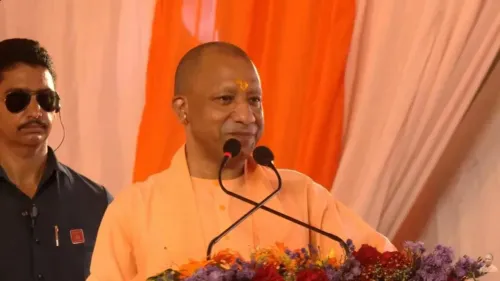
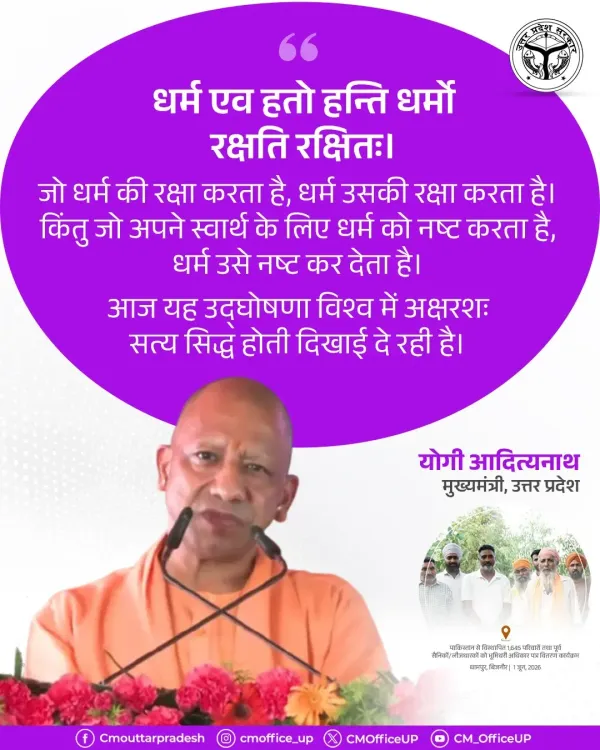
Chief Minister Yogi Adityanath invoked the classical Sanskrit shloka 'Dharma eva hato hanti, dharmo rakshati rakshitah' on June 1, 2026, declaring that its message — dharma protects those who protect it and destroys those who betray it — is proving literally true in the world today.
Key Takeaways
The Chief Minister's Office of Uttar Pradesh posted a scriptural statement attributed to CM Yogi Adityanath on June 1, 2026 .
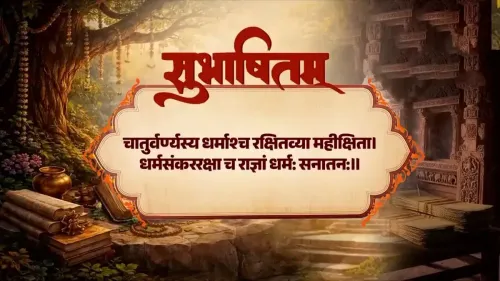
The post cites the Sanskrit shloka 'Dharma eva hato hanti, dharmo rakshati rakshitah' from the Manusmriti .
CM Yogi declared the verse is 'visibly proving itself literally true across the world today,' without naming a specific event.
Yogi Adityanath has routinely used scriptural invocations to frame governance in Uttar Pradesh since taking office in 2017 .
The statement is seen as a pointed moral commentary with an implicit contemporary reference, set against the backdrop of the 2027 UP Assembly elections .
The Chief Minister's Office of Uttar Pradesh posted a scriptural invocation attributed to Chief Minister Yogi Adityanath on Monday, June 1, 2026, citing a classical Sanskrit verse on the reciprocal nature of dharma and declaring it to be visibly proving true in the world today.
The post opens with the Sanskrit shloka 'Dharma eva hato hanti, dharmo rakshati rakshitah' — meaning, 'Dharma, if destroyed, destroys; dharma, if protected, protects.' The verse is drawn from the Manusmriti, one of ancient India's foundational texts on ethics and social order, and is among the most frequently cited shlokas in Hindu philosophical discourse.
Context
In the post, CM Yogi Adityanath translates and expands upon the shloka: 'He who protects dharma, dharma protects him. But he who destroys dharma for his own selfish ends, dharma destroys him.' He then adds: 'Today, this proclamation is visibly proving itself literally true across the world.'
The statement carries an implicit but pointed edge — the phrase 'across the world' and the word 'today' signal that the Chief Minister is connecting the ancient verse to a specific contemporary moment, without naming it directly. No event, individual, or country is explicitly identified in the post.
Policy Backdrop
Yogi Adityanath, who has served as Chief Minister of Uttar Pradesh since March 2017, is also the mahant of the Gorakhnath Math in Gorakhpur. He has consistently woven scriptural references into his public communications, framing administrative decisions on law, order, and cultural heritage as expressions of dharmic governance.
This approach has been a defining feature of his tenure. Major policy initiatives — including the Kashi Vishwanath Corridor, Ayodhya Ram Temple development, and anti-conversion legislation — have each been publicly framed by his office through the lens of dharma and Sanatan values. The current post continues that established pattern of using classical texts as political and moral commentary.
Stakeholders and Impact
The message is directed at Uttar Pradesh's large Hindu community, as well as a national and global audience following the Chief Minister's social media presence. By invoking a universally recognised shloka rather than a partisan slogan, the statement is calibrated to resonate across ideological lines within the Hindu tradition.
Political observers note that such invocations also serve a signalling function within the BJP's broader national communication strategy, which has integrated Hindu philosophical concepts into political messaging since 2014. The reference to events 'across the world' gives the statement an international dimension unusual for a state government post.
What's Next
With the 2027 Uttar Pradesh Assembly elections approaching, the frequency and intensity of dharma-centred messaging from the Chief Minister's Office is expected to increase. Analysts will watch whether this post is the prelude to a specific legislative proposal, a cultural initiative, or a broader campaign theme anchored in Sanatan values. The invocation of a global frame also suggests the possibility of a statement on an international development in the days ahead.
Point of View
Inviting audiences to project their own interpretations while the Chief Minister retains deniability. This is consistent with the BJP's broader communication architecture, which treats Hindu philosophical vocabulary as a lingua franca capable of bridging the devotional and the political. As the 2027 Uttar Pradesh election cycle nears, expect this dharma-as-governance framing to intensify as a central campaign motif.
NationPress
17 Oct 2026
Frequently Asked Questions
What shloka did CM Yogi Adityanath quote on June 1 2026?
CM Yogi Adityanath quoted the Sanskrit shloka 'Dharma eva hato hanti, dharmo rakshati rakshitah,' meaning 'Dharma, if destroyed, destroys; dharma, if protected, protects.' It is widely associated with the Manusmriti.
What did CM Yogi mean by dharma is proving true across the world?
In the post, CM Yogi stated that the shloka's message — that those who destroy dharma for selfish ends are themselves destroyed — is 'visibly proving literally true across the world today.' He did not name a specific event or individual.
Why does Yogi Adityanath frequently cite Hindu scriptures in official statements?
Yogi Adityanath is both Chief Minister of Uttar Pradesh and mahant of the Gorakhnath Math. Since taking office in 2017, he has consistently framed governance through the lens of dharma and Sanatan values, a practice central to his political identity.
What is the meaning of 'dharmo rakshati rakshitah'?
'Dharmo rakshati rakshitah' translates to 'dharma protects those who protect it.' It is the second half of the couplet and is used to argue that upholding righteousness is ultimately self-protective.
How does CM Yogi's dharma messaging relate to the 2027 UP elections?
Political analysts see dharma-centred communication as a core electoral strategy for the BJP in Uttar Pradesh. With the 2027 Assembly elections approaching, such scriptural invocations are expected to feature prominently in the party's campaign narrative.