CM Yogi Cites Gita Verse in Law-and-Order Message
Synopsis
The Uttar Pradesh CMO shared a statement by CM Yogi Adityanath on 1 June 2026 citing a Bhagavad Gita verse — 'protection of the righteous, destruction of the wicked' — as a philosophical anchor for the state's law-and-order approach.
Key Takeaways
The UP CMO posted a statement by CM Yogi Adityanath on 1 June 2026 citing a Bhagavad Gita verse.
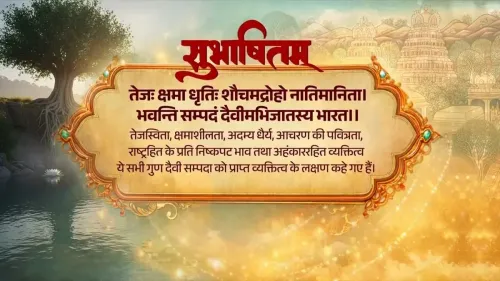
The shloka quoted — paritranaya sadhunam vinashaya cha dushkritam — is from Chapter 4, Verse 8 of the Bhagavad Gita.
CM Yogi paraphrased the verse: 'Be righteous for the righteous, but not for the wicked.' Yogi Adityanath has maintained a zero-tolerance stance on organised crime in Uttar Pradesh since taking office in 2017 .
The post continues a documented pattern of religious-philosophical messaging by the UP CMO to frame governance and enforcement priorities.
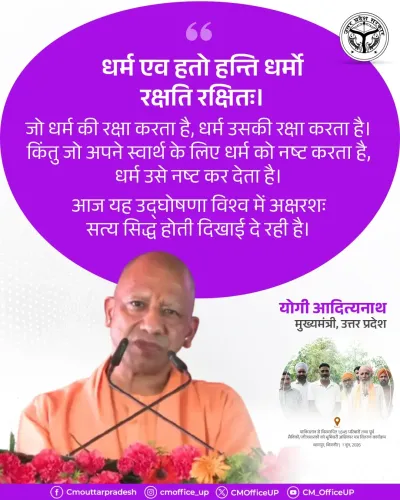
The Chief Minister's Office of Uttar Pradesh, on Monday, 1 June 2026, shared a pointed statement from Chief Minister Yogi Adityanath invoking a verse from the Bhagavad Gita to articulate his government's stance on governance and law enforcement in the state.
The post quoted CM Yogi Adityanath citing the Sanskrit shloka — 'Paritranaya sadhunam vinashaya cha dushkritam' (For the protection of the righteous and the destruction of the wicked) — attributed to Lord Krishna in the Bhagavad Gita. The Chief Minister's message, rendered in Hindi, translates to: 'Be righteous for the righteous, but not for the wicked.'
Context
The statement draws directly from Chapter 4, Verse 8 of the Bhagavad Gita, one of Hinduism's most cited scriptural passages on divine duty and moral order. CM Yogi Adityanath, a Gorakhpur-based Hindu priest-turned-politician, has consistently used religious and philosophical references to frame his administration's policy positions since taking office in 2017.
The Uttar Pradesh CMO's social media presence has, since 2017, reflected a documented pattern of blending religious-philosophical messaging with governance communication — a style that resonates strongly with the Chief Minister's political base across India's most populous state.
Policy Backdrop
Upon assuming office in March 2017, CM Yogi Adityanath declared a zero-tolerance policy against organised crime, frequently describing his administration's approach as dismantling 'goonda raj' (rule of criminals) in Uttar Pradesh. That framing has remained central to the BJP government's self-presentation across two terms in office.
Indian chief ministers have periodically cited Bhagavad Gita verses to justify administrative stances on morality and enforcement. The 1 June post continues this pattern, using scriptural authority to signal a firm posture toward criminal elements while simultaneously reassuring law-abiding citizens of state protection.
Stakeholders and Impact
The message is directed at multiple audiences simultaneously: the general public of Uttar Pradesh, the state police apparatus, and political observers tracking the BJP government's messaging strategy ahead of any future legislative or enforcement action. For ordinary residents, the statement reaffirms the administration's stated commitment to their security.
For the Uttar Pradesh Police and allied enforcement agencies, such public statements from the Chief Minister have historically served as rhetorical reinforcement of active anti-crime drives. The verse's emphasis on the 'destruction of the wicked' carries an unmistakable administrative undertone in this context.
What's Next
Observers of Uttar Pradesh politics will watch for follow-up communications from the CMO that may announce specific law-enforcement outcomes, policy directives, or legislative proposals in the Uttar Pradesh assembly. Such philosophical statements from CM Yogi Adityanath have in the past preceded or accompanied concrete anti-crime announcements. Whether this post marks the beginning of a fresh enforcement drive or stands as a standalone message of governance philosophy will become clearer in the days ahead.
Point of View
Destruction of the wicked' verse is a deliberate act of political communication, not merely a spiritual reflection. It maps a nine-year-old governance brand — zero tolerance for criminals — onto a timeless scriptural authority, lending it moral weight that transcends ordinary policy language. The choice of this specific verse signals that the administration sees its law-and-order record as a divine-duty narrative, not just an electoral one. For analysts watching Uttar Pradesh, such messaging typically foreshadows, or reinforces, concrete enforcement action on the ground.
NationPress
19 Sept 2026
Frequently Asked Questions
What did CM Yogi Adityanath say in his 1 June 2026 post?
CM Yogi Adityanath quoted a Bhagavad Gita verse attributed to Lord Krishna — meaning 'for the protection of the righteous and the destruction of the wicked' — and added that one should be righteous toward the righteous but not toward the wicked.
Which Bhagavad Gita verse did CM Yogi quote?
The verse cited is from Chapter 4, Verse 8 of the Bhagavad Gita: 'Paritranaya sadhunam vinashaya cha dushkritam,' which translates to 'for the protection of the righteous and the destruction of the wicked.'
What is CM Yogi Adityanath's law-and-order policy in Uttar Pradesh?
Since taking office in March 2017, CM Yogi Adityanath has pursued a stated zero-tolerance policy against organised crime, frequently describing his administration's mission as ending 'goonda raj' in Uttar Pradesh.
Why does CM Yogi often use religious references in governance?
CM Yogi Adityanath is a Hindu priest and head of the Gorakhnath Math temple. He has consistently used religious and philosophical references, including Bhagavad Gita verses, to frame his administration's policy positions and communicate with his political base.
What does the UP CMO's Gita quote signal about future policy?
Analysts note that such philosophical statements from the UP CMO have historically accompanied or preceded concrete anti-crime drives or enforcement announcements, though no specific follow-up action has been confirmed for this post.