CM Yogi Invokes Rigveda on India's Openness to Knowledge

Synopsis
Chief Minister Yogi Adityanath invoked the Rigvedic verse 'Aa no bhadraah kratavo yantu vishwatah' on 26 October 2026, arguing that India's ancient intellectual tradition champions openness to knowledge from every direction — a position he called foundational to Indian civilisation.
Key Takeaways
CM Yogi Adityanath quoted the Rigvedic verse 'Aa no bhadraah kratavo yantu vishwatah' — 'Let noble thoughts come from all directions.' He argued that Indian wisdom never claimed exclusive ownership of truth, positioning the tradition as inherently pluralist.
The statement was shared by the Chief Minister's Office of Uttar Pradesh on 26 October 2026 .
The verse originates in the Rigveda's first mandala , one of the oldest hymns in the Hindu scriptural canon.
The message was directed implicitly at students and academics , signalling a civilizational philosophy of open inquiry.
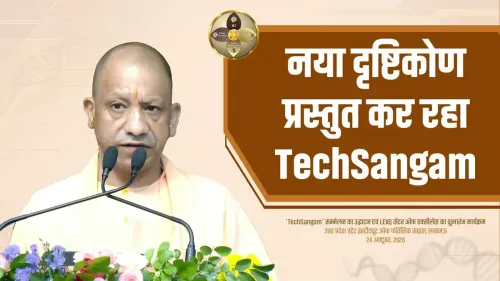
A four-thousand-year-old Vedic verse is doing modern political work. Chief Minister Yogi Adityanath's office shared a statement by the Chief Minister on Monday, 26 October 2026, invoking a foundational line from the Rigveda to articulate what he called India's timeless civilizational approach to knowledge — open, pluralist, and directionally boundless.
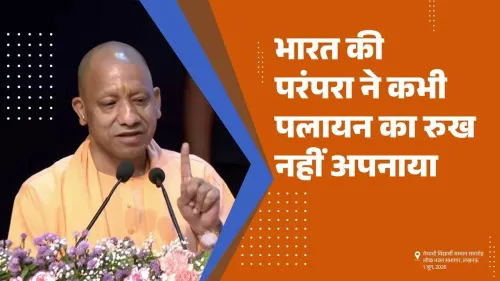
The Chief Minister quoted the Sanskrit verse 'Aa no bhadraah kratavo yantu vishwatah' — rendered in English as 'Let noble thoughts come to us from all directions' — and drew from it a sweeping philosophical point: 'Indian wisdom never claimed that only it holds the truth and everything else is worthless. Wherever knowledge comes from, the paths to receive it must remain open.'
The Rigvedic Verse and What It Carries
The line belongs to the Rigveda's first mandala, one of Hinduism's oldest hymns, and has long been cited as a scriptural basis for intellectual pluralism in Indian thought. Its deployment by public figures is not new — it has appeared in addresses to Parliament, university convocations, and diplomatic speeches — but each invocation carries fresh political weight depending on the moment.
Yogi Adityanath, who has served as Chief Minister of Uttar Pradesh since 2017, has consistently woven cultural and civilizational themes into his public rhetoric alongside governance priorities. This statement fits a recognisable pattern among BJP-led state governments: grounding contemporary public discourse in ancient Indian textual traditions.
Civilisational Pluralism as a Governing Motif
The broader argument the Chief Minister advances is pointed: India's intellectual tradition is not exclusivist. By stressing that 'knowledge from any direction must find open roads,' the statement positions Indian civilisation as a model of epistemic humility — a counter-narrative to perceptions of cultural insularity.
Indian leaders have periodically reached for Vedic and Upanishadic texts to articulate this civilizational self-image, particularly in educational and cultural settings. For a state government with the scale of Uttar Pradesh — India's most populous, home to some of its oldest universities and heritage sites — such statements also signal intent toward students and the academic community.
Whether this becomes a prelude to a concrete cultural or educational initiative from the Lucknow government will be worth watching in the weeks ahead. For now, the message from CM Yogi is philosophical — and deliberately so: ancient India, he argues, never shut its doors. Neither should the present.
Point of View
Lending philosophical legitimacy to the administration's civilizational identity project. The choice of a verse explicitly about openness to all-directional knowledge is strategically nuanced — it pre-empts charges of cultural exclusivism while still centering Hindu scripture. For Uttar Pradesh specifically, with its dense network of traditional educational institutions, such messaging also serves as soft signalling to academia and the cultural establishment. The statement's timing, without a specific trigger event, suggests it is part of ongoing cultural positioning rather than a reactive statement.
NationPress
26 Oct 2026
Frequently Asked Questions
What does the Rigvedic verse 'Aa no bhadraah kratavo yantu vishwatah' mean?
It translates as 'Let noble thoughts come to us from all directions' and is drawn from the Rigveda's first mandala. The verse is widely cited as scriptural support for intellectual pluralism in Indian philosophical tradition.
Why did CM Yogi Adityanath quote this Sanskrit verse?
CM Yogi used the verse to argue that India's ancient civilisation was never exclusivist about knowledge — a point he framed as foundational to Indian identity and relevant for contemporary openness to learning.
Who is Yogi Adityanath?
Yogi Adityanath is the Chief Minister of Uttar Pradesh , serving since 2017 . He is a member of the BJP and is known for statements emphasising Indian cultural and religious heritage alongside governance.
Is this connected to any specific UP government policy?
No specific policy announcement accompanied this statement. It reflects a broader pattern of BJP-led state governments invoking classical Indian texts in cultural and educational discourse, with possible follow-up initiatives to watch for.
Where was this statement posted?
The statement was posted by the official Chief Minister's Office of Uttar Pradesh account on X on 26 October 2026 .