CM Yogi writes on Sant Ravidas's philosophy of inner purity
Synopsis
UP CM Yogi Adityanath authored an article in Dainik Jagran on Sant Ravidas's celebrated verse on inner purity, drawing a direct line from the 15th-century Bhakti saint's philosophy to compassionate conduct, social trust, and just administration in modern governance.
Key Takeaways
CM Yogi Adityanath shared an article he wrote on Sant Ravidas 's philosophy, posted on 29 July 2026 .
The piece centres on the verse 'Man changa toh kathauti mein Ganga' — inner purity supersedes outward ritual.
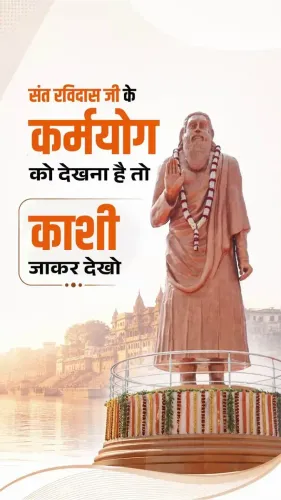
Sant Ravidas was a 15th–16th century Bhakti saint from Uttar Pradesh whose verses are enshrined in the Guru Granth Sahib .
CM Yogi links Ravidas's ethic of inner cleanliness to three governance outcomes: compassionate conduct, social trust, and administrative justice.
The article was published in Dainik Jagran , one of India's largest Hindi-language dailies.
The piece reflects CM Yogi's recurring practice of drawing governance lessons from India's Bhakti philosophical tradition.
A 15th-century saint's couplet about the purity of the mind has found a new platform — the desk of Uttar Pradesh Chief Minister Yogi Adityanath, who on Wednesday, 29 July 2026, shared an article he authored on the teachings of Sant Ravidas, calling them a 'profound formula of Indian life-philosophy.'
The Chief Minister anchored his piece on one of Ravidas's most celebrated sayings: 'Man changa toh kathauti mein Ganga' — roughly, 'If the heart is pure, the Ganges flows even in a wooden tub.' The verse, he wrote, teaches that inner righteousness matters far more than outward ritual. When the mind is clean, he argued, compassion enters conduct, trust expands in society, and justice finds its place in governance.
The saint behind the verse
Sant Ravidas was a 15th–16th century Bhakti movement poet and mystic from Uttar Pradesh whose compositions are revered across northern India and enshrined in the Guru Granth Sahib. His verses consistently rejected caste hierarchy and empty religious performance, insisting that devotion lived in the quality of a person's inner life — not in pilgrimage or ritual display. That democratic, egalitarian spirit is what CM Yogi described as the blueprint for a samras samaj, a harmonious, equitable society.
Governance woven from philosophy
The Chief Minister's framing is deliberate: he draws a direct line from Ravidas's inner-purity ethic to the three pillars of public life — compassionate conduct, social trust, and just administration. It is a recurring mode in his public writing, using the Bhakti tradition as a moral vocabulary for governance. The argument, in essence, is that a clean conscience in those who govern produces a just state — and that this idea is not new but centuries old, rooted in the soil of Uttar Pradesh itself.
The article was published in Dainik Jagran, one of India's most widely read Hindi dailies, giving the piece significant reach among Hindi-speaking audiences across the country.
In linking a medieval saint's spiritual insight to the ethics of modern administration, CM Yogi is doing something that has defined his public intellectual identity: insisting that India's philosophical heritage is not museum material — it is a living instruction manual for those in power.
Point of View
He positions spiritual heritage not as sentiment but as policy ethic — a soft-power move that speaks simultaneously to devout communities and to a broader audience seeking governance grounded in values. Publishing in a major Hindi daily amplifies that reach well beyond social media. The recurring invocation of saints like Ravidas also signals an inclusive cultural nationalism — one that foregrounds figures who historically challenged caste hierarchy, giving the BJP's Hindu-identity politics a reformist, egalitarian texture.
NationPress
28 Oct 2026
Frequently Asked Questions
What is the meaning of 'Man changa toh kathauti mein Ganga'?
The saying by Sant Ravidas means that if one's heart and mind are pure, even a small wooden tub of water is as sacred as the river Ganga — emphasising inner righteousness over outward ritual or pilgrimage.
Who was Sant Ravidas?
Sant Ravidas was a 15th–16th century Bhakti movement saint and poet from Uttar Pradesh. His verses, which stress equality, inner devotion, and rejection of caste discrimination, are revered across northern India and are included in the Sikh scripture, the Guru Granth Sahib.
What did CM Yogi Adityanath write about Sant Ravidas?
CM Yogi Adityanath authored an article arguing that Sant Ravidas's philosophy of inner purity is a guiding principle for a harmonious society and just governance, linking the saint's teachings to compassionate conduct, social trust, and administrative ethics.
Where was CM Yogi's article on Sant Ravidas published?
The article was published in Dainik Jagran, one of India's most widely circulated Hindi-language newspapers.
What is a 'samras samaj' as mentioned by CM Yogi?
'Samras samaj' translates to a harmonious or equitable society — a social ideal in which different communities coexist with mutual respect and dignity, a concept CM Yogi associates with the egalitarian teachings of Bhakti saints like Sant Ravidas.