PM Modi Invokes Gita Verse, Links Virtues to Viksit Bharat Goal
Synopsis
Prime Minister Narendra Modi quoted a Bhagavad Gita verse on humility, forgiveness, and virtue on 29 May 2026, framing personal conduct as the moral foundation for India's Viksit Bharat mission to become a developed nation by 2047.
Key Takeaways
PM Modi posted on 29 May 2026 linking personal virtues — humility, forgiveness, righteous conduct — to the Viksit Bharat national goal.
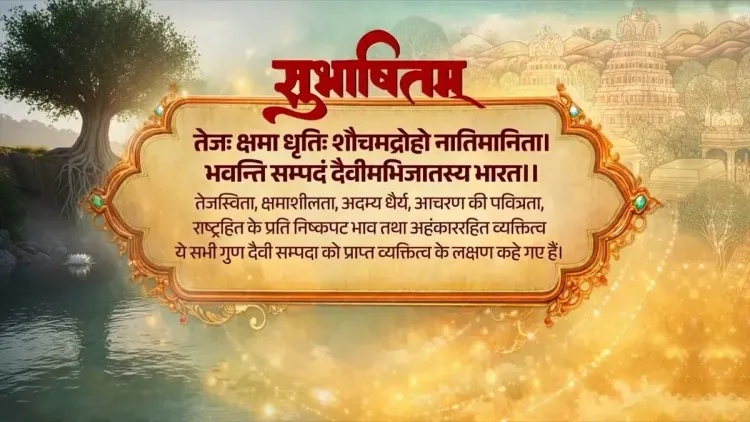
He quoted Bhagavad Gita Chapter 16, Verse 3 , listing divine qualities including radiance, fortitude, purity, and freedom from malice.
Viksit Bharat is the government's vision to make India a fully developed nation by 2047 , the centenary of independence.
The goal was formally announced in Modi's Independence Day address from the Red Fort in August 2022 .
The post continues PM Modi's established pattern of pairing classical Indian philosophical texts with contemporary governance messaging.
Citizens are cast as active agents of national transformation, with individual virtue framed as civic duty.
Prime Minister Narendra Modi on Friday, 29 May 2026 shared a reflective post on X pairing a Sanskrit verse from the Bhagavad Gita with a message on national character, calling humility, forgiveness, and righteous conduct the 'true ornaments of personality' and linking these virtues to India's pursuit of the Viksit Bharat vision.
Context
Writing in Hindi, Prime Minister Modi opened with the line: 'Vinramta, kshamashilta aur uttam aacharan hi vyaktitva ke sacche aabhushan hain' — 'Humility, forgiveness, and righteous conduct are the true ornaments of one's personality.' He then connected these qualities directly to the collective effort of citizens working toward the Viksit Bharat goal, framing individual virtue as the moral foundation of national progress.
The post closed with a Sanskrit shloka from the Bhagavad Gita (Chapter 16, Verse 3): 'Tejah kshama dhritih shaucham adroho natimanita / Bhavanti sampadam daivim abhijatasya Bharata' — roughly translated: 'Radiance, forgiveness, fortitude, purity, freedom from malice, and absence of excessive pride — these are the divine qualities of one born to a noble heritage, O Bharata.'
Policy Backdrop
Viksit Bharat — meaning 'Developed India' — is the Modi government's flagship long-term national vision, targeting India's transformation into a fully developed nation by 2047, the centenary of independence. Prime Minister Modi formally articulated this goal in his Independence Day address from the Red Fort in August 2022, and it has since become a recurring anchor in government communications, budget frameworks, and NITI Aayog planning documents.
The framing of Viksit Bharat has consistently blended economic targets — infrastructure, manufacturing, digital penetration — with cultural and civilisational aspirations. Friday's post is consistent with that dual register, positioning ethical self-improvement as a prerequisite for national transformation.
Stakeholders and Impact
The post is addressed to Indian citizens broadly, casting them as active participants in the Viksit Bharat mission. By invoking a widely recognised Gita verse, the message draws on a shared classical heritage that resonates across India's diverse linguistic and regional communities.
The choice of Chapter 16 of the Gita — which catalogues 'divine qualities' (daivi sampada) against their opposite — signals an appeal to personal conduct as civic duty. This framing is consistent with the BJP-led government's broader cultural messaging, which regularly integrates classical Indian philosophy into contemporary governance narratives.
What's Next
Further government communications, NITI Aayog milestone reports, and upcoming policy announcements are expected to continue building out the Viksit Bharat 2047 roadmap. Prime Minister Modi's social media cadence suggests that philosophical and cultural messaging will remain a consistent accompaniment to policy rollouts, reinforcing the idea that India's development trajectory is inseparable from the values its citizens embody.
Point of View
Used to ground a modern policy goal in civilisational continuity. By invoking the Gita's 'daivi sampada' in the same breath as Viksit Bharat, the message implies that India's development trajectory is morally distinct from purely materialist models of growth. This is consistent with the BJP's broader ideological project of presenting governance as an extension of dharmic values rather than technocratic management alone. For political analysts, the timing and philosophical register of such posts also serve a soft-mobilisation function, reinforcing cultural identity among the party's core support base without making any partisan claim.
NationPress
20 Sept 2026
Frequently Asked Questions
What did PM Modi post on 29 May 2026?
PM Modi posted a message in Hindi on X on 29 May 2026 , quoting a Bhagavad Gita verse and stating that humility, forgiveness, and righteous conduct are the true ornaments of personality, linking these virtues to the Viksit Bharat mission.
What is the Bhagavad Gita verse PM Modi quoted?
He quoted Chapter 16, Verse 3 of the Bhagavad Gita: 'Tejah kshama dhritih shaucham adroho natimanita / Bhavanti sampadam daivim abhijatasya Bharata,' which describes divine qualities including radiance, forgiveness, fortitude, purity, and freedom from malice.
What is Viksit Bharat?
Viksit Bharat — 'Developed India' — is the Modi government's long-term national vision to transform India into a fully developed nation by 2047 , the centenary of Indian independence, first announced in PM Modi's Independence Day speech in August 2022 .
Why does PM Modi frequently quote classical Indian texts in his posts?
PM Modi has established a consistent pattern of pairing Sanskrit verses and classical Indian philosophy with contemporary governance goals, integrating India's ethical and civilisational heritage into messaging on national development and policy.
What is the significance of Bhagavad Gita Chapter 16 for this message?
Chapter 16 of the Bhagavad Gita catalogues 'divine qualities' ( daivi sampada ), including humility, forgiveness, and purity. By citing this chapter, PM Modi frames civic virtue and personal conduct as essential qualities for citizens contributing to India's national progress.