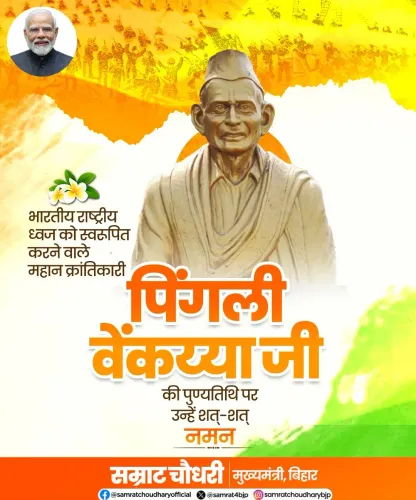
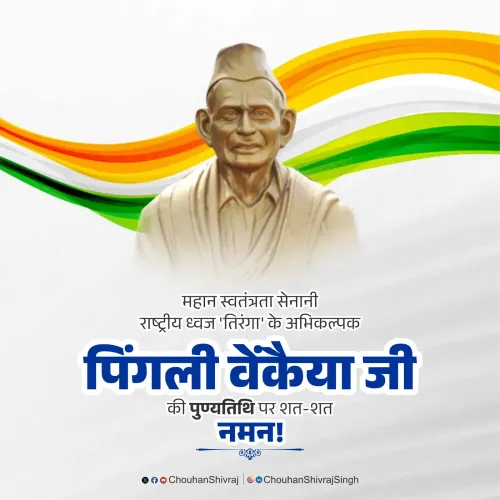
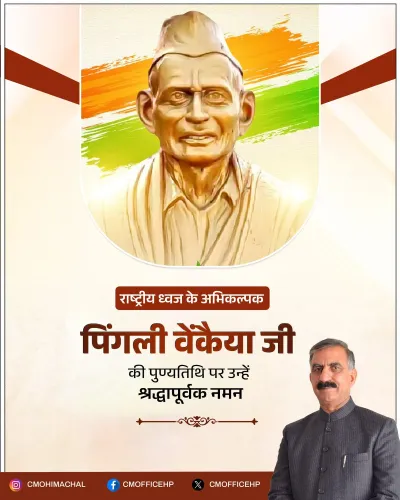
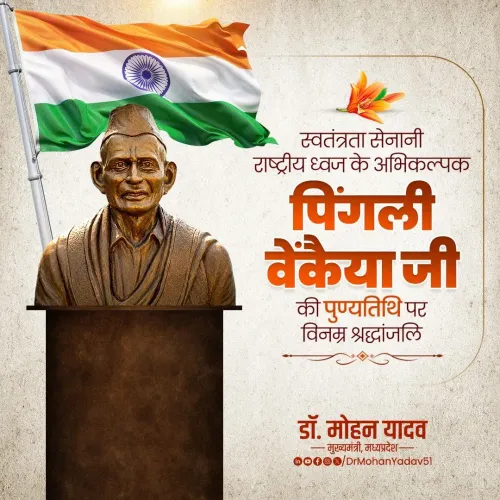
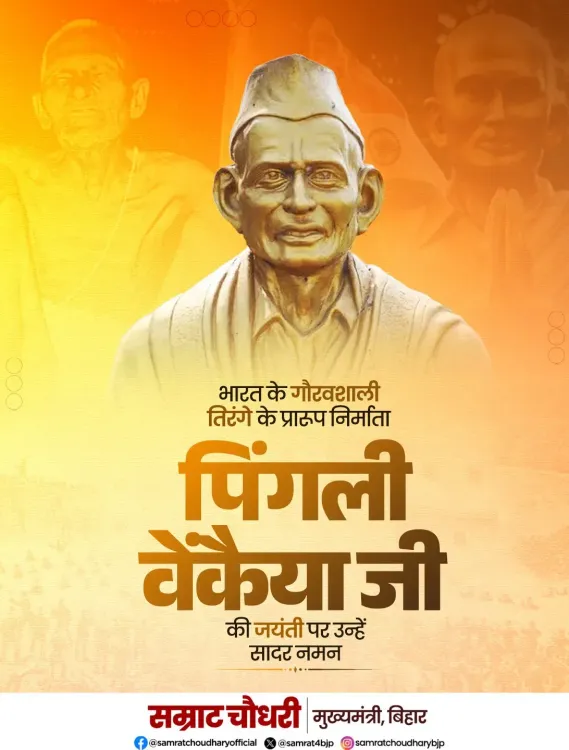
CM Samrat Choudhary Pays Tribute to Tricolour Designer Pingali Venkayya
Synopsis
Bihar Chief Minister Samrat Choudhary honoured Pingali Venkayya on his birth anniversary, calling his contribution to designing India's Tricolour 'incomparable' and describing the flag as a symbol of national unity, integrity, freedom, and self-respect.
Key Takeaways
Bihar CM Samrat Choudhary paid tribute to Pingali Venkayya on his birth anniversary, 2 August .
Pingali Venkayya was the freedom fighter whose design proposal formed the basis of India's national flag.
The Constituent Assembly formally adopted the Indian national flag on 22 July 1947 .
Choudhary described the Tricolour as a symbol of 'unity, integrity, freedom, and the self-respect of crores of citizens.' Venkayya Jayanti is observed annually on 2 August across India.
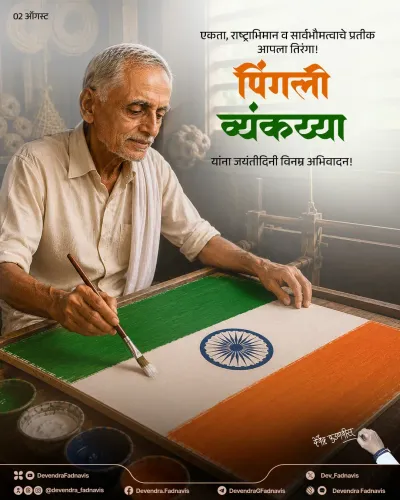
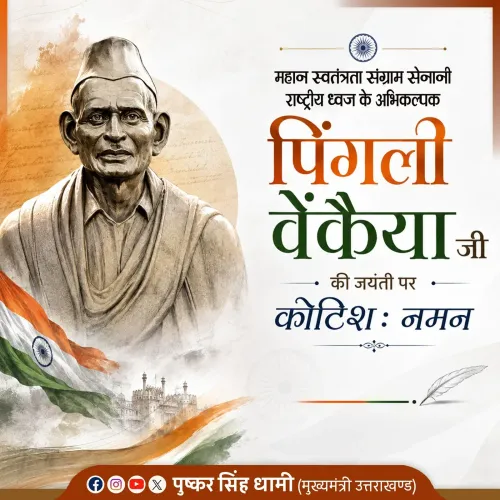
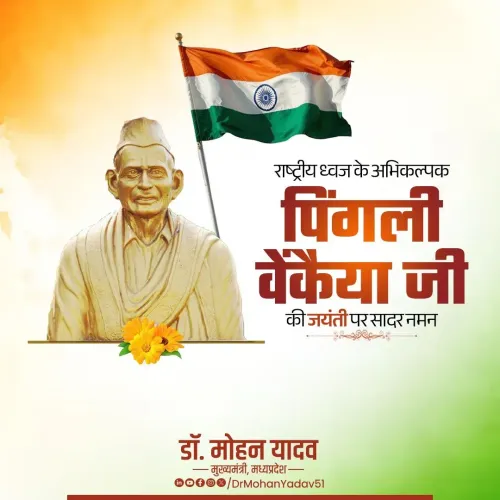
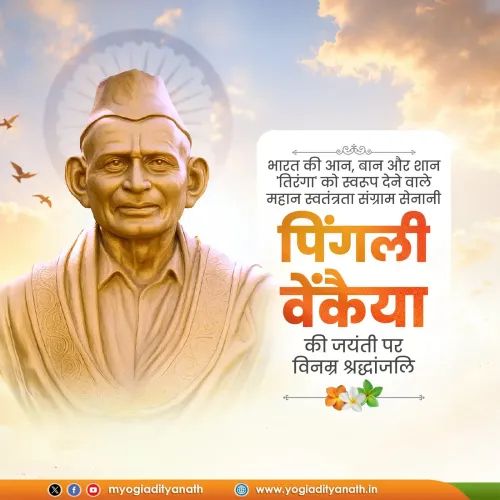
The man who gave India its flag was born on this day — and Bihar Chief Minister Samrat Choudhary marked the occasion with a heartfelt salute to Pingali Venkayya on 2 August, the freedom fighter's birth anniversary.
Posting in Hindi, CM Choudhary wrote: 'I pay respectful homage to Pingali Venkayya ji, the creator of the design of India's glorious Tricolour, on his birth anniversary. His incomparable contribution to the creation of the national flag will forever be inscribed in golden letters in Indian history. The Tricolour is not merely a symbol of our honour and pride, but also a symbol of the nation's unity, integrity, freedom, and the self-respect of crores of fellow citizens. Jai Hind.'
The man behind the Tricolour
Pingali Venkayya was a freedom fighter, scholar, and agriculturist from Andhra Pradesh whose design proposal formed the foundation of India's national flag. The Constituent Assembly formally adopted the Indian national flag on 22 July 1947, with Venkayya's core design — the horizontal saffron, white, and green bands — at its heart. His work translated the aspirations of a nascent republic into a single, enduring image that now flies over every institution in the country.A flag, and what it carries
Choudhary's tribute echoed a sentiment that transcends party lines: the Tricolour as a living symbol rather than a static emblem. His post invoked unity, integrity, freedom, and aatma-gaurav (self-respect) — the four threads woven into the flag's meaning for ordinary Indians. Political figures across the spectrum mark Venkayya Jayanti annually, but the tribute carries particular resonance at a moment when flag-centric nationalism remains a prominent theme in public discourse. Venkayya's contribution was long under-recognised; it is only in recent decades that his Jayanti has become a regular fixture in the national commemorative calendar. That quiet correction of history is, in itself, part of the story the flag now tells.Point of View
Flag symbolism has been a consistent and potent thread in its public messaging, making Venkayya Jayanti a natural moment for senior leaders to engage. What is notable here is the framing — Choudhary's post foregrounds civic values (unity, integrity, freedom, self-respect) rather than purely cultural nationalism, a register that broadens the appeal. As Venkayya's profile continues to rise in the national commemorative calendar, such tributes are likely to grow in prominence across party lines.
NationPress
2 Aug 2026
Frequently Asked Questions
Who is Pingali Venkayya?
Pingali Venkayya was an Indian freedom fighter and scholar from Andhra Pradesh who designed the flag that became the basis for India's national Tricolour, adopted by the Constituent Assembly on 22 July 1947.
When is Pingali Venkayya Jayanti celebrated?
Pingali Venkayya Jayanti is observed on 2 August each year, marking his birth anniversary.
What did Bihar CM Samrat Choudhary say about Pingali Venkayya?
CM Choudhary paid respectful homage to Venkayya, calling his contribution to the national flag 'incomparable' and saying it would be 'inscribed in golden letters in Indian history.' He also described the Tricolour as a symbol of national unity, integrity, freedom, and citizens' self-respect.
When was the Indian national flag adopted?
The Indian national flag was formally adopted by the Constituent Assembly on 22 July 1947, incorporating the design elements proposed by Pingali Venkayya.
Why is the Tricolour significant?
The Tricolour represents India's sovereignty, unity, and the values of freedom and self-respect. Its three bands — saffron, white, and green — along with the Ashoka Chakra, carry constitutional and historical significance dating to independence in 1947.