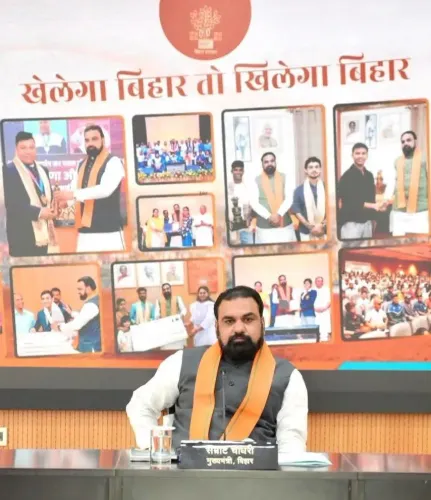
CM Samrat Choudhary Starts Paperless E-Cabinet in Bihar
Synopsis
Bihar Chief Minister Samrat Choudhary said cabinet meetings have begun under an e-cabinet system from 25 November 2026, making the full workflow digital, paperless and technology-enabled.
Key Takeaways
Bihar Chief Minister Samrat Choudhary said e-cabinet has begun in cabinet meetings from 25 November 2026.
He said the cabinet's full functioning will now be digital, paperless and equipped with new technology.
The post was tagged DigitalBihar, GoodGovernance and NDA4Bihar.
The move sits within the Digital India programme launched in 2015 for e-governance and paperless administration.
Cabinet ministers and the state bureaucracy are the primary users of the system.
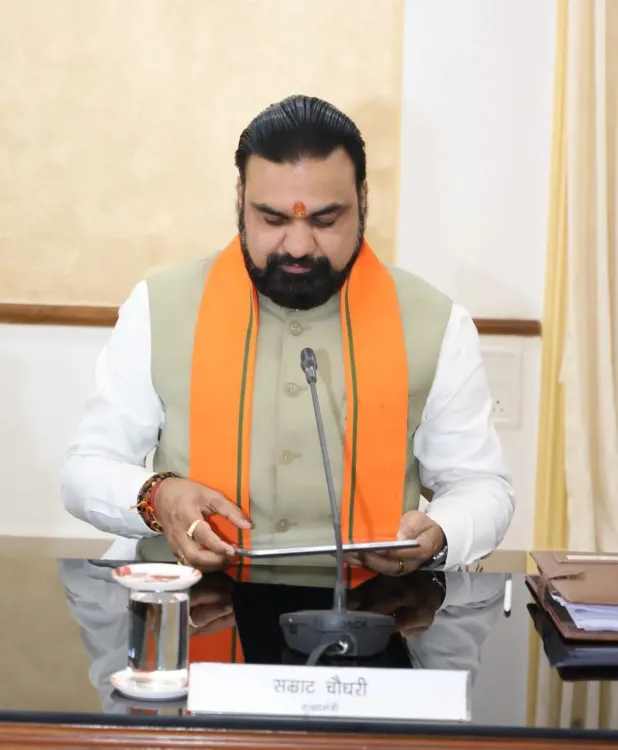
Bihar Chief Minister Samrat Choudhary on 25 November 2026 said the paper file has left the state's cabinet table, as e-cabinet meetings began from today. The entire functioning of the council of ministers, he said, will now be digital, paperless and equipped with new technology.
In a Hindi post on X he wrote: आज से बिहार मंत्रिमंडल की बैठक में ई-कैबिनेट व्यवस्था की शुरुआत हो गई (From today, the e-cabinet system has begun in Bihar cabinet meetings). He added that the cabinet's full working would now be digital, paperless and loaded with new technology, tagging the move DigitalBihar, GoodGovernance and NDA4Bihar.
E-cabinet takes over Bihar's decision table
Physical dossiers that once travelled through the secretariat are meant to move as digital records — created, tracked and archived without paper. Cabinet ministers and the state bureaucracy sit at the centre of that change. The meeting room is the first room to go paperless; the rest of government has to follow the same spine.
Choudhary presented the switch as an operational fact, not a promise. From today, he said, the cabinet table itself runs on a new technology stack.
Digital India reaches the cabinet room
The step sits inside a longer national arc. The Digital India programme, launched in 2015, set out to push e-governance, paperless administration and technology-enabled government processes across the country. Indian states have incrementally put cabinet proceedings on digital platforms to cut paperwork and tighten the official record.
Bihar's announcement follows that pattern of aligning cabinet-level work with Digital India goals for administrative efficiency. The live test is not the first meeting. It is whether every department actually files, tracks and stores decisions on the same digital trail — and how fast the secretariat leaves paper behind.
If e-cabinet holds, Bihar's next governance story will be written in logs, not in files.
Point of View
Continuing the Digital India template that NDA-led state governments have used to brand administrative efficiency. In Bihar the political signal is that good governance is being equated with a paperless council of ministers. The administrative test is whether every department actually lives on that digital trail, not only the meeting that starts it.
NationPress
25 Nov 2026
Frequently Asked Questions
What did Bihar CM Samrat Choudhary announce about e-cabinet?
He said the e-cabinet system has begun in Bihar cabinet meetings from 25 November 2026. He added that the cabinet's entire functioning will now be digital, paperless and equipped with new technology.
When did Bihar start the e-cabinet system?
According to Chief Minister Samrat Choudhary, the e-cabinet arrangement began from 25 November 2026. He described it as starting from that day in cabinet meetings.
What is an e-cabinet system?
An e-cabinet system is a digital platform for conducting cabinet meetings and handling files without paper. It is meant to make the full working of the cabinet digital, paperless and technology-enabled.
How is Bihar's e-cabinet linked to Digital India?
Digital India, launched in 2015, promotes e-governance and paperless administration nationwide. Bihar's e-cabinet move follows the wider pattern of states putting cabinet proceedings on digital platforms under that agenda.
Who will use Bihar's e-cabinet platform?
Cabinet ministers and the state bureaucracy are the immediate users. The system is designed around the cabinet's decision-making workflow and the records that departments feed into it.