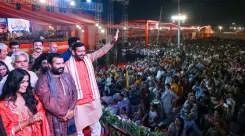
CM Samrat Choudhary pays tribute on Hindu Samrajya Diwas
Synopsis
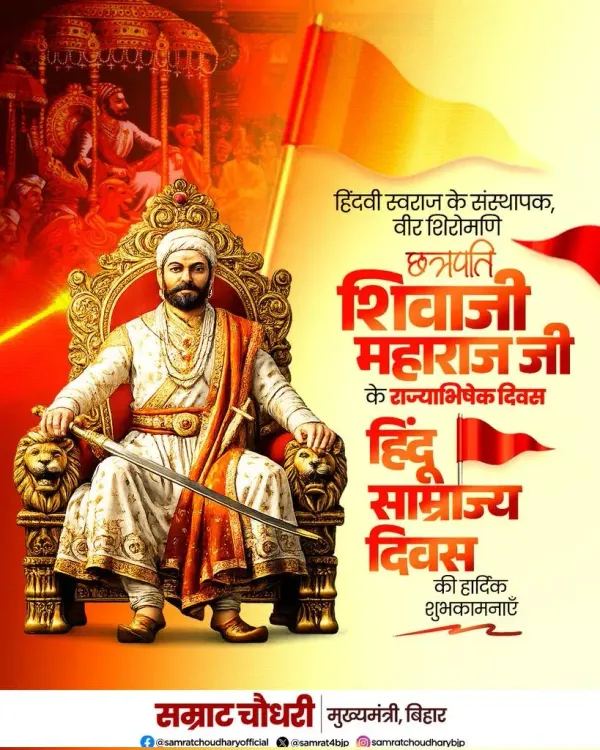
Bihar Chief Minister Samrat Choudhary on June 6, 2026 paid tribute to Chhatrapati Shivaji Maharaj on Hindu Samrajya Diwas, honouring the 1674 coronation of the Maratha king and calling on citizens to build a powerful, self-reliant India inspired by his ideals of good governance and resistance to injustice.
Key Takeaways
Bihar Chief Minister Samrat Choudhary posted a tribute to Chhatrapati Shivaji Maharaj on June 6, 2026 , the day observed as Hindu Samrajya Diwas .
The occasion marks the 1674 coronation of Shivaji Maharaj at Raigad Fort , commemorated annually by Hindu nationalist organisations and several state governments.
Choudhary described Shivaji as the founder of Hindavi Swaraj and a symbol of 'indomitable courage, self-respect, and patriotism.' He called upon citizens to imbibe Shivaji's ideals to contribute to building 'a powerful, prosperous, and self-respecting India.' The tribute is part of a broader BJP pattern of issuing coordinated commemorations of pre-colonial Hindu rulers to reinforce narratives of cultural self-assertion and good governance.
Bihar Chief Minister Samrat Choudhary on Saturday, June 6, 2026, paid tribute to Chhatrapati Shivaji Maharaj on Hindu Samrajya Diwas, marking the 17th-century Maratha king's coronation anniversary, urging citizens to draw inspiration from his ideals to build a strong and self-reliant India.
Context
In his post on X, Samrat Choudhary offered koti-koti naman (countless salutations) to Shivaji Maharaj, describing him as the founder of Hindavi Swaraj (indigenous self-rule) and a symbol of 'indomitable courage, self-respect, and patriotism.' He called upon people to imbibe Shivaji's ideals and contribute to building 'a powerful, prosperous, and self-respecting India.'
The post was shared on the morning of June 6, the date observed annually as Hindu Samrajya Diwas, commemorating Shivaji Maharaj's coronation at Raigad Fort in 1674, when he was crowned the sovereign ruler of the Maratha kingdom.
Policy Backdrop
Chhatrapati Shivaji Maharaj founded the Maratha polity in the 17th century through sustained military and administrative campaigns, establishing a model of governance that has been widely cited for its emphasis on people-centric administration, naval strength, and indigenous sovereignty. His 1674 coronation is regarded as a landmark moment in the assertion of regional self-rule against Mughal dominance.
Hindu Samrajya Diwas has been observed by Hindu nationalist organisations and several state governments for decades. Maharashtra has held official coronation-day events since the state's formation in 1960, with the commemorations receiving greater prominence after 2014. BJP leaders across states have made public tributes on this occasion a consistent part of their political calendar, invoking Shivaji's legacy as a symbol of indigenous governance and cultural self-assertion.
Stakeholders and Impact
The tribute from Bihar's Chief Minister is notable given that Bihar is geographically distant from the Maratha heartland, reflecting the BJP's broader strategy of projecting pan-India cultural icons beyond their regional origins. For BJP supporters and Hindu nationalist constituencies, such commemorations reinforce a narrative linking present-day governance with a lineage of pre-colonial Hindu statecraft.
The Maratha community, a significant political constituency particularly in Maharashtra, regards Shivaji Maharaj as a defining ancestor. Tributes from senior leaders across party-governed states signal the nationwide resonance the icon carries in contemporary Indian politics.
What's Next
Similar commemorative statements are expected from other BJP chief ministers and senior leaders throughout June 6, as the party's state units typically coordinate messaging around major cultural anniversaries. With Bihar assembly elections on the horizon, such public affirmations of cultural heritage are likely to feature more prominently in CM Choudhary's outreach. Observers will watch whether the tribute is followed by any state-level directives on history curricula, memorials, or cultural programmes in Bihar that invoke the Shivaji legacy.
Point of View
Projecting Shivaji Maharaj's legacy well beyond Maharashtra into Hindi-belt politics. The invocation of Hindavi Swaraj and self-reliant governance carries a dual message: it aligns with the party's broader cultural-nationalist positioning while echoing development-oriented rhetoric ahead of state elections. Such commemorations serve as low-cost, high-visibility signals to both the party's ideological base and floating voters who respond to assertions of civilisational pride. The consistency of this messaging across BJP chief ministers suggests central coordination, making individual tributes as much a statement of party discipline as personal conviction.
NationPress
21 Oct 2026
Frequently Asked Questions
What is Hindu Samrajya Diwas?
Hindu Samrajya Diwas is observed annually on June 6 to commemorate the coronation of Chhatrapati Shivaji Maharaj at Raigad Fort in 1674 , when he was crowned the sovereign ruler of the Maratha kingdom. It is observed by Hindu nationalist organisations and several state governments across India.
Why did Bihar CM Samrat Choudhary pay tribute to Shivaji Maharaj?
Samrat Choudhary paid tribute on Hindu Samrajya Diwas, June 6, 2026 , describing Shivaji Maharaj as a symbol of courage, self-respect, and patriotism, and calling on citizens to draw inspiration from his ideals of good governance and resistance to injustice.
What is Hindavi Swaraj?
Hindavi Swaraj refers to the concept of indigenous self-rule established by Chhatrapati Shivaji Maharaj through the founding of the Maratha polity in the 17th century, representing sovereignty free from Mughal dominance.
Do BJP leaders across states routinely observe Hindu Samrajya Diwas?
Yes. BJP leaders across states have made public tributes on Hindu Samrajya Diwas a consistent part of their political calendar, invoking Shivaji Maharaj's legacy to reinforce narratives of indigenous governance and cultural self-assertion.
What did Samrat Choudhary say about Shivaji Maharaj?
Samrat Choudhary called Shivaji Maharaj the founder of Hindavi Swaraj and a symbol of 'indomitable courage, self-respect, and patriotism,' urging citizens to imbibe his ideals and contribute to building 'a powerful, prosperous, and self-respecting India.'